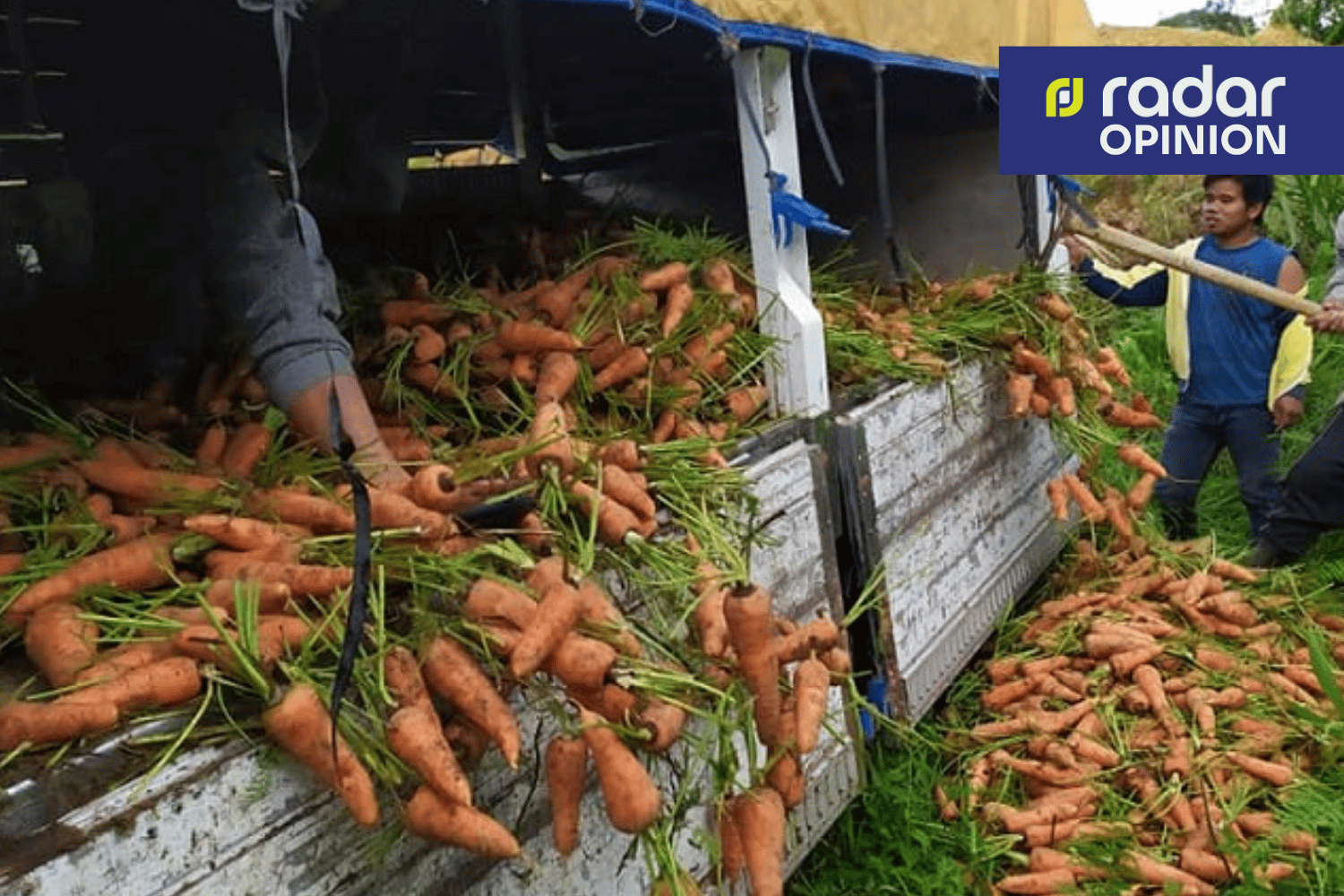
Getting crops to market can be just as important as growing them, especially when floods, damaged roads and high transport costs threaten to turn good harvests into waste.
Food security is often measured by whether farmers can grow enough food. But a harvest means little if the food cannot get from the farm to the market before it goes bad.
After all, a farmer can survive a typhoon, save the crop, and still lose money if there is no affordable way to bring the vegetables to market.
By the time the produce reaches a buyer, if it reaches one at all, the opportunity may already be gone.
That creates a strange problem. Vegetables can be available at the farm while consumers elsewhere face limited supply and higher prices. The food exists, but the system cannot move it where it needs to go.
This is particularly painful for small farmers, for whom a failed harvest can mean losing not only income but also the money needed to plant again. When crops survive a disaster but cannot be transported because roads are damaged, fuel is expensive or trucks are unavailable, the farmer can still end up shouldering the loss.
And the waste does not stop with the farmer. When perfectly edible food is discarded because it cannot reach a market in time, consumers lose a potential source of supply as well.
Call for subsidized hauling
The instinctive response is often to talk about trucks. And yes, affordable hauling can make a difference. But a truck alone cannot fix a broken food supply chain.
Where will the produce go?
Is there temporary storage? What happens to vegetables that cannot be sold immediately? Can they be moved to another market where supply is tighter? Who will buy them, and how quickly can government respond?
These questions matter because perishable food does not wait for bureaucracy to catch up.
The issue was recently raised by consumer advocacy group CONSUMA, which called for a permanent mechanism for affordable or subsidized hauling, along with temporary storage, cold-chain facilities, direct government procurement, better production and demand forecasting, and stronger farm-to-market connections.
The broader point is worth considering. This is because food security does not end when a farmer harvests a crop. It also depends on the roads, trucks, storage facilities, markets and distribution networks that allow that crop to reach consumers.
This becomes even more important when floods, landslides and other disruptions interfere with normal routes. A system designed only for normal conditions can quickly become useless when the next disaster hits.
Government intervention, therefore, should not begin only when farmers are already throwing away their produce. By then, the food may already be lost.
The better approach is to build a system that can anticipate disruptions and move quickly when they happen. That could mean having hauling capacity ready, identifying temporary storage, coordinating buyers and redirecting supplies before produce starts to spoil.
The goal is bigger than saving a farmer from one bad harvest.
It is about preventing a situation where food is available but cannot reach the people who need it.
Because growing the food is only the first half of food security. Getting it from the farm to the table is the other half.
READ: