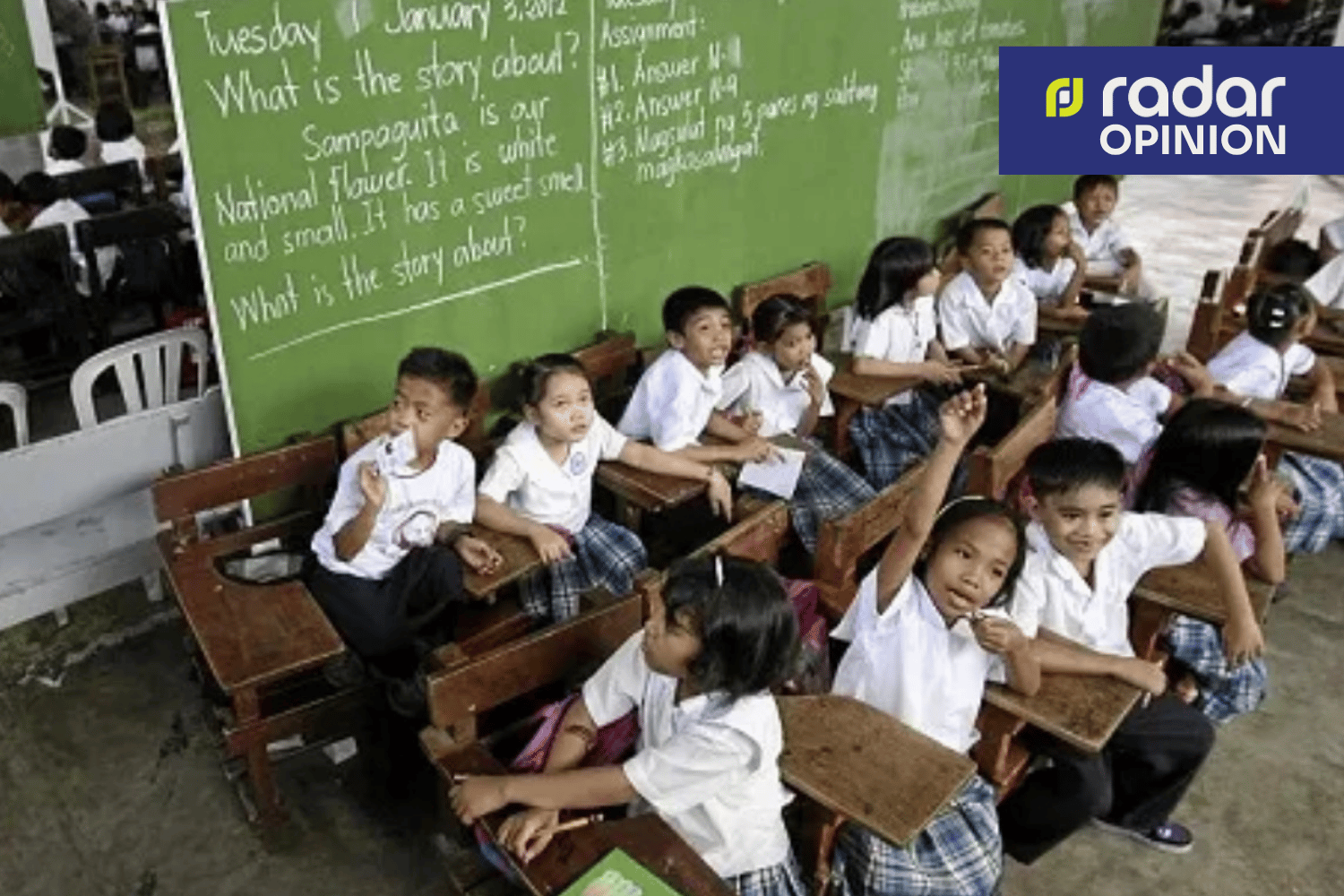
Millions of Filipino students return to school facing systemic challenges.
Tomorrow marks the official start of school year 2026-2027 for about 27 million Filipino students. We will open classrooms under a new trimester calendar approved by this administration. But the same systemic rot and structural failures that have crippled Philippine education for decades are hidden under the new coat of paint from recent Brigada Eskwela campaigns.
These are deep, generational crises formally targeted by the Second Congressional Commission on Education (EDCOM 2) in its newly ratified 10-year policy framework, “Turning Point: A Decade of Necessary Reforms (2026–2035).”
The reading comprehension and functional illiteracy crisis
Learning poverty is DepED’s most catastrophic problem. The new data collected prior to this school opening reveals a shocking truth: 87% of Grade 11 students are non-independent readers. They can read words phonetically but have near-zero comprehension of what they are reading.
We are a manufacturing plant for a generation of functionally illiterate citizens. To address this, EDCOM 2’s 10-year master plan rightly calls for the total abolition of “mass promotion”—the toxic bureaucratic practice of promoting failing students to protect school performance ratings—by phasing out the DepEd’s grade transmutation policy and requiring intensive recovery interventions such as the ARAL Program.
The bullying captial of the world stigma
Days before the school opening, EDCOM 2 and De La Salle University reminded the public that the Philippines remains the “bullying capital of the world” in PISA metrics. 65% of Grade 10 students are bullied multiple times a month, destroying retention and mental health.
The newly enforced Anti-Bullying Act Implementing Rules and Regulations (IRR) of the Department of Education is a welcome legal step for day one, but EDCOM 2 must audit schools strictly to make sure specialized formation officers handle these offenses structurally and not simply sweep them under administrative rugs.
Senior High School (SHS) curriculum misalignment
The broken promise of the senior high school curriculum continues to handicap our youth. K-12 was sold on the premise that Grade 12 graduates would be immediately employable. Instead, the curriculum remains rigidly academic, while public schools suffer from severe shortages in technical-vocational laboratories and National Certification (NC) assessments.
EDCOM 2’s blueprint explicitly demands a complete redesign of the track, favoring practical elective alignments and direct public-private partnerships to fill the immense equipment gap.
Defining the problem is the start
The agenda of EDCOM 2 is perfectly aligned with the present misery of DepEd. For the first time we have a data-driven roadmap to legally enforce structural change over the next decade.
In order to do that, we have to shed the performative politics of education as we know it, and hope whatever success this administration builds gets steamrolled to the next.
The measure of progress is not how many millions of children we can cram into already overcrowded classrooms tomorrow morning, but whether they actually learn anything before they leave.
READ: