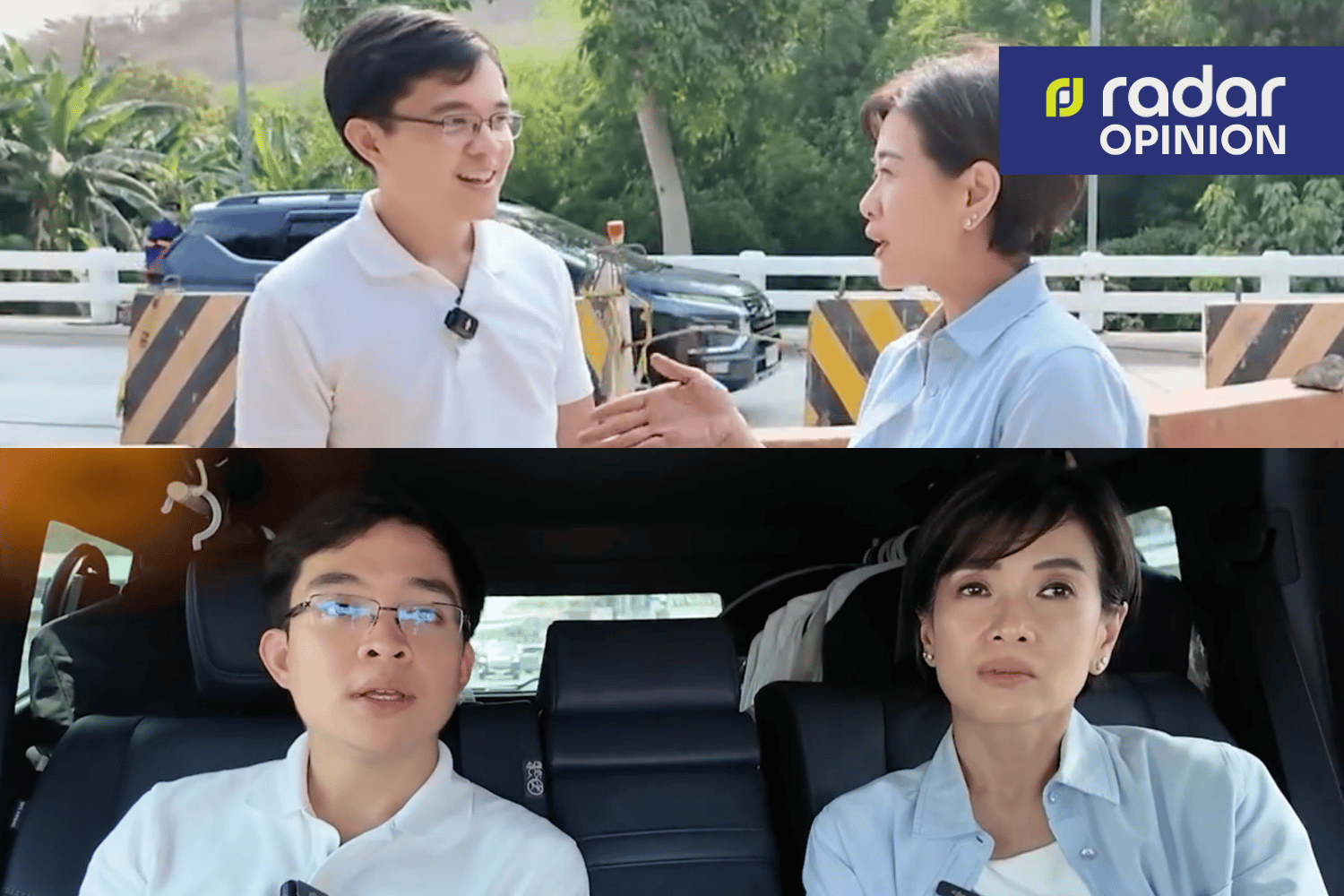
Sembrano-Leviste issue sparks debate on ethics, accountability, and the thin line between journalism and public relations.
The Bernadette Sembrano-Leandro Leviste controversy is not really about one interview. It is about one of journalism’s oldest and most uncomfortable questions: When does giving someone a platform become giving them protection?
The answer is not as simple as saying journalists should never interview controversial personalities. In fact, I believe they should.
Powerful people—especially politicians accused of wrongdoing or facing intense public scrutiny—must be interviewed. They should be questioned. They should be confronted. They should be given the opportunity to explain themselves because the public deserves to hear their side.
But there is one non-negotiable condition: the interview must serve the public, not the subject. Journalism has never been about making people comfortable. It exists to hold power accountable. That means asking the difficult questions that everyone else is afraid to ask. It means providing context instead of removing it. It means reminding audiences why a public official is controversial in the first place instead of pretending that controversy does not exist.
This is where the moral dilemma begins. Every journalist knows access is valuable. An exclusive interview is a coveted opportunity. Turning it down may mean losing an important story. Accepting it, however, creates another danger—that the interview becomes a carefully managed exercise in reputation repair.
The line separating journalism from public relations is surprisingly thin. Sometimes, it isn’t crossed through lies. It is crossed through omission.
An interview can be factually accurate yet still become propaganda if it strips away the very context that makes the audience understand what is really happening. A smiling conversation about hobbies, family, or personal routines may humanize a politician, but if that politician is under serious public scrutiny, those softer moments cannot replace the tougher questions.
Context is journalism. Without context, audiences are left with an incomplete picture. Worse, they may unknowingly consume what is effectively an image-building campaign wrapped in the credibility of a respected journalist.
This is why the criticism surrounding Sembrano’s deleted vlog deserves discussion—not because journalists should avoid interviewing controversial politicians, but because audiences naturally ask whether the interview challenged power or merely showcased it.
That distinction matters. History is filled with examples of journalists interviewing dictators, alleged criminals, corrupt officials, extremists, and controversial public figures. Those interviews are not unethical simply because the subjects are unpopular. They become valuable precisely because they expose contradictions, verify claims, and demand accountability.
The interview itself is never the problem. The absence of scrutiny is. Journalists owe fairness to their subjects, but fairness does not mean softness. Fairness means giving someone the opportunity to answer difficult questions—not replacing those questions with comfortable conversations that help rebuild public image.
In an era when politicians increasingly use podcasts, YouTube channels, influencers, and lifestyle content to bypass traditional newsrooms, journalists carry an even heavier responsibility. Their credibility is one of the few remaining currencies that still commands public trust.
That credibility should never become borrowed prestige for those seeking rehabilitation. This is not an argument against vlogs. Nor is it an argument against showing the human side of public figures. It is an argument for remembering that journalism is different.
The moment a journalist’s reputation becomes the reason audiences lower their skepticism, every editorial decision carries greater weight. Every omission becomes more significant. Every deleted video raises legitimate questions. And every appearance by a controversial figure must ultimately answer one question:
Who benefited more from this interview—the public or the politician?
That is the ethical test every journalist should be willing to face.
READ:

AI becomes newsroom staple in Philippine media, PIDS study shows
radar Business
June 16, 2026
When canceled public figures apologize, should we forgive them?
Matahari
June 29, 2026
Should primetime TV face same scrutiny as video games?
Julia Escarez
July 1, 2026