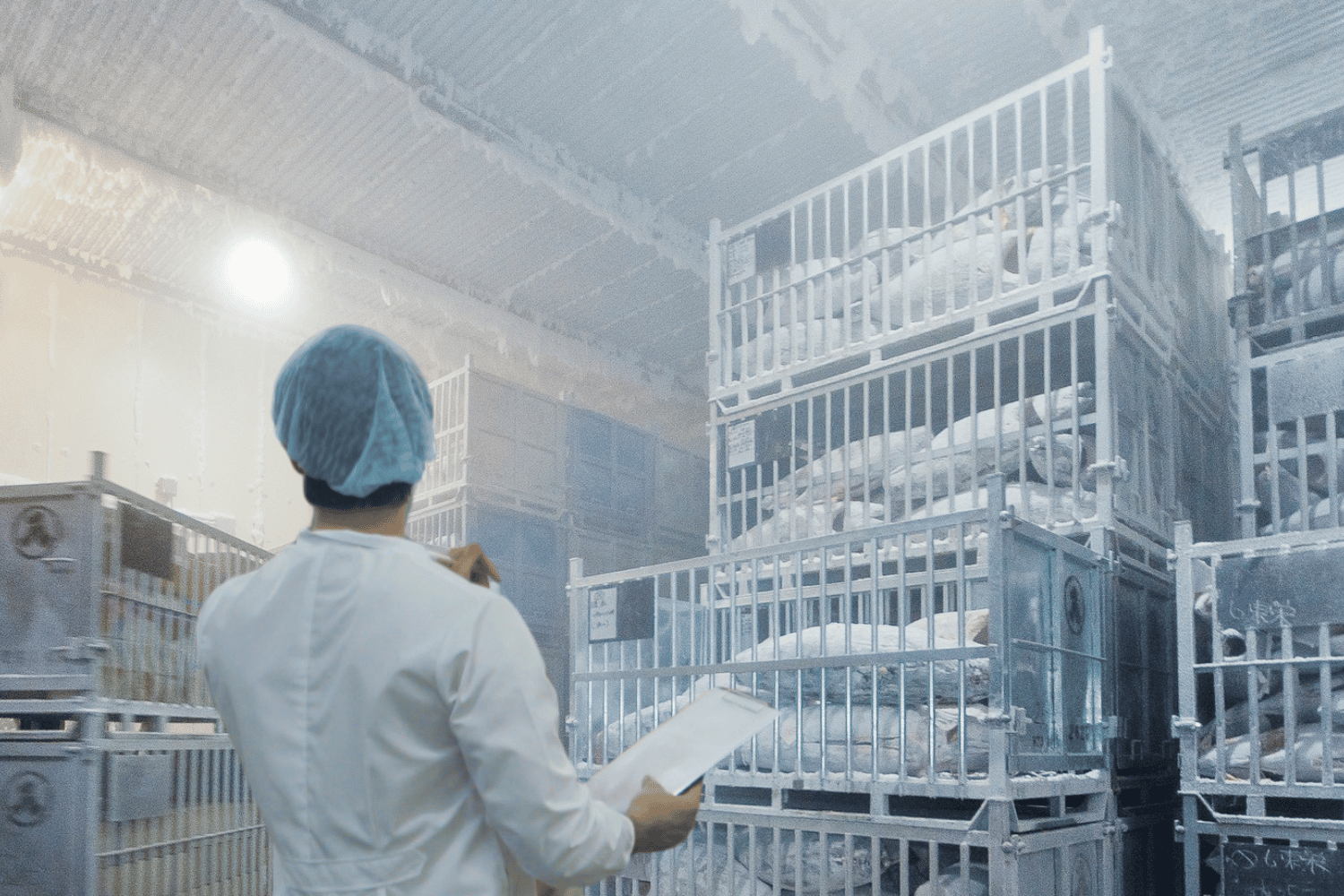
Industry players say the country needs more temperature-controlled facilities, but higher construction costs and specialized requirements continue to limit new supply.
The Philippines’ logistics sector may have found its next big growth opportunity in cold storage, but expanding the country’s temperature-controlled warehouse network is proving more complicated than simply building more facilities.
Industry players agree that demand is there. The challenge is making the business case work.
The need for additional cold storage has become more apparent as the country looks to reduce post-harvest losses, strengthen food security and improve the movement of agricultural products from farms to consumers. Yet despite growing demand, developers continue to face steep construction costs that make cold storage projects far more expensive than conventional warehouses.
According to FAST Logistics Group ColdChain Business Unit Head Marc Anthony Dizon, the Philippines currently has about 860,000 cold storage pallet positions, a standard industry measure referring to the number of storage spaces available for palletized goods inside a warehouse. He said the country needs around 1.4 million pallet positions to meet annual food consumption requirements.
But Dizon said increasing capacity alone should not be the industry’s only goal.
Instead, he said more cold storage facilities should be built closer to agricultural production areas rather than concentrated near major consumption markets such as Metro Manila.
Locating cold rooms and processing facilities near farms allows agricultural products to be sorted, cleaned and prepared before they are transported, reducing unnecessary weight, lowering logistics costs and making supply chains more efficient.
Dizon also advocated for shared cold chain facilities, where multiple producers can use the same warehouse and refrigerated transport infrastructure instead of investing in their own facilities. He said such an approach could make modern cold chain services more accessible to small and medium-sized agricultural enterprises while allowing operators to maximize facility utilization.
A difficult segment to develop
While the operational case for expanding cold storage appears straightforward, industry observers say the economics remain far more challenging.
During a recent market briefing, Lobien Realty Group said cold storage continues to be one of the warehouse sector’s biggest opportunities, but also one of its most difficult segments to develop.
Chief executive officer Sheila Lobien said demand for temperature-controlled facilities remains strong, but construction costs continue to discourage wider investment.
Unlike conventional warehouses, cold storage facilities require specialized refrigeration systems and other infrastructure that significantly increase development costs. As a result, many developers continue to build standard warehouse shells instead, leaving tenants to install cooling systems themselves.
Lobien noted that only a handful of developers are actively investing in purpose-built cold storage facilities despite growing demand from industries that rely on temperature-controlled logistics.
She also observed that the warehouse market is gradually moving beyond simply adding storage space toward developing facilities designed for specific operational needs, with cold storage emerging as one of the clearest examples.
While Metro Manila remains a preferred location because of its proximity to consumers, Lobien said limited land availability and rising property costs are pushing new warehouse projects toward Cavite, Laguna, Bulacan and Pampanga. She added that continued investments in expressways, airports and other transport infrastructure are making these areas more attractive for logistics companies looking to expand.
Larger investments needed
The insights from FAST and Lobien highlight different sides of the same market. Logistics operators see a growing need for more temperature-controlled facilities, particularly near food production areas, while property consultants point to the high cost of developing them.
That leaves the industry facing a familiar challenge. Demand continues to grow, but adding new supply is not as simple as building another warehouse. Cold storage requires larger investments, specialized equipment and careful site selection, all of which can slow expansion even as businesses see opportunities in the sector.
Even so, interest in the segment continues to build. With warehouse developers increasingly looking beyond traditional storage facilities and supply chains requiring more temperature-controlled logistics, cold storage is shaping up to be one of the areas to watch in the country’s industrial property market.
READ:
DA opens national seed reserve to speed up farm recovery after disasters
John Lloyd Aleta
July 4, 2026
New TESDA meat-processing training aims to grow skilled meat industry workforce
John Lloyd Aleta
July 8, 2026
New low-cost cold storage tech aims to cut farm produce losses
John Lloyd Aleta
May 5, 2026