

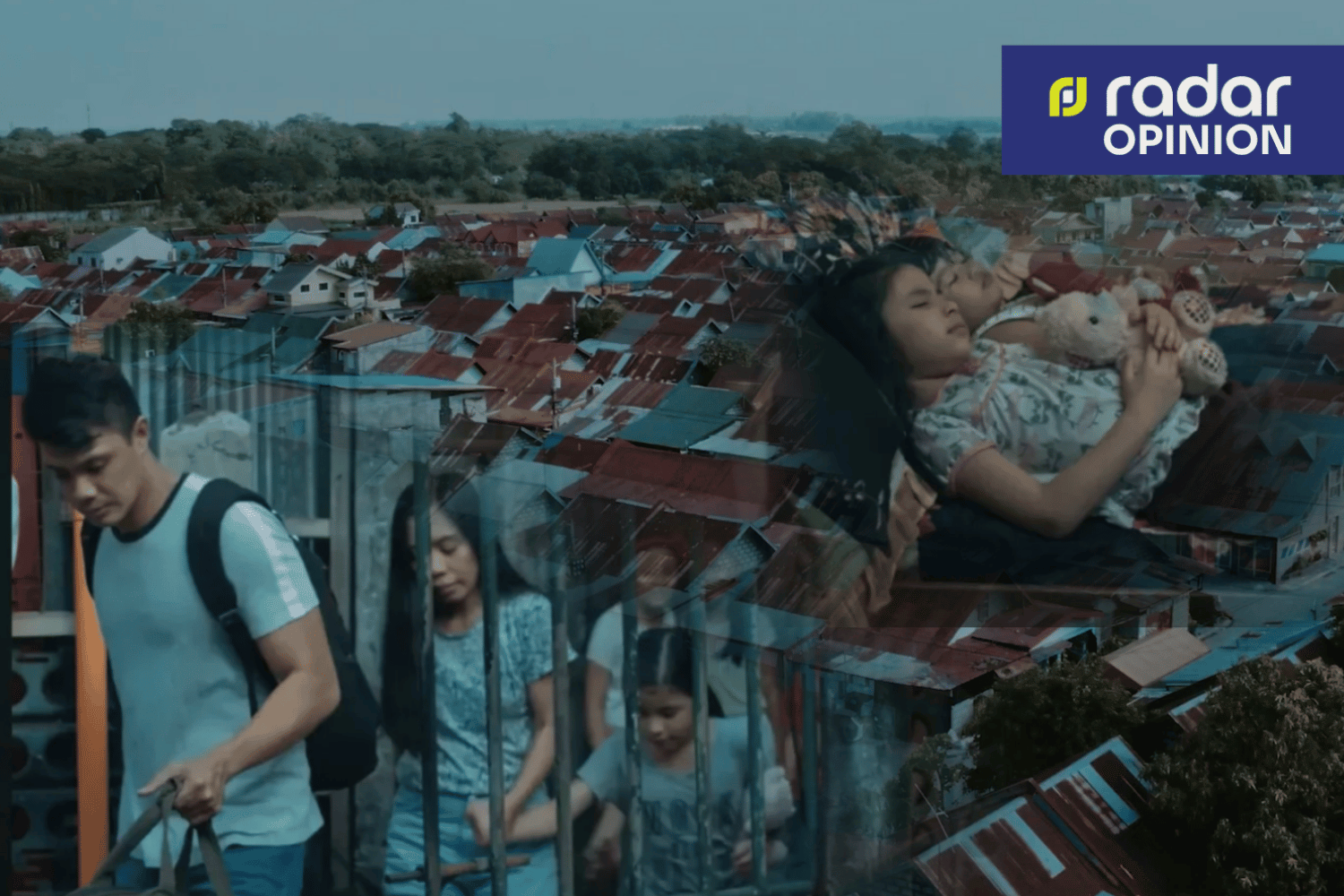
Housing is discussed as an economic issue and dignity issue.
Millions of Filipino children don’t remember growing up in one house. They remember growing up in many—a rented apartment today, a smaller room the following year, a relative’s sofa or spare room after the landlord asked the family to leave. Furniture tied to the roof of a tricycle. Clothes packed into plastic boxes. Parents whispering late at night about where everyone would go next because the rent had become impossible to pay.
Then comes the feared knock on the door.
The landlord isn’t there to visit. He’s there to collect. The children pretend not to listen while their parents ask for a few more days. If they’re lucky, they get another week. If not, it’s time to pack again.
This is what the housing crisis looks like for millions of Filipinos. It isn’t just about not having a title or owning a house. It’s about living with the constant fear that someone else decides whether your family gets to stay.
According to the Philippine Statistics Authority’s 2022 Annual Poverty Indicators Survey, 37.9% of Filipino families do not own the house and lot they occupy. That’s almost four out of every ten families raising children in homes they may never truly call their own.
The Philippines continues to face a massive housing shortage, with around 6.5 million units needed, according to the UN-Habitat Philippines Country Report 2023.
The gap remains wide as demand continues to outpace supply. In February, Dr. Winston Padojinog of the University of Asia and the Pacific and its Center for Research and Communication estimated that the country needed an average of 478,000 new homes each year from 2018 to 2024. However, private developers produced only around 128,000 housing units annually during that same timeframe.
Instead of closing the gap, we’re watching it grow wider.
Those numbers explain the shortage, but they don’t capture the humiliation of asking a landlord for more time to pay. They don’t show children changing schools because another move has become inevitable. They don’t tell the story of parents who endure insults or unreasonable treatment because arguing could mean losing the only roof they can afford.
Housing is usually discussed as an economic issue. It is also a dignity issue.
A family that owns a home gradually builds savings and, eventually, wealth. That home becomes collateral for a small business, helps pay for a child’s education, and eventually becomes something to pass on. A family that rents spends 30% to 50% of its monthly income just to stay where it is. Month after month, that money disappears into someone else’s asset while the dream of owning a home slips farther away.
That is why the housing crisis doesn’t just make people poorer. It makes it harder for them—and eventually their children—to escape poverty. One generation inherits land. The next inherits another lease.
Successive governments have promised to solve the problem. The 4PH Program was launched with ambitious targets, while the Pag-IBIG Fund and other housing programs continue to provide financing for qualified beneficiaries. But the housing backlog remains in the millions. Many of the poorest workers still cannot qualify because they lack formal employment records, while some housing projects are built so far from workplaces that families are forced to choose between affordable shelter and earning a living.
Housing cannot remain a promise repeated every election cycle while millions continue to wait.
A home is more than concrete and steel. It is where children grow roots, where families feel secure, and where parents believe that years of hard work have finally become something permanent. When that dream remains out of reach, the damage isn’t measured only by the number of houses the country fails to build.
It is measured by the opportunities families never get, the wealth they never accumulate, and the quiet indignities they endure simply because the place they call home has never really been theirs.
That is why the housing crisis is not just about missing houses. It is about a society where too many hardworking Filipinos still have to earn the right to feel secure where they live.
READ:

OPINION: The Filipino masses are naturally suspicious of virtue signaling
Matahari
July 20, 2026
OPINION: The Philippines has a healthcare access problem—and Filipinos are paying with their lives
John Lloyd Aleta
July 23, 2026
OPINION: Meralco can lower electricity bills by managing its greed — not just growing its profits
Top Dagohoy
July 13, 2026
Tags: affordable homesAnnual Poverty Indicators SurveyCenter for Research and CommunicationDepartment of Human Settlements and Urban DevelopmentHome Development Mutual Fundhousing crisisPhilippine Statistics AuthoritypovertyProgramang Pambansang Pabahay Para sa PilipinopropertyUnited Nations Human Settlements ProgrammeUniversity of Asia and the PacificWinston Padojinog


