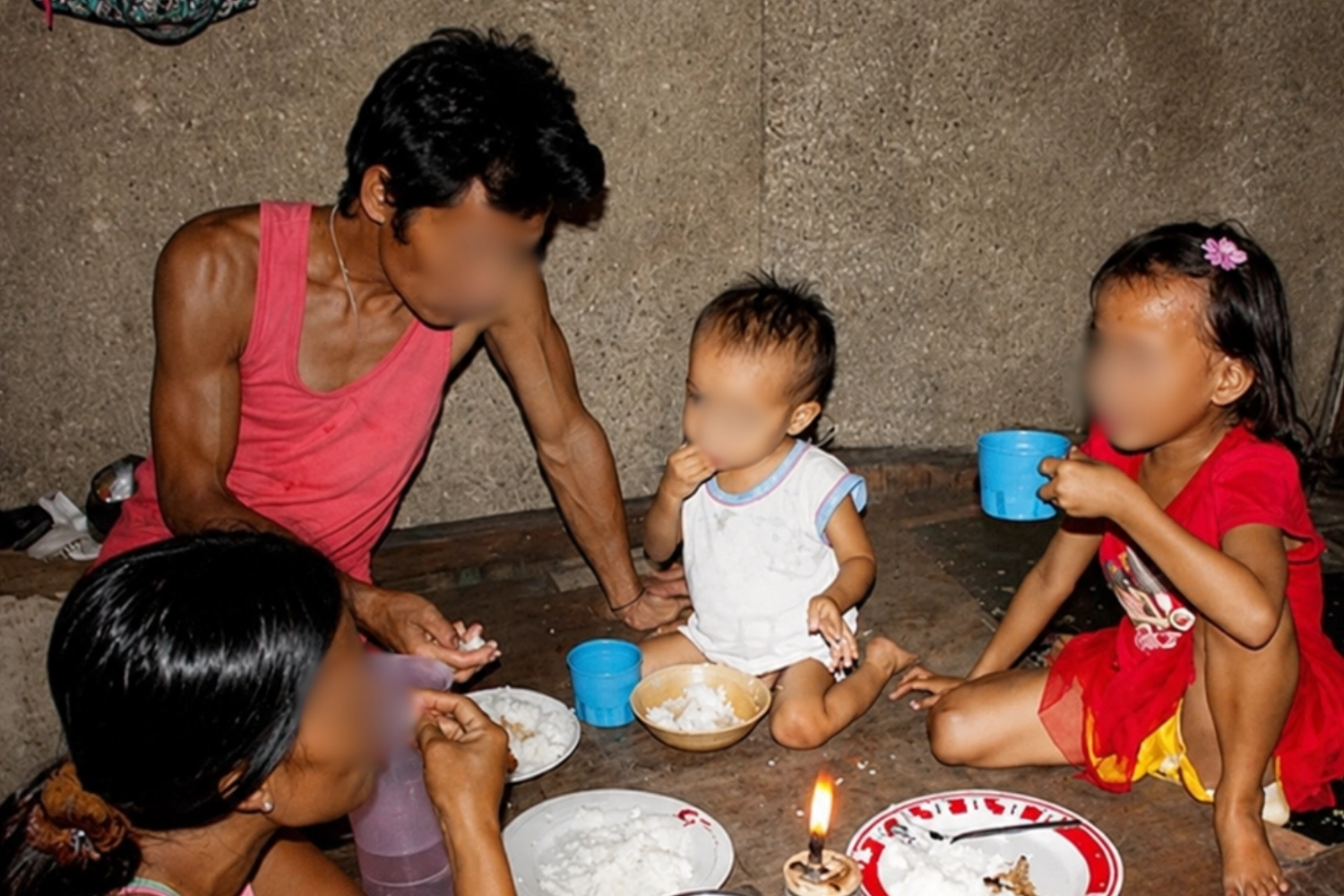
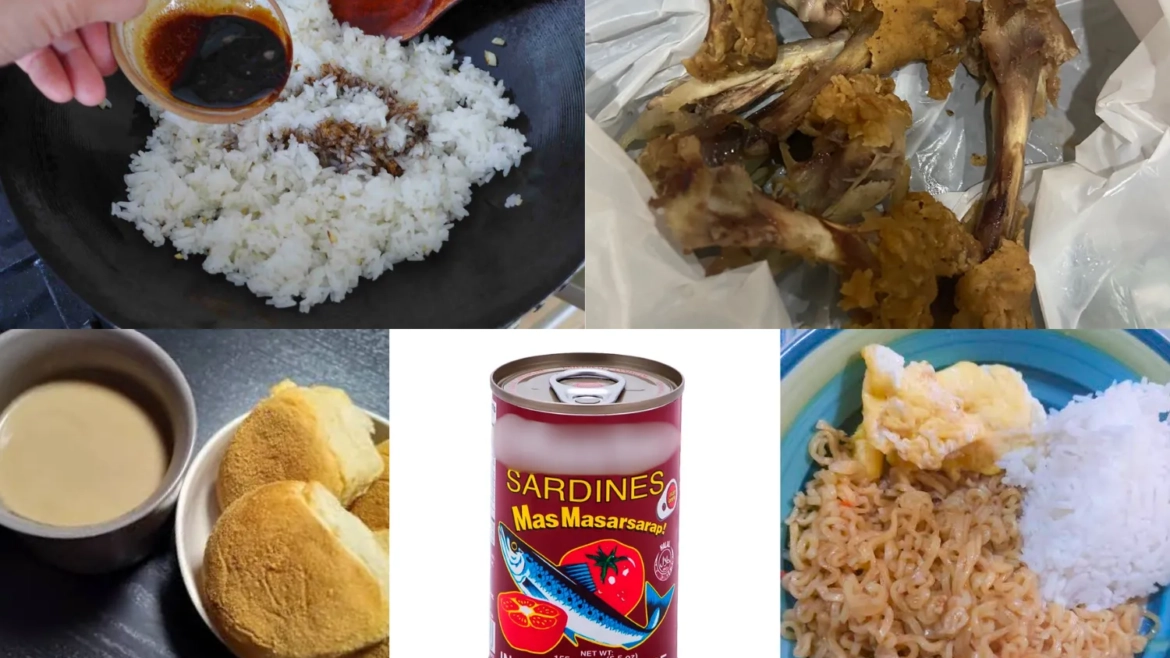
Imagine having just about ₱100 a day to cover almusal, tanghalian, and hapunan.
That is the amount each member of a five-person household would have based on the Philippine Statistics Authority’s 2025 poverty threshold, according to its latest Family Income and Expenditure Survey, released last Aug. 26.
The PSA estimates that a family of five needs at least ₱14,634 a month to meet its basic food requirements.
Divided by 30 days, that amounts to ₱487.80 for the entire household daily. Split among five members, each person gets roughly ₱97.56 a day.
But Filipinos do not eat just almusal, tanghalian, and hapunan. If the daily food budget were to include meryenda and midnight snack, it would amount to roughly ₱19.51 per meal.
This is not a prescribed daily budget from the PSA. Rather, the poverty threshold is a statistical benchmark used to determine whether a household has enough income to meet its minimum basic needs.
The previous FIES, covering 2023, placed the monthly food threshold for a family of five at ₱9,581, or roughly ₱64 per person daily.
Still a bare minimum
Despite the increase, the figures do not necessarily suggest comfortable living.
The poverty threshold covers both food and non-food needs. Its food component is based on bundles developed with the help of nutritionists from the Food and Nutrition Research Institute. These account for nutritional requirements, locally available food, and the least-cost options in each area.
The methodology also assumes that food is prepared at home. This means the threshold does not necessarily reflect the actual cost of buying meals outside.
Even families that cook at home have to buy ingredients in quantities that may not match the exact portions used in the statistical food bundle. They also shoulder the costs of cooking and other household necessities.
For workers and students who rely on affordable eateries, even a basic meal can eat into a substantial part of their daily budget.
But beyond the numbers is a bigger concern: when the bare minimum becomes the reference point, poverty risks being treated as something people should simply learn to live within.
For lower-income families, the conversation can quickly shift from whether they can afford the food and necessities they need and want to how little they should be expected to spend. It leaves little room for choice, variety, or even the simple pleasure of enjoying a meal without having to count every peso.
PSA has acknowledged food threshold’s limit
The PSA has previously faced criticism over how little its food threshold allows for daily meals.
In August 2024, then National Statistician Claire Dennis Mapa acknowledged that the roughly ₱64 daily food threshold per person in 2023 was insufficient. He, however, explained that it was based on a scientifically developed food bundle and a least-cost approach.
Other critics have called on the agency to review its methodology and sample menu to make its estimates more reflective of changing household expenditures, incomes, and inflation.
The PSA’s 2023 figures showed that approximately 4.84 million Filipinos, or 4.3% of the population, lived below the food threshold and did not have sufficient income to meet their basic food needs.
In 2025, the Department of Trade and Industry also came under fire for its ₱500 Noche Buena estimate.
Filipinos questioned whether a holiday spread should be kept to the bare minimum—and whether being able to prepare something more elaborate than usual is already being treated as a sign of living comfortably.
The minimum should be a measure of poverty, not what Filipinos are expected to settle for.