Singapore’s strategy has helped reduce flood-prone areas while turning rainwater into one of its key sources of drinking water.
Millions of Filipinos deal with flooded roads, damaged homes, and disrupted livelihoods every rainy season. But Singapore water management experts say much of that rain could instead become a valuable resource if the country rethinks how it manages stormwater.
Speaking at the Stormwater Summit 2026 in Makati, organized by Approach Consultancy Inc. and Archipelago Media, officials and engineers from Singapore urged the Philippines to move beyond simply draining floodwater as quickly as possible and instead capture, store, and reuse rainfall.
Among them was Ryan Yuen, managing director of PUB Consultants Pte. Ltd., the consultancy arm of Singapore’s national water agency, who shared how the city-state has adopted an integrated approach to managing stormwater, wastewater, and coastal protection.
Yuen said every drop of rain should be viewed as a potential water supply. That strategy has helped Singapore reduce flood-prone areas while turning rainwater into one of its key sources of drinking water through collection, treatment, and reuse.
The recommendation comes as stronger typhoons and heavier monsoon rains continue to expose the limits of relying primarily on drainage systems, pumping stations, and flood-control infrastructure.
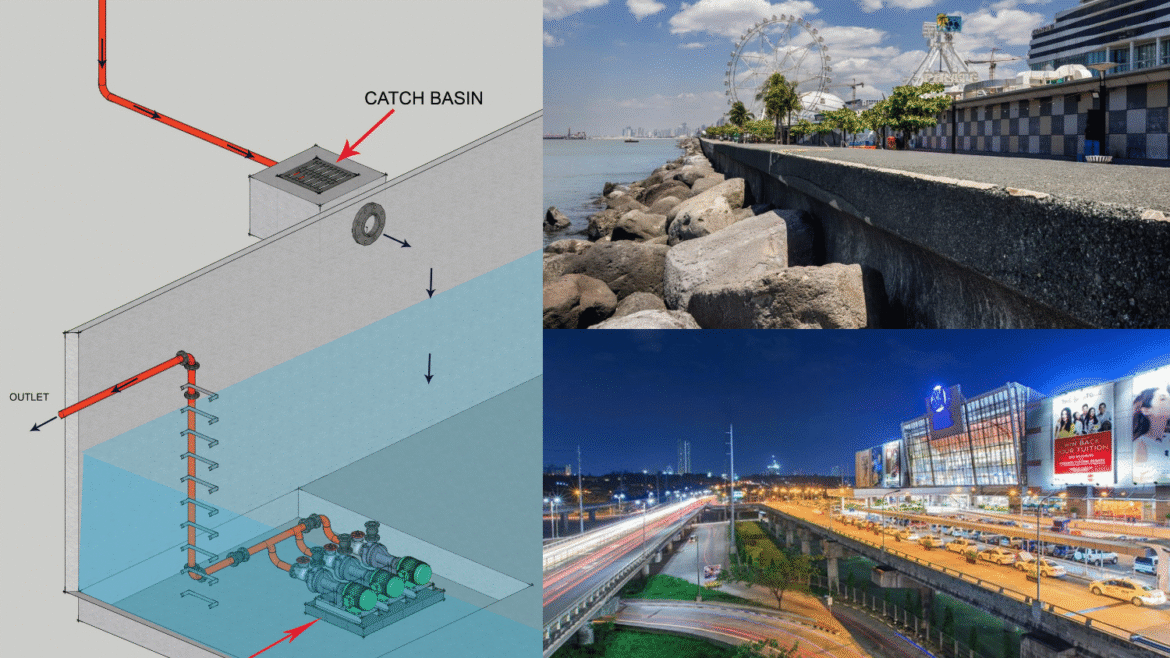
The Department of Public Works and Highways (DPWH) said the government is beginning to adopt a broader strategy by complementing flood control projects with detention basins, retention ponds, and stormwater storage facilities that can temporarily hold excess rainwater before it is safely released or put to productive use.
The agency has removed around 1.7 million cubic meters of silt and waste through its Oplan Kontra Baha program while expanding drainage and pumping capacity.
However, DPWH Undersecretary Charles Calima said lasting solutions will require stronger coordination among government agencies, local governments, scientists, communities, and the private sector.
Treating rainwater as a resource could eventually mean fewer flooded streets, more reliable water supplies during dry months, and better-prepared communities for extreme weather.
READ: