Streaming platform tightens recommendations as mass uploads threaten music discovery.
Spotify has removed more than 50 million tracks flagged as spam or low-quality AI-generated content from its recommendations this year, as the streaming platform tries to keep automated music uploads from crowding out what listeners want to hear.
In an October 20 statement, the company said it reviewed tracks that users repeatedly skipped, ignored, or flagged as unwanted, identifying a pattern of content it described as “slop and spam.”
Spotify has since updated its recommendation system, reporting a marked drop in listener complaints about such tracks appearing in suggested music.
It has not disclosed whether any Filipino songs or tracks by local artists were included in the removals. The company’s announcement did not identify specific artists, tracks, or countries affected by the changes.
The platform considers several signals when identifying suspicious content, including listener engagement, user feedback, upload patterns, metadata, and information from third-party AI detection tools.
It also monitors tactics such as mass uploads, duplicate tracks, manipulated search rankings, spam-heavy playlist networks, and unusually short songs that may be designed to exploit the platform.
The crackdown comes as generative AI makes it easier to produce music at scale, raising concerns that automated uploads could overwhelm music catalogs and make it harder for listeners to discover artists.
Spotify acknowledged that AI detection tools have limitations and warned that identifying AI-generated content will become more difficult as the technology develops.
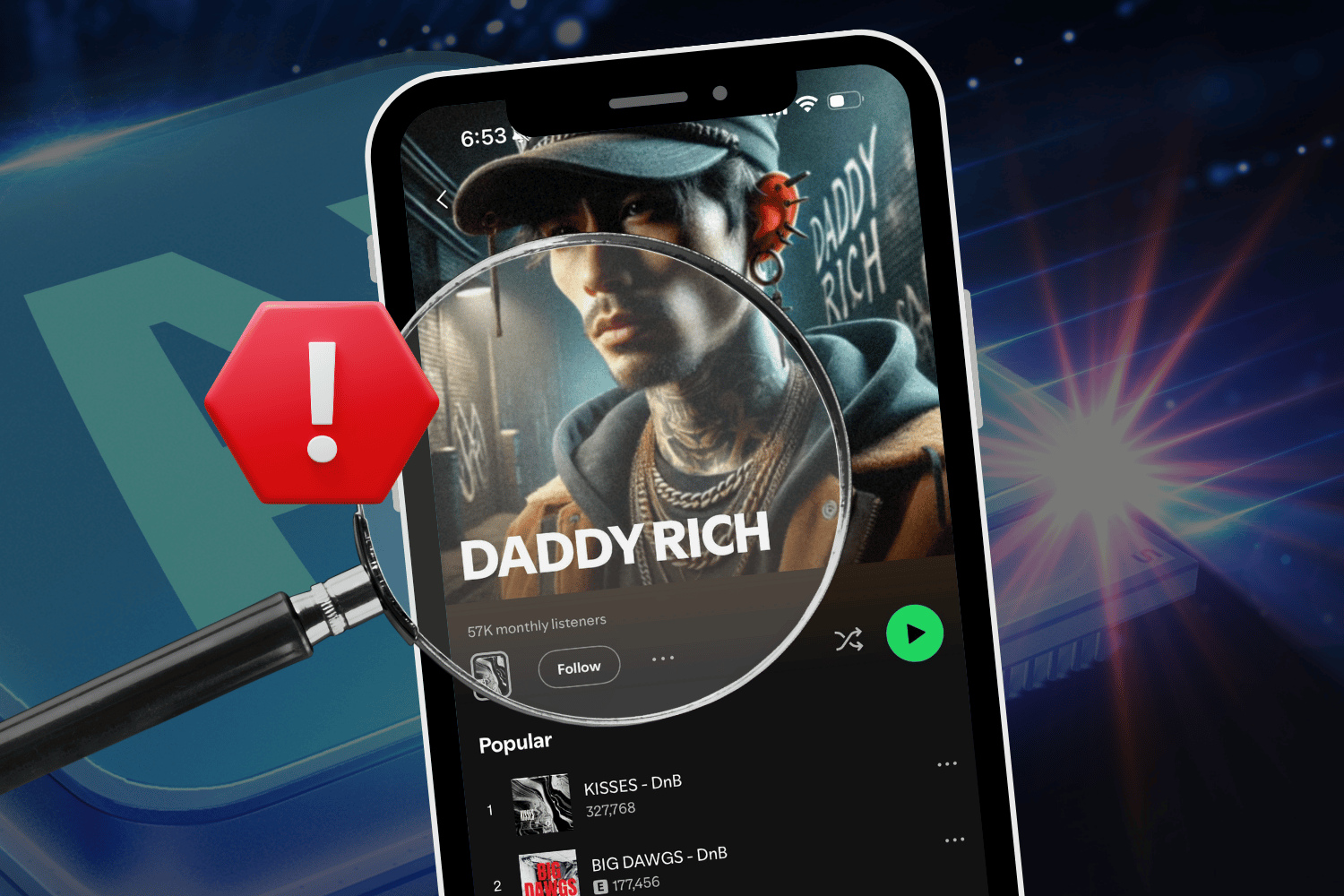
The company has also introduced AI Credits, which allow artists to disclose how AI was used in a track, and AI Persona badges for profiles believed to represent AI-generated identities.
Under Spotify’s current policy, tracks from AI Personas are excluded from editorial and algorithmic recommendations by default unless listeners choose to follow those artists.
The removal does not mean Spotify has banned AI-generated music altogether. Instead, its measures focus on spam, misleading content, and how tracks enter recommendations, while disclosure tools aim to give listeners more information about how music is made.
READ: