Filipino street food owes its unique nicknames to the humor and resourcefulness of local vendors.
You are standing beside a smoky barbecue cart after sunset, waiting for your order. The vendor calls out, “Isang Adidas! Dalawang Betamax! May Walkman pa!” For a moment, it sounds less like a street food stall and more like someone reading a shopping list from an electronics store.
Why would grilled chicken feet be called Adidas? What does pig’s ear have to do with a Walkman? And how did coagulated blood become Betamax?
Behind these names is one of the most ingenious examples of Filipino creativity—one born not in advertising agencies, but on sidewalks, during a time when resourcefulness was a necessity.
The colorful naming tradition of Filipino street food is widely believed to have flourished during the economic challenges of the 1970s and 1980s. As Doreen Fernandez noted in “Balut to Barbecue: Philippine Streetfood” from the Budhi journal in 2001, vendors were selling inexpensive cuts that many people overlooked—chicken feet, pig’s ears, blood, intestines, and heads—meticulously cleaned and looped on this skewers.
Instead of calling them by their plain—and sometimes unappetizing—names, Fernandez noted that sellers and even buyers gave them amusing nicknames inspired by pop culture.
Adidas
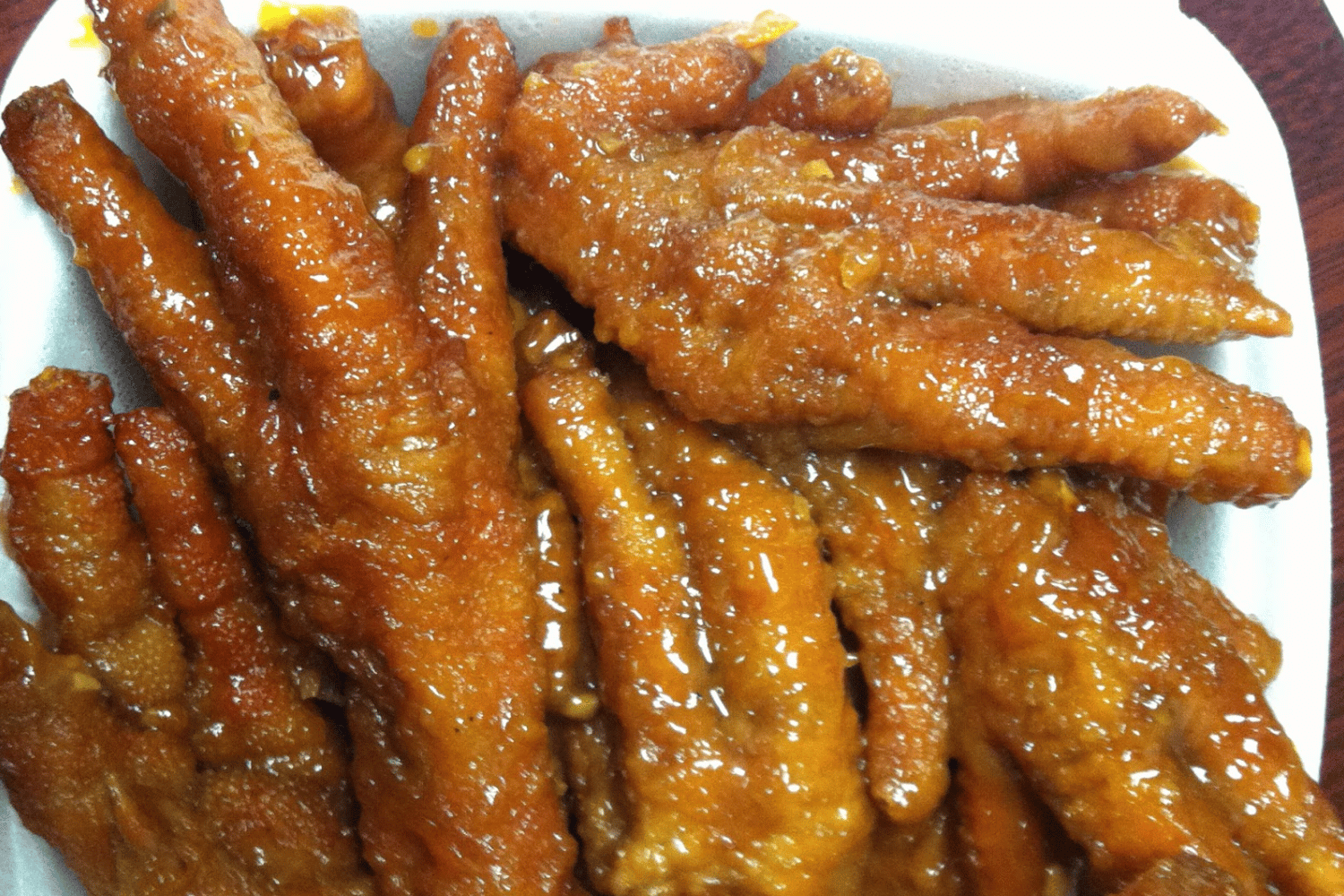
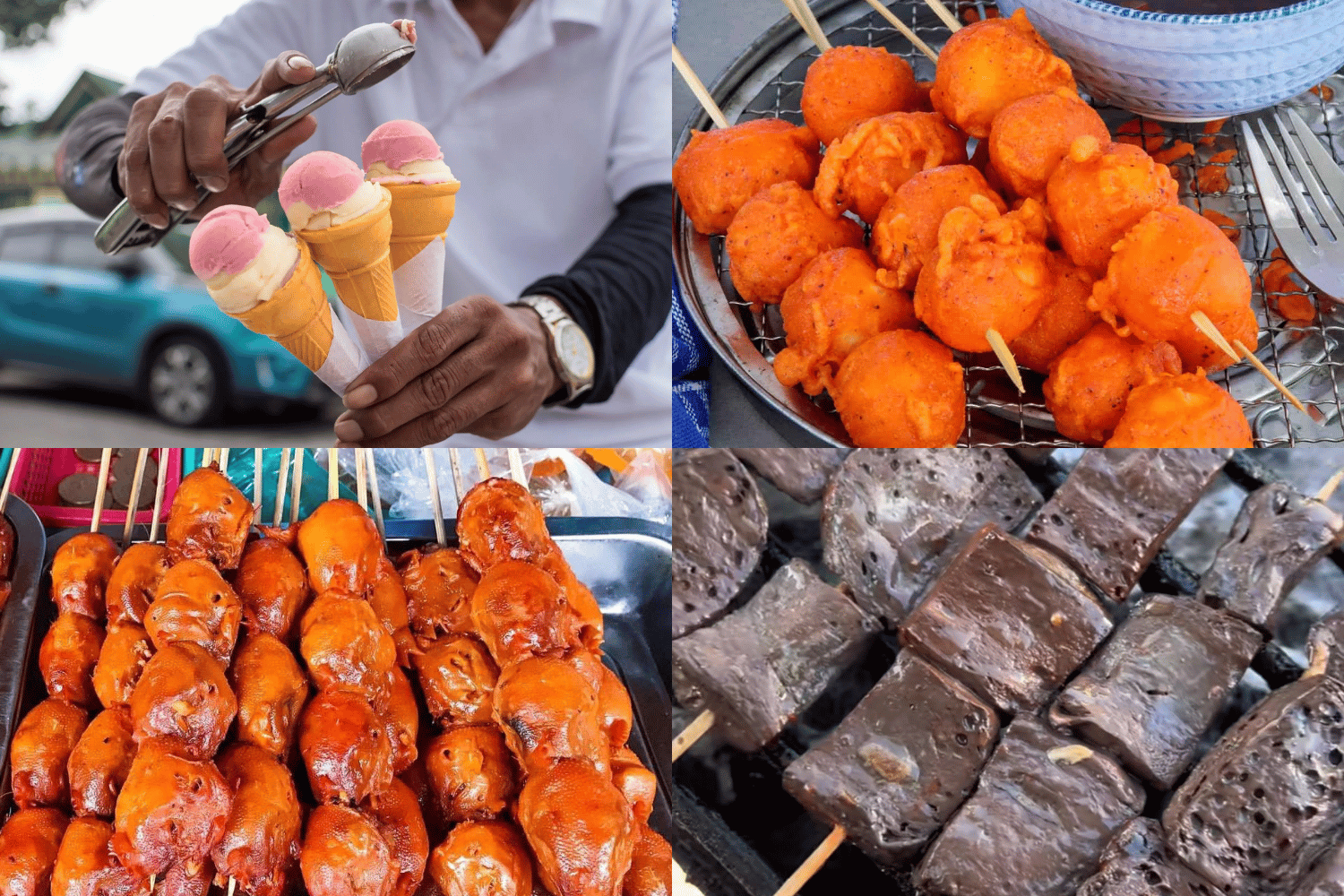
Chicken feet became Adidas, a playful nod to the famous sportswear brand. With their long toes and claws, they reminded vendors of athletic shoes. The feet are cleaned, marinated in soy sauce, calamansi, garlic, and brown sugar, then skewered and grilled over charcoal until caramelized and chewy. The clever nickname helped turn what many considered an undesirable cut into one of the country’s best-loved barbecue staples.
Betamax
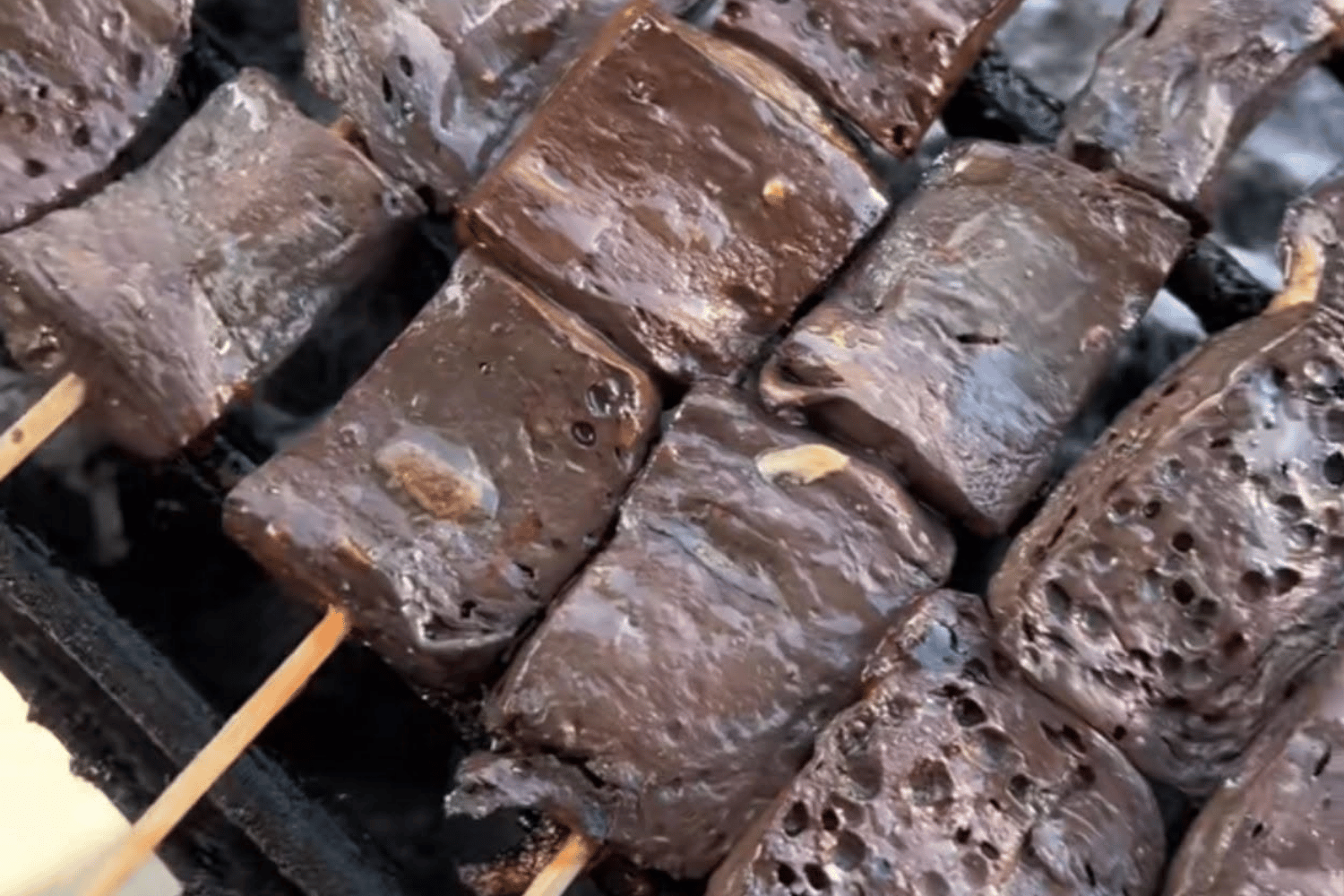
Coagulated chicken or pork blood is steamed until firm, sliced into neat rectangles, then grilled after marinating. Its shape closely resembled the Betamax videotapes that were popular decades ago, inspiring vendors to borrow the name. Today, Betamax remains a favorite among adventurous eaters, especially when dipped generously in spicy vinegar.
Walkman
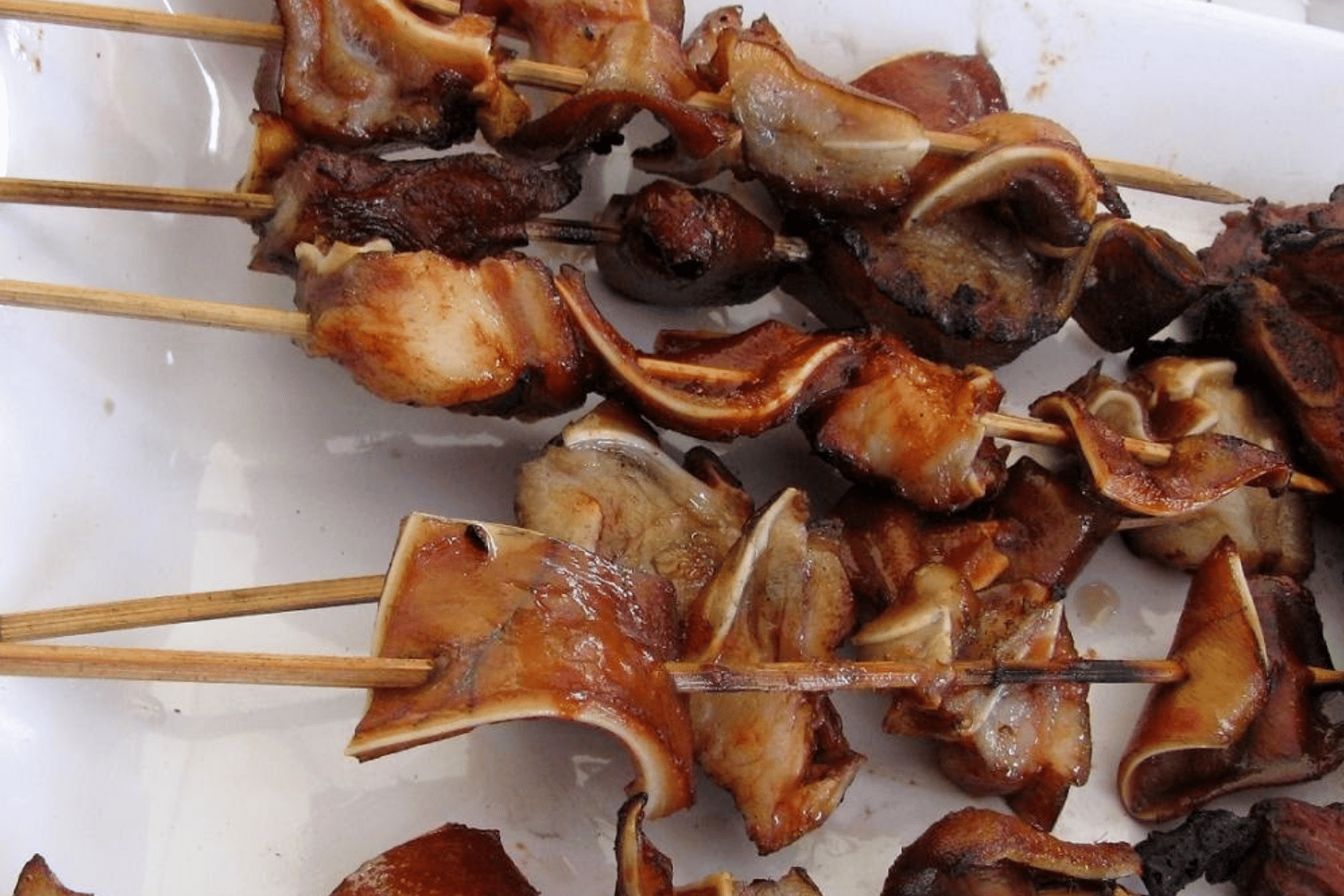
Pig’s ears earned the nickname Walkman, another reference to a popular gadget of the era. After being boiled until tender, the ears are sliced, marinated, and grilled. The smoky exterior and crunchy cartilage make Walkman one of the most distinctive textures found in Filipino street food.
Helmet
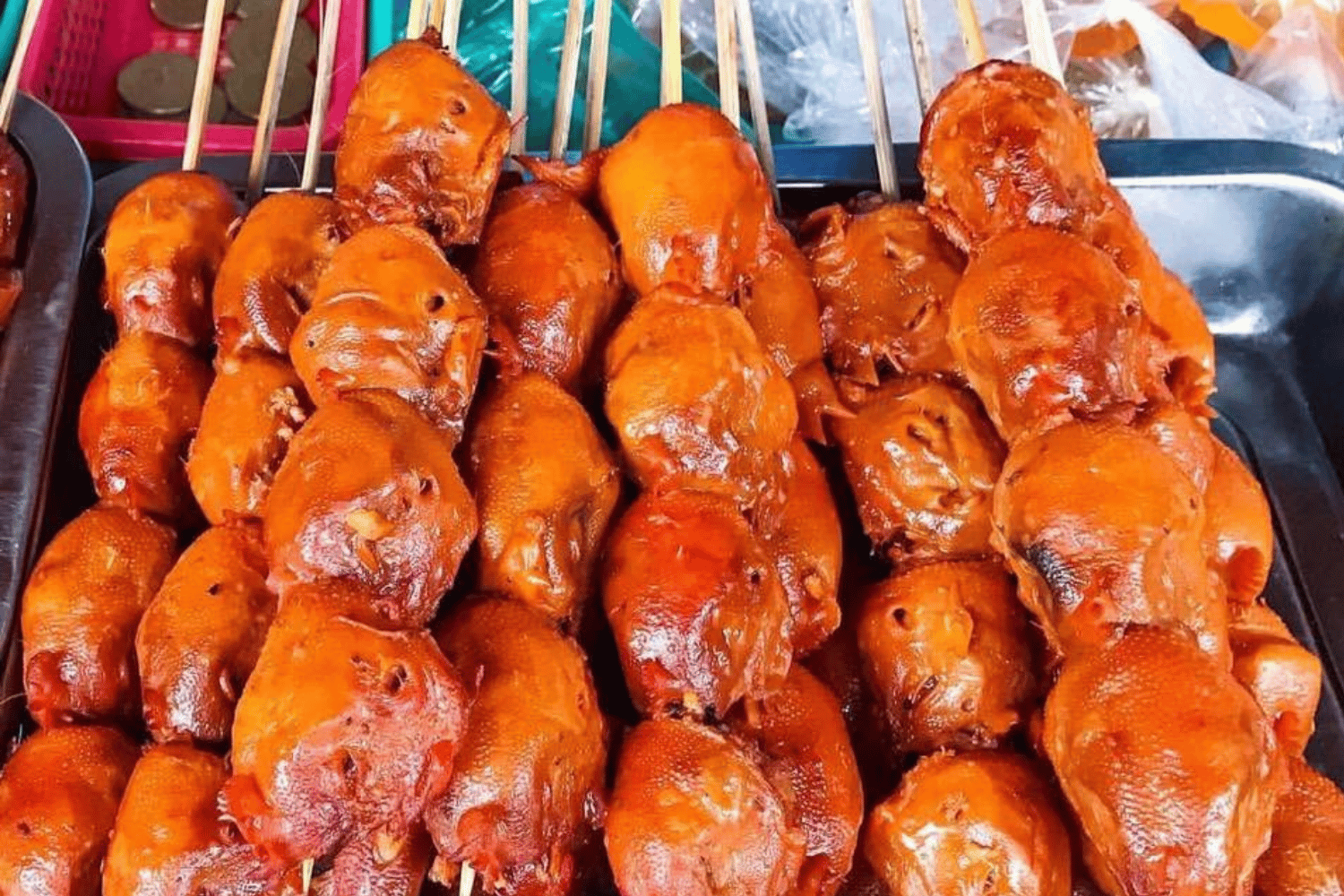
Among the easiest nicknames to understand is Helmet. The grilled chicken head resembles a protective helmet, making the comparison almost automatic. After marinating, the entire head is grilled until the skin becomes crisp. Many enthusiasts even crack open the skull to enjoy the creamy brain inside.
IUD
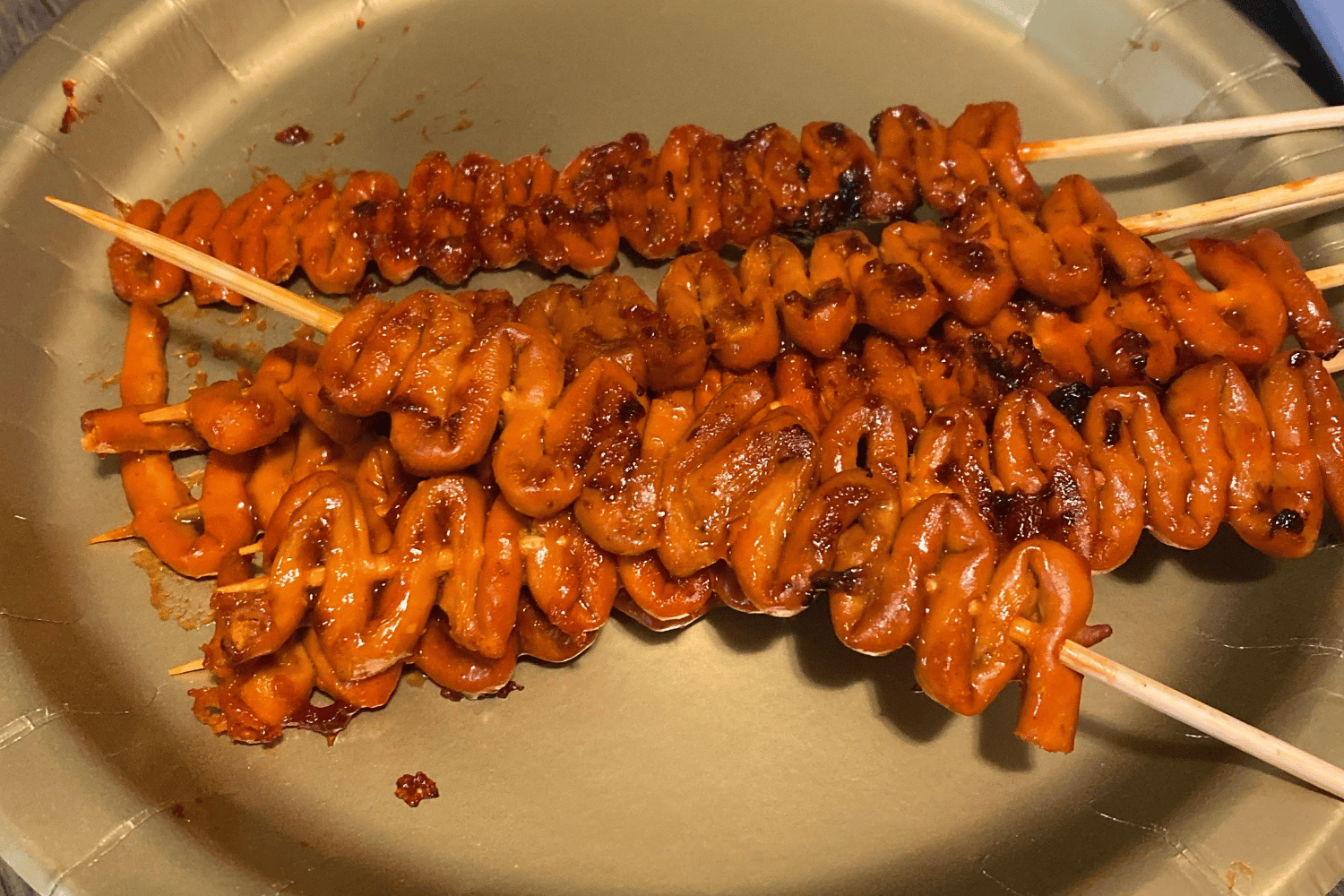
Chicken intestines picked up the nickname IUD, a tongue-in-cheek reference to the intrauterine device, inspired by their long, coiled shape when skewered. Over time, however, the name faded into the more familiar isaw.
Tokneneng & kwek-kwek:
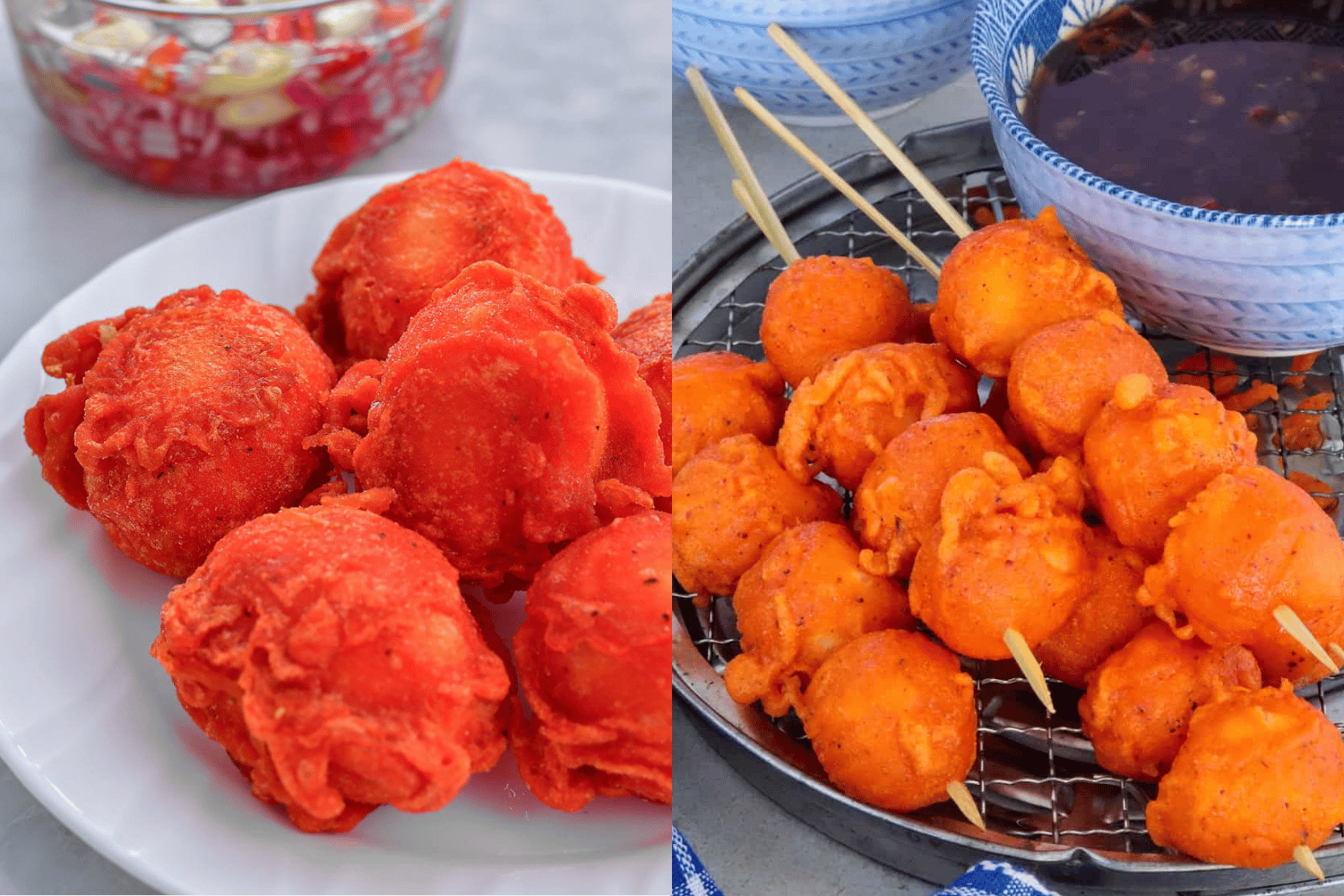
Not every famous street food name came from gadgets.
The larger battered chicken or duck egg became Tokneneng, a name popularly believed to have originated from the 1978 comic series “Batute,” whose lead character spoke a fictional language and called eggs “tokneneng.” The smaller quail egg version became Kwek-Kwek, named after the playful chirping sound of small birds. Both have since become staples of every Filipino street food cart.
PAL
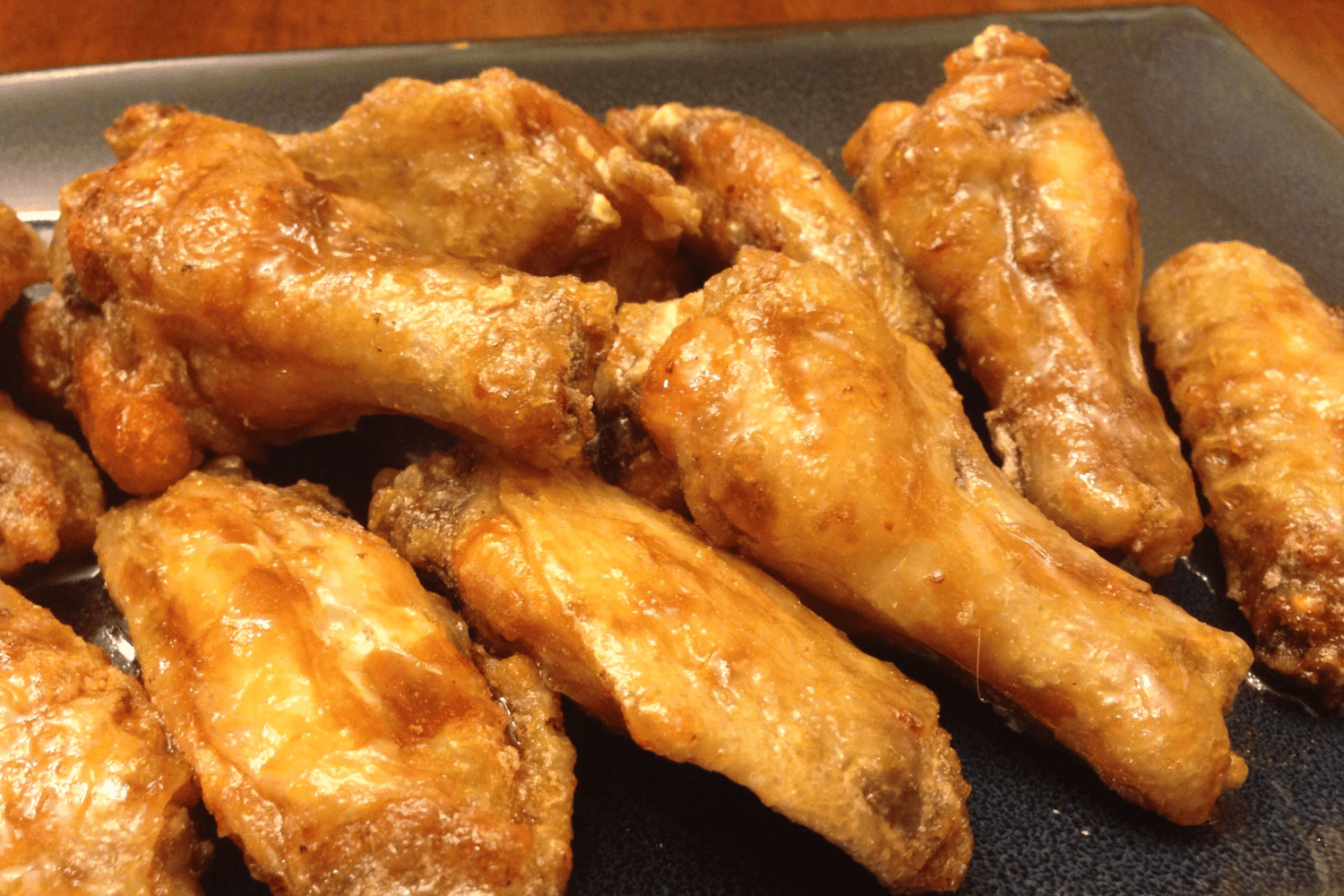
Chicken wings acquired the nickname PAL, after Philippine Airlines. The joke was simple but effective: wings are wings, whether on a chicken or an airplane. Vendors would teasingly ask customers if they wanted “PAL,” turning an ordinary barbecue item into a memorable punchline.
Marimar & Thalia
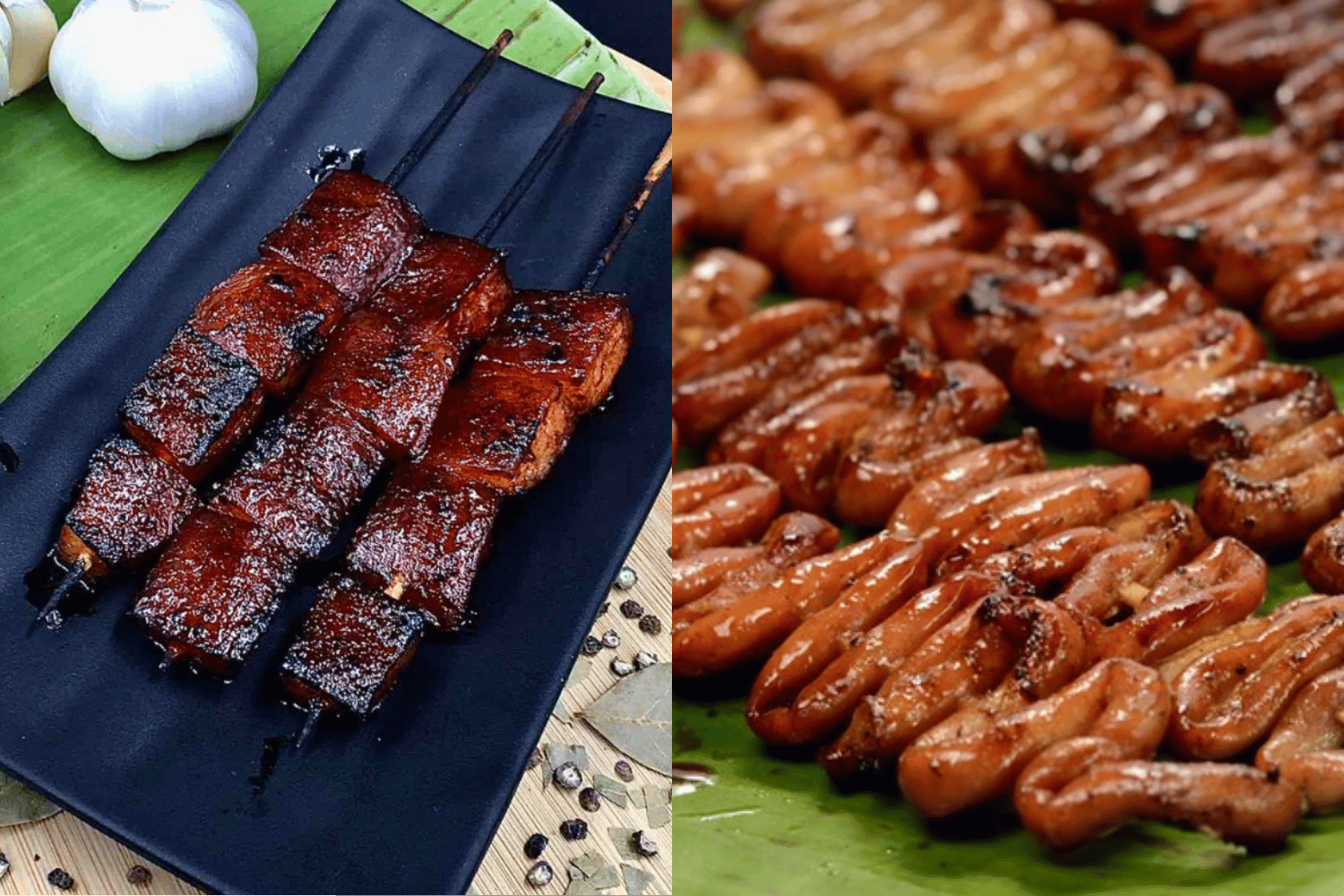
During the height of the 1990s Mexican telenovela craze, actress Thalía became a household name through “Marimar.” That’s when vendors reportedly began calling premium grilled pork skin and carefully cleaned braided intestines Marimar or Thalia, suggesting they were beautiful, desirable, and of higher quality—just like the television icon who inspired the names.
Dirty ice cream
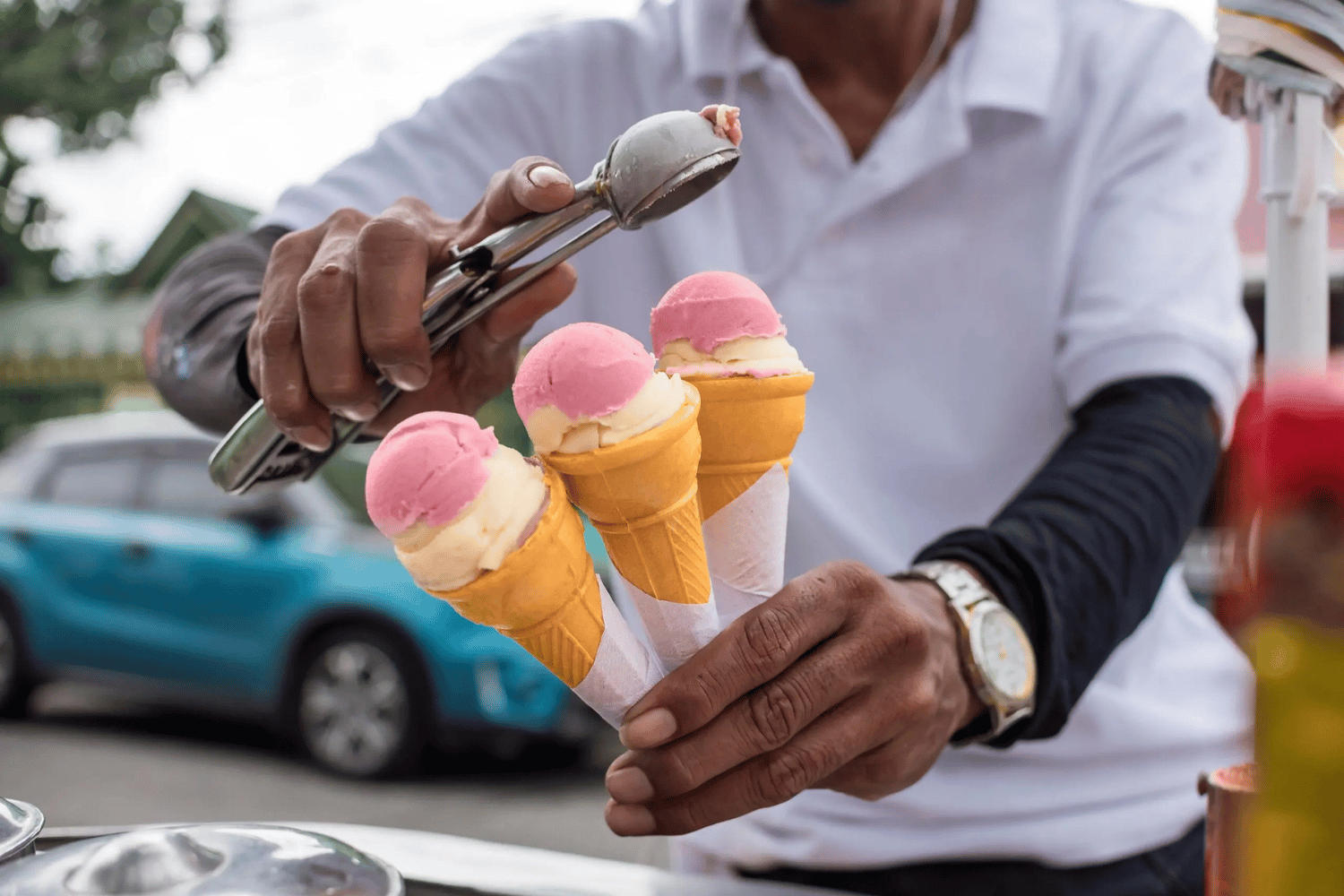
Perhaps the most ironic nickname belongs to Dirty Ice Cream.
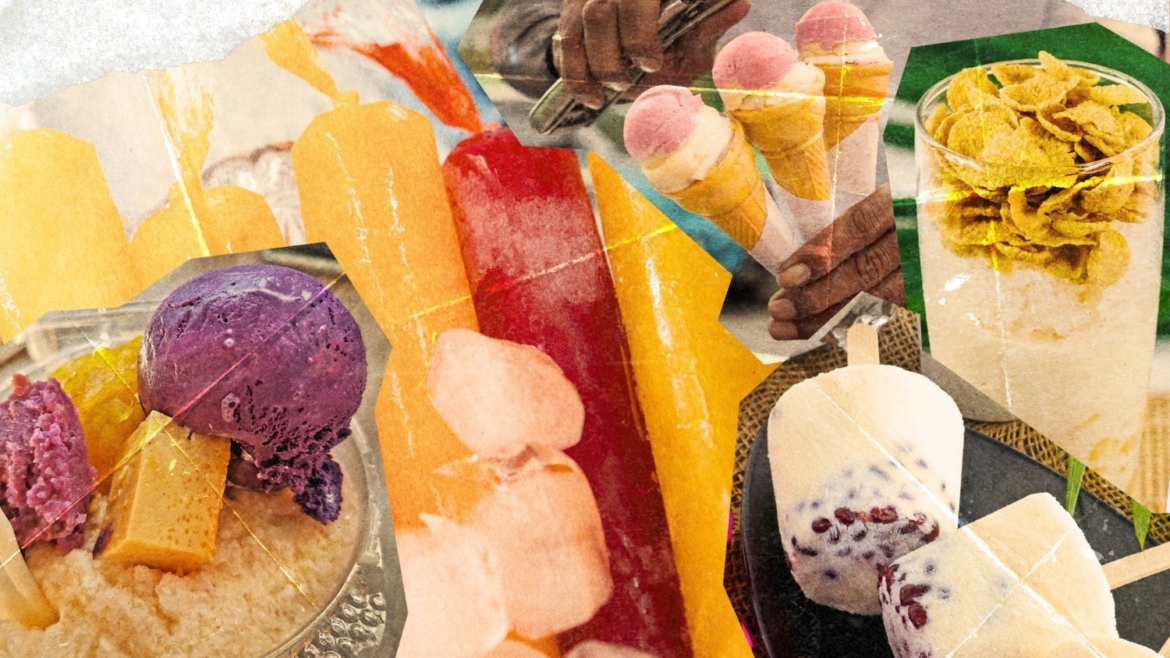
The beloved sorbetes sold from colorful wooden pushcarts is not dirty at all. It traditionally uses local ingredients such as coconut milk and cassava flour instead of fresh cow’s milk. The nickname reportedly came from parents warning children against buying food from street vendors. Over time, the teasing label became a term of endearment and eventually part of Filipino food culture.
Long before viral marketing and branding experts existed, Filipino street vendors had already mastered the art of making ordinary food unforgettable. Armed with little more than charcoal grills, bamboo skewers, and a remarkable sense of humor, they transformed humble ingredients into cultural icons.
Today, every order of Adidas, Betamax, Walkman, Tokneneng, or Dirty Ice Cream carries more than flavor. It carries a story—one that proves Filipinos have always found clever ways to turn everyday survival into something memorable, joyful, and uniquely their own.