Some of the country’s greatest medical achievements risk being reversed due to fear, misinformation, and eroding public trust.
You probably know someone who says, “Ayoko nang magpabakuna.” Or a parent who quietly skipped their child’s routine immunization after reading alarming posts on Facebook, TikTok, or YouTube. What once sounded like isolated skepticism has steadily evolved into something far more dangerous: a growing distrust of vaccines that health experts warn could undo decades of progress against preventable diseases.
The consequences are already being felt.
The Philippines is now home to around 1 million “zero-dose” children—those who have not received even a single routine vaccine. According to UNICEF’s State of the World’s Children 2023, that places the country fifth in the world and second in East Asia for the number of completely unvaccinated children. Even more alarming, public confidence in childhood vaccines dropped by 25 percentage points during the pandemic years.
For public health experts, those numbers are more than statistics. They are warning signs.
Herd immunity is beginning to crack
Vaccination works not only because it protects individuals but because it creates herd immunity. Once enough people are vaccinated—typically around 95% for highly contagious diseases like measles—the virus struggles to spread, protecting even infants, cancer patients, and others who cannot be vaccinated.
But that protective wall is weakening.
Data from the World Health Organization (WHO) and UNICEF show that routine childhood immunization coverage in the Philippines fell from 75% in 2019 to just 57% by 2021, far below the level needed to prevent outbreaks.
That means millions of Filipino children are growing up with little or no protection against diseases that previous generations had nearly eliminated.
The internet is winning the information war
Health experts say vaccine hesitancy is no longer confined to neighborhood gossip. It is being amplified online.
A 2024 Philippine study analyzing comments on YouTube videos about vaccines found that 80% of comments reflected vaccine-hesitant views, while 46% expressed outright refusal to be vaccinated. Researchers also found that anti-vaccine content generated significantly more engagement than pro-vaccine messages.
Another study focusing on TikTok identified misinformation, distrust in government and health workers, and vaccine brand preferences as major drivers of hesitancy.
The algorithms reward outrage, fear, and controversy—allowing false information to spread faster than scientific facts.
The dengvaxia shadow still lingers
Many experts trace today’s vaccine skepticism back to the Dengvaxia controversy in 2016 and 2017.
Although the controversy centered on one specific dengue vaccine, the public backlash extended far beyond it.
Trust in vaccination programs deteriorated, affecting routine childhood immunizations against diseases like measles, polio, and pertussis. Years later, researchers continue to identify the Dengvaxia episode as one of the country’s biggest contributors to long-term vaccine hesitancy.
The result is that some parents no longer distinguish between one controversial vaccine and the entire childhood immunization program.
Diseases are making a comeback
The dangers of declining vaccination are no longer theoretical.
In 2024, the Philippines recorded 4,518 cases of pertussis, or whooping cough, along with 144 deaths—nearly six times more cases than the previous year.
DOH investigations found that 67.6% of those infected were either completely unvaccinated or had unknown vaccination histories, directly linking the outbreak to missed immunizations.
The country has also witnessed the return of polio.
After being declared polio-free in 2000, the Philippines was forced to mount emergency vaccination campaigns in 2019 after new cases emerged—an event experts attributed largely to declining immunization coverage.
Diseases once thought to belong in history books are finding vulnerable populations once again.
The next generation may pay the price
The greatest danger of vaccine hesitancy is that its effects are often delayed.
A child who skips a vaccine today may remain healthy for years—until an outbreak occurs. By then, the consequences extend beyond one family. Schools, hospitals, and entire communities become vulnerable as contagious diseases spread among those with little or no immunity.
Public health experts warn that if vaccination rates continue to fall, the Philippines could see more frequent outbreaks of measles, polio, diphtheria, and other vaccine-preventable diseases that had long been under control.
The irony is painful.
Modern medicine has already developed safe and effective vaccines against many of these illnesses. Yet because of fear, misinformation, and eroding public trust, some of the country’s greatest medical achievements risk being reversed.
For a nation that once celebrated the near-elimination of diseases like polio, the biggest threat today may not be the viruses themselves—but the growing number of people choosing not to fight them.
READ:
DOH intensifies vaccine effort amid rising measles numbers
Rei Marquez
January 7, 2026
Rumored mpox case in a Mandaluyong condo spark panic
radar Business
June 29, 2026
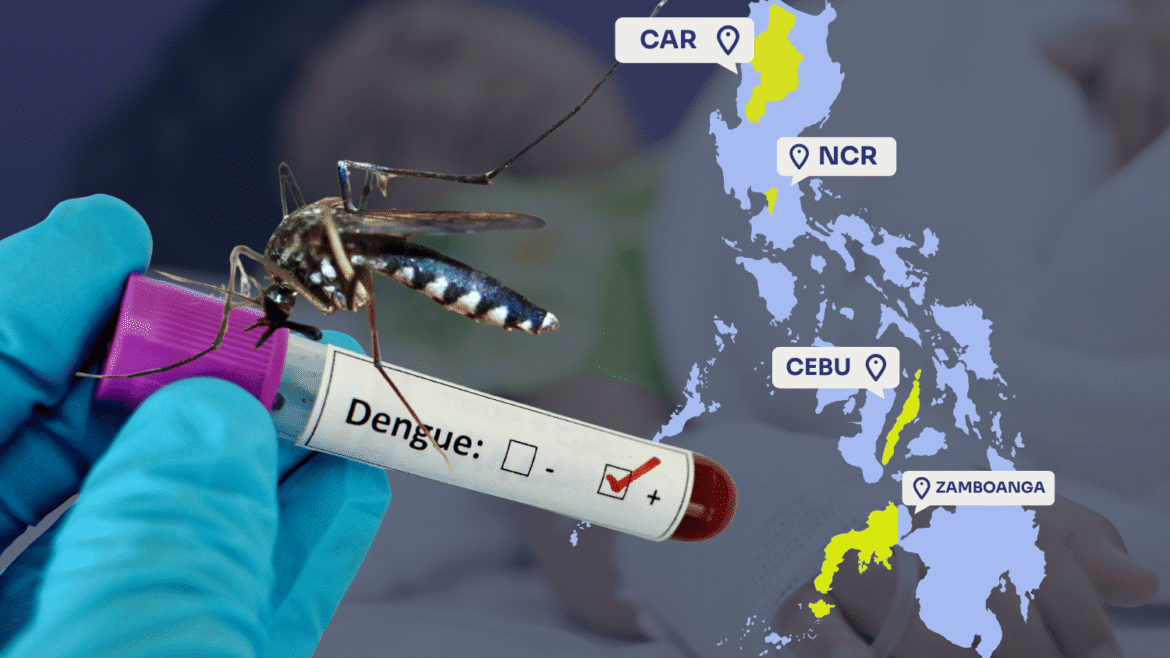
Cebu, Zamboanga, NCR, and CAR among PH’s dengue hot spots
Top Dagohoy
August 3, 2026