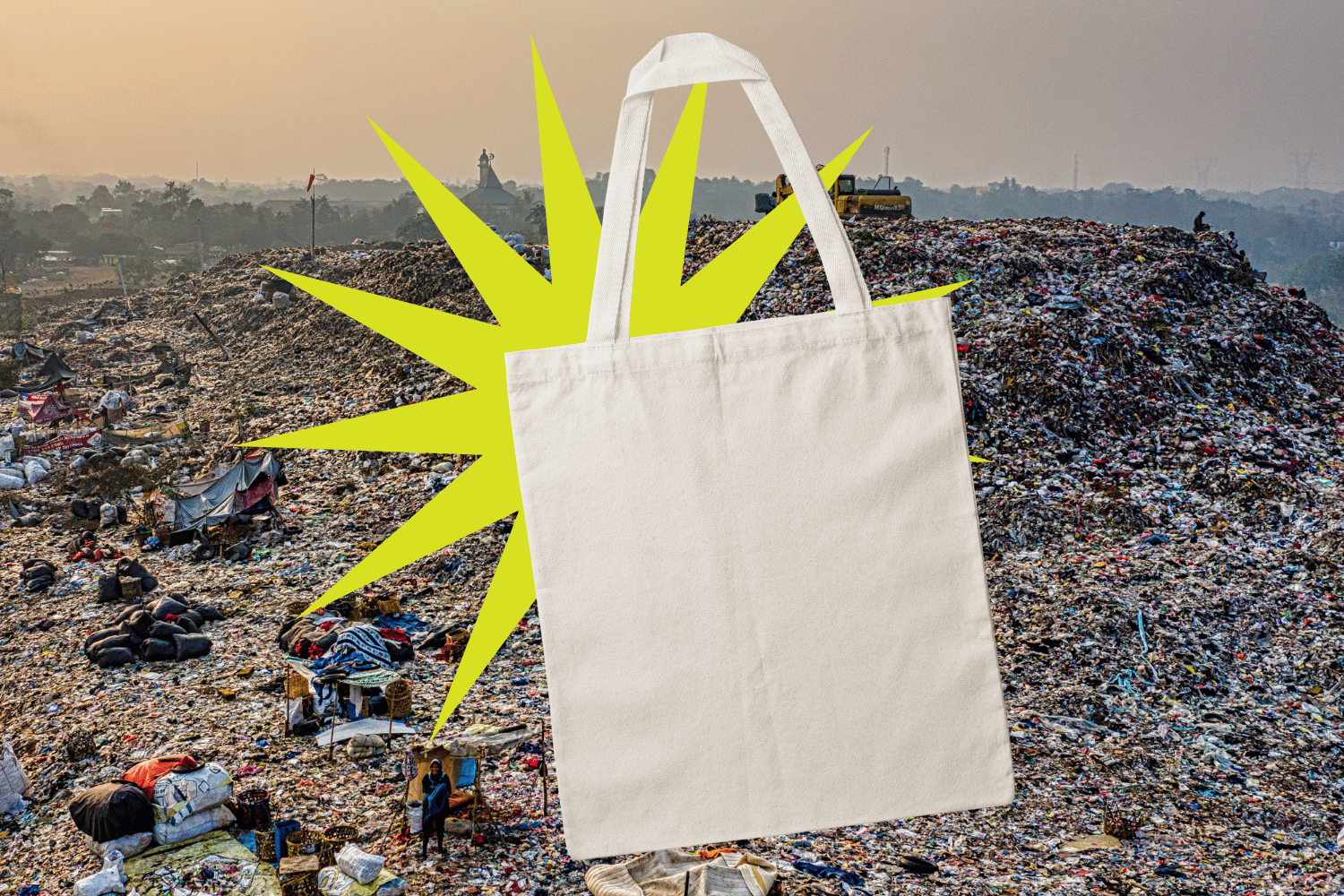
A product designed to reduce waste is now being overproduced and overconsumed.
You probably have one hanging by the door. Another inside the car. Five more in the closet. Then a pile of freebies from conferences, fun runs, bookstores, banks, schools, and corporate events.
Canvas tote bags have become the symbol of sustainable living. But environmental experts say our obsession with collecting them may be creating a new environmental problem—one that ironically undermines the very reason they became popular in the first place.
The issue isn’t the bag itself. It’s the staggering number of them being produced.
The tote bag paradox
Once promoted as the eco-friendly alternative to single-use plastic, canvas bags have evolved into one of the world’s favorite promotional giveaways. Brands print millions of them every year, encouraging people to keep accepting new bags instead of repeatedly using the ones they already own.
Environmental advocates call this the “tote bag paradox.” A product designed to reduce waste is now being overproduced and overconsumed.
A bigger footprint than most people think
The irony is that canvas bags carry a much larger environmental footprint than most people realize.
Cotton is frequently cited as one of the world’s most resource-intensive crops, with the United Nations Environment Programme stating in 2018 that producing one kilogram of cotton can require up to 10,000 liters of water.
However, a 2025 global analysis by the International Cotton Advisory Committee found that the actual water requirement averages 8,920 liters per kilogram of cotton lint. The research indicates that 73.4% of this footprint is sourced passively from natural rainfall, with only 2,344 liters per kilogram actively drawn from human-managed irrigation.
Whichever estimate one uses, the takeaway remains clear: cultivating cotton requires thousands of liters of water per kilogram.
Cotton farming also consumes large amounts of land, pesticides, fertilizers, and energy before the fabric is even woven into a bag.
Manufacturing canvas also produces far more carbon emissions than making a thin plastic shopping bag because cotton is heavier to process and transport.
That means every new canvas tote begins its life with a significant environmental debt.
The reuse math
Life-cycle assessments show that a conventional cotton tote must typically be reused around 130 to 170 times before its climate impact becomes lower than that of a single-use plastic bag, a United Kingdom Environment Agency study found in 2011.
When researchers consider broader environmental impacts—including water use, land use, and pollution—the number becomes even more striking. A 2018 study by the Danish Environmental Protection Agency study estimated that a conventional cotton tote may need about 7,100 uses, while an organic cotton version could require as many as 20,000 uses, before matching the overall environmental performance of a plastic bag across multiple environmental indicators.
For most promotional tote bags, those numbers are virtually impossible to reach.
When “green” becomes overconsumption
Instead, many canvas bags end up folded inside cabinets while new ones continue arriving after every seminar, trade show, product launch, or shopping trip.
Experts say this reflects a phenomenon known as moral self-licensing. People feel they are making an environmentally responsible choice simply by accepting a reusable bag, even if they already own dozens they rarely use.
Many branded canvas bags also contain plastic-based inks, coatings, or decorative finishes that make them difficult to recycle at the end of their lifespan.
The greenest bag is the one you already own
The research doesn’t suggest that plastic bags are environmentally better. Plastic pollution remains one of the world’s biggest environmental threats, especially to oceans and wildlife.
Instead, the lesson is much simpler: the greenest bag is almost always the one you already own.
Buying—or accepting—another “eco-friendly” tote only helps the environment if it replaces new bags for years to come.
Otherwise, yesterday’s solution risks becoming tomorrow’s waste.
READ:
Aboitiz firms find new value in plastic once treated as waste
radar Business
July 6, 2026
Filipino engineer turns pili tree waste into aircraft-grade sealant
Top Dagohoy
July 25, 2026
Boracay beach collects organize and plastic wastes due to typhoon
Annie Azucena
July 18, 2026