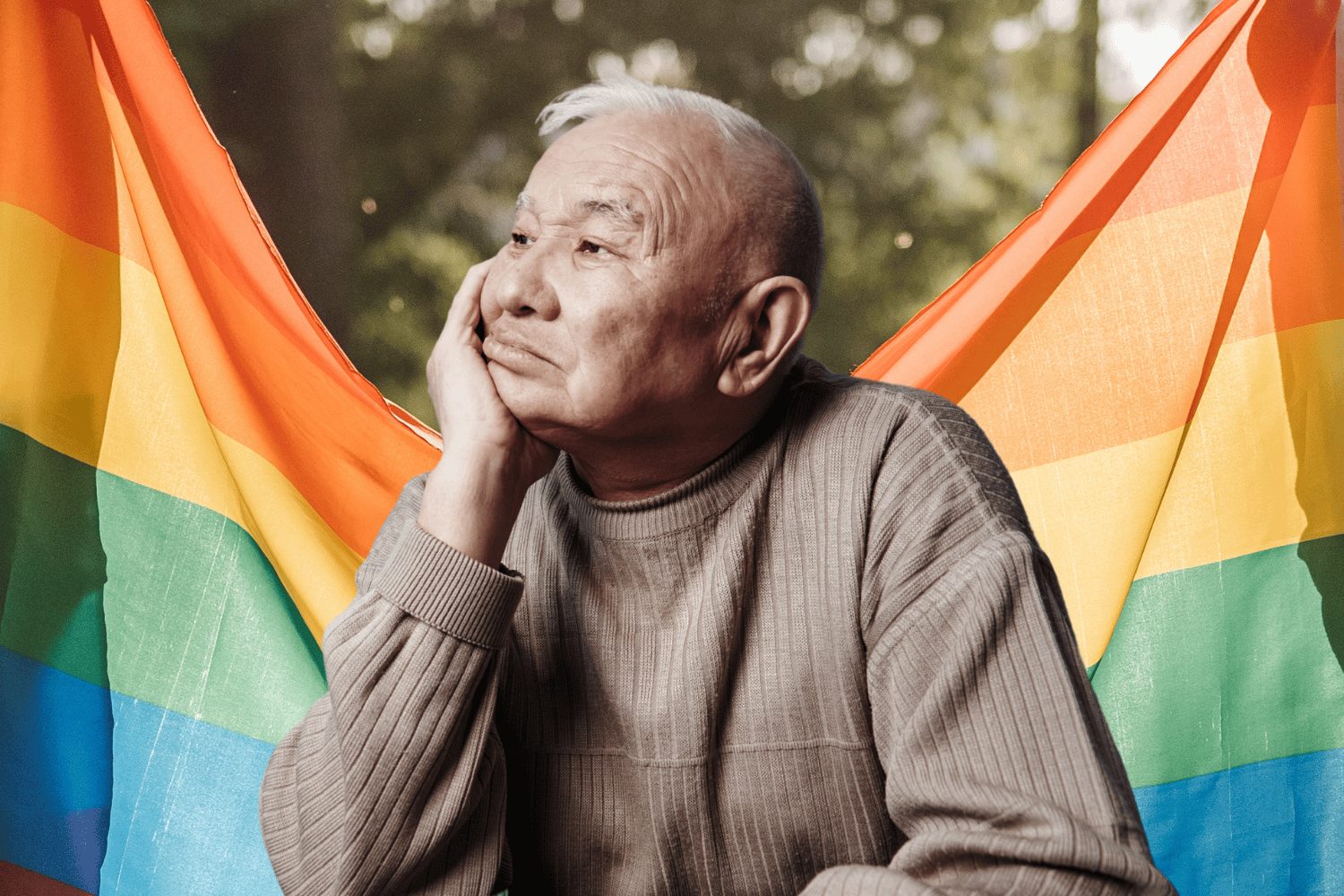
Older LGBTQ+ people spent decades hiding to survive.
A young gay man introduces himself with his pronouns. A transgender woman politely corrects someone who misgenders her. A nonbinary teenager posts about being proud of who they are.
Then comes the familiar response—not from a conservative uncle or a religious leader, but from an older gay man.
“Why do you have to make everything about being gay?”
“We never needed pronouns.”
“Can’t you just know your place?”
It is a scene many queer people have witnessed.
That last statement has always fascinated me.
Know your place.
But what exactly was that place?
For many older LGBTQ+ people, “knowing your place” often meant remaining invisible. It meant staying in the closet. It meant speaking a little deeper, dressing a little straighter, avoiding affection in public, and never giving society a reason to notice you. It meant conforming as closely as possible to heteronormative expectations because visibility carried consequences.
It wasn’t simply advice.
It was a survival strategy.
One of the cruelest legacies of homophobia is that it does not always come from outside the community. Sometimes it takes root within us.
Psychologists call it internalized homophobia: the unconscious absorption of society’s anti-queer beliefs by LGBTQ+ people themselves. It doesn’t necessarily mean someone hates being gay. More often, it means decades of learning that survival depended on suppressing or policing one’s own identity.
For many Baby Boomers and members of Generation X, that lesson was learned early.
They grew up when homosexuality was widely classified as a mental illness. Same-sex intimacy was criminalized in many places. Being out could cost someone a career, housing, friendships, or family acceptance.
Then came HIV/AIDS.
An entire generation watched friends disappear while governments hesitated to act, religious institutions portrayed the epidemic as divine punishment, and much of society equated queer intimacy with sickness and death.
Survival demanded camouflage.
Many older LGBTQ+ people became experts at passing. They changed the way they spoke. They concealed relationships. They edited stories about their personal lives. Some entered heterosexual marriages. Others remained permanently closeted.
When you spend decades believing that invisibility keeps you alive, someone openly celebrating their identity can feel unsettling—not because they are doing anything wrong, but because they are doing something you once believed was dangerous.
That helps explain why internalized homophobia sometimes appears in unexpected ways.
Some older queer people dismiss pronouns as unnecessary. Others criticize flamboyant gay men, drag queens, transgender people, or gender-nonconforming youth. Some insist that younger LGBTQ+ people are “asking for too much” or “making the community look bad.”
Underlying these remarks is often the same message: acceptance comes from blending in.
The irony is heartbreaking.
Many of the freedoms younger LGBTQ+ people enjoy today exist because older generations fought against police raids, discrimination, censorship, and silence. Yet for some, the habits that once ensured survival became deeply ingrained, making today’s openness feel unfamiliar or even threatening.
This is not true of every Boomer or every Gen Xer. Many continue to champion LGBTQ+ rights and celebrate younger generations for living more openly than they ever could.
But sociologists and psychologists have long recognized that internalized homophobia can persist long after laws and public attitudes begin to change. Trauma has a way of outliving the conditions that created it.
History helps explain these reactions.
It does not excuse them.
A young transgender person asking to be addressed correctly is not rejecting the struggles of older generations. A nonbinary teenager expressing their identity is not diminishing the sacrifices made by those who came before them.
If anything, they are evidence that those sacrifices mattered.
Every generation of LGBTQ+ people inherits a world shaped by the courage of the generation before it.
Perhaps the greatest victory isn’t that young queer people are louder.
It’s that many of them no longer have to whisper.
The older generation taught us how to survive.
The younger generation is teaching us what survival was always meant to lead to: the freedom to live honestly.
READ:

The ultimate guide to the highly nuanced Gen Z relationship terms
radar Lifestyle
June 26, 2026

Bee Gees tribute concert sends millennials, Gen X to disco mode
Nikko Miguel Garcia
April 12, 2026

Sassa Gurl on ‘Multwoh’ and homophobia in online spaces
Rafael Asonza
February 2, 2026