Our countdown culture helps “anticipate a horizon,” “create a sense of urgency.”
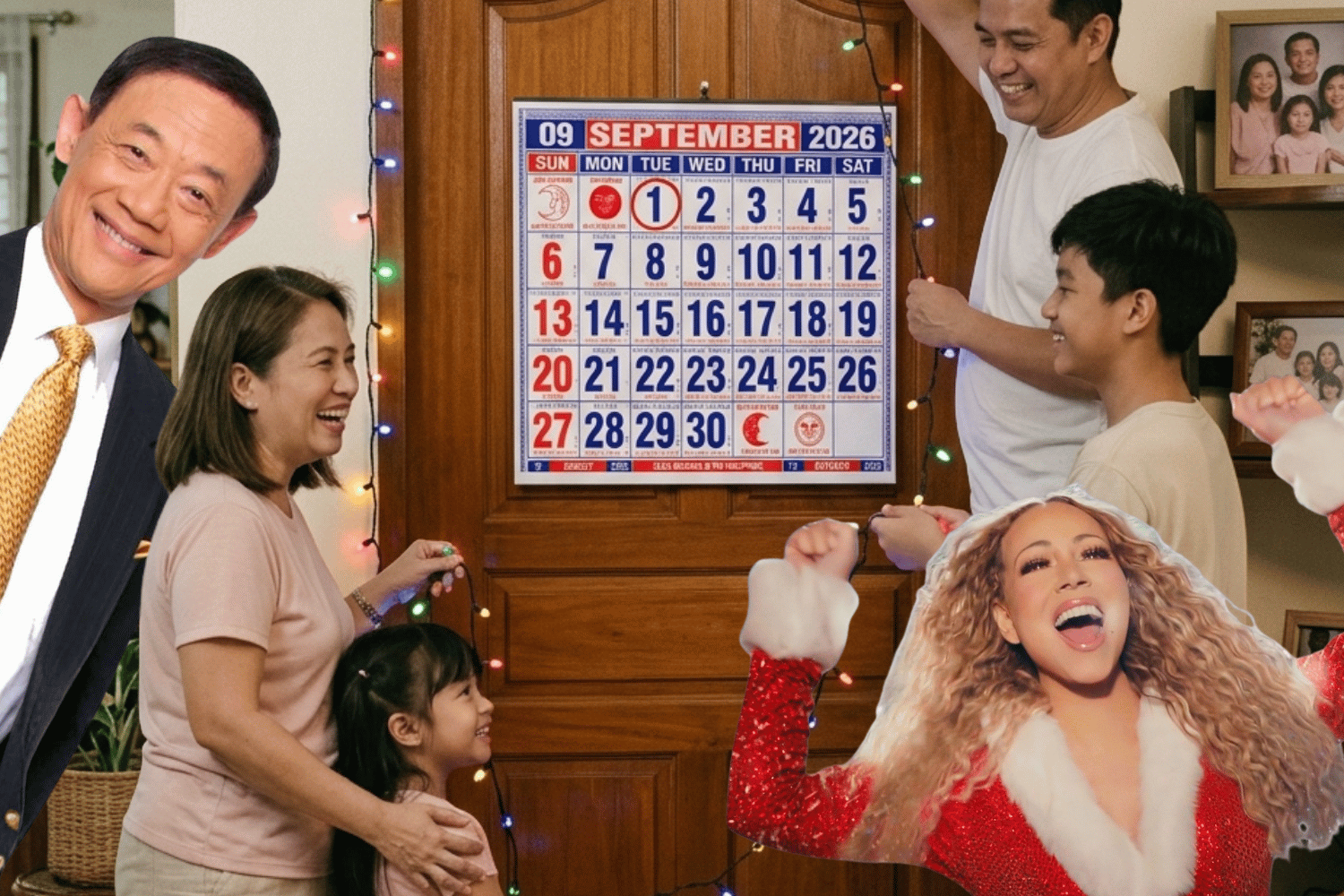
It’s Sept. 1. Green Day’s Billie Joe Armstrong is telling us to wake him up when September ends.
Filipinos, meanwhile, are already waking up to Jose Mari Chan peeping on their news feeds. And somewhere in the background, Mariah Carey is probably singing, “I don’t want a lot for Christmas…”
The “Ber” months are officially here, and with them, what Filipinos consider the world’s longest Christmas season. For decades, Sept. 1 has meant the return of Christmas memes, playlists, countdowns and sales.
But why do we start so early?
Countdown culture
Sociologist Bro. Clifford Sorita offered four reasons in a 2020 LinkedIn post.
First, it helps us anticipate a horizon. Sorita wrote that “time moves according to how we anticipate horizons.” For Filipinos, Christmas becomes that horizon—a hopeful event ahead that gives us something to look forward to and, as he puts it, makes the remaining days of the year more bearable.
It also creates a sense of urgency. Sorita noted that starting early gives us time to “plan, prepare and prioritize,” instead of cramming gifts, travel and reunions into the Christmas rush. Four months suddenly doesn’t seem so excessive.
That head start, Sorita said, can also help calm our Christmas anxieties. The holidays come with expectations of happy, seamless and picture-perfect celebrations, which can also bring stress and disappointment. Celebrating early, he said, gives us more time to prepare and manage those expectations.
And ultimately, it gives us more time for the essential things before Christmas. For Sorita, those essentials are “faith, family and friends.” For Filipinos separated from loved ones by work or distance, the long season gives them more time to save, book a flight and make plans to be together—in his words, “Being Home for Christmas.”
Filipinization of Christmas
Christmas came with Christianity, but Filipinos turned it into something distinctly their own. In “Christmas in the Philippines: Beyond Popular Religious Tradition”—published in the Asia Pacific Journal of Multidisciplinary Research in 2020—Rev. Fr. Antonio Noel Carbayas and theologian Fides del Castillo described how the celebration has become woven into Filipino family and social life.
They pointed out how Christmas has been “Filipinized”—a blend of faith and local traditions, from Simbang Gabi and the belen to family reunions, gift-giving, food, and homecomings. Commercialism, they noted, has also made the season more festive and extravagant.
But beneath the noise and spending is something more enduring: connection. Grandparents wait for grandchildren. Friends organize reunions. Families separated by work or migration make plans to come together.
For Filipinos, especially those working overseas, Christmas isn’t just a religious celebration. It’s also a reason to come home.
Older story about September
Filipino-American historian and content creator Kirby Araullo offers a different take: September may have been culturally significant long before Christmas arrived.
In a September 2025 YouTube video, Araullo argued that “our September celebrations have a much deeper environmental foundation than most people realize.”
For agricultural communities, he said, the month marked a critical seasonal transition that could mean the difference between “survival and abundance.” Its timing, he added, came from reading “natural signs from Mother Nature,” rather than simply following a fixed calendar.
That doesn’t mean precolonial Filipinos celebrated Christmas in September. Araullo’s point is that the season itself may have already carried meaning before Christianity gave it a new one.
So here we are again: Sept. 1, Jose Mari Chan on the feed, Mariah Carey in the background, and four months of Christmas ahead.
READ:
Tourism Philippines joins Anne Hathaway-Khalil Ramos bio trend with festival-packed calendar
Denchelle Castro
August 21, 2026
More snaps of Liza Marcos’ advance celebration with Kris Aquino surface
Kiko Escuadro
August 22, 2026
Filipinos torn after Threads post urges partygoers to normalize gift-giving
Julia Escarez
July 21, 2026