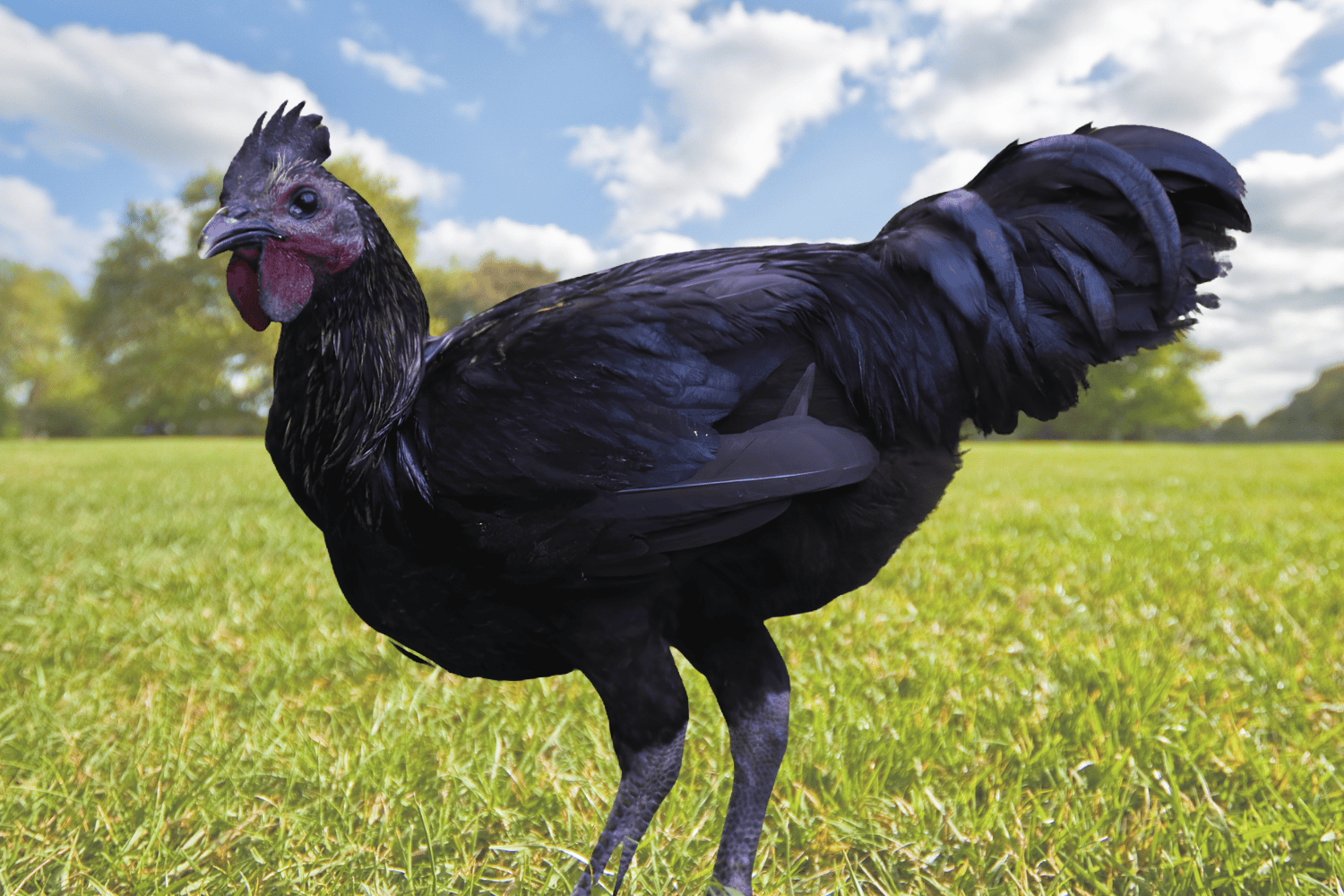
Meet Patani, Caraga’s rare all-black native chicken
Yes, you read that correctly.
The Philippines has its own big, black cocks—and some of them can weigh more than two kilos.
They’re called Patani, or the Caraga Black Native Chicken (CBNC), a striking Philippine native chicken distinguished by its unusually dark pigmentation. Think of it as our homegrown answer to Indonesia’s famous Ayam Cemani.
And these birds aren’t simply black because of their feathers.
Black from feathers to skin
Patani chickens have black plumage, dark combs, black shanks and black skin. Even their flesh can appear grayish or considerably darker than the meat of ordinary commercial chickens.
Mature roosters reportedly weigh around 1.6 to 2.2 kilograms, while hens generally reach about 1.25 to 1.45 kilograms.
The population is associated with the Caraga Region of northeastern Mindanao, particularly areas of Agusan and Surigao.
Researchers from Caraga State University, with support from government agriculture and science agencies, have worked for years to characterize, conserve and develop the Caraga Black Native Chicken as a distinct native genetic resource and potential livelihood for farmers.
A chicken worth saving
One reason Patani matters goes beyond its unusual appearance.
Native chicken populations can gradually lose distinctive characteristics when repeatedly crossed with other breeds. Conservation and selective breeding therefore help preserve desirable traits and establish birds that consistently pass them to succeeding generations.
Patani is also adapted to Philippine conditions—a major advantage for farmers interested in native and free-range poultry production.
Research on the Caraga Black Native Chicken has reported promising reproductive performance, including relatively high fertility and hatchability under studied conditions.
You can eat it, too
Its dramatic appearance naturally makes Patani attractive as breeding stock, but researchers also see potential on the dinner table.
The chicken produces relatively lean, firm meat with the stronger flavor commonly associated with native poultry. Its darker flesh could also make it an intriguing specialty ingredient for restaurants and culinary tourism in Caraga.
Reports have placed dressed Patani at roughly ₱500 per kilogram, while chicks and growers may fetch premiums because breeding stocks remain comparatively limited.
That gives farmers another reason to preserve it: rarity can become economic value when conservation and commercialization are properly managed.
So the next time somebody tells you the Philippines has some impressive big, black cocks, don’t immediately assume they’re making a dirty joke.
They could simply be talking about one of Mindanao’s most fascinating native chickens.
And its name is Patani.
READ: