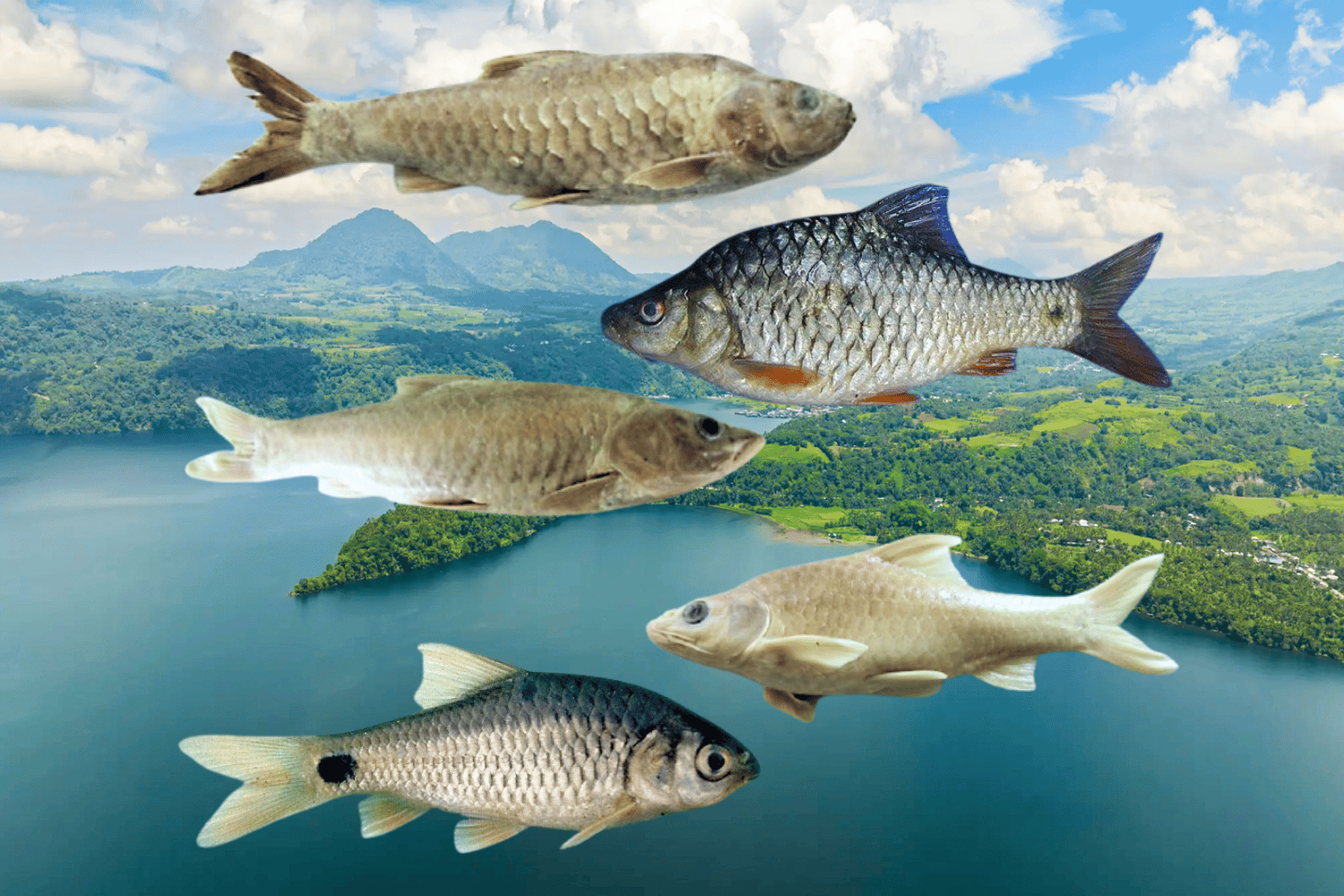
Predatory fish introduced to the lake heavily led to collapse of the native species, according to studies.
Fifteen species. Gone forever.
Not simply gone from Lake Lanao. Not transferred somewhere else. Not hiding in another Philippine river.
Extinct.
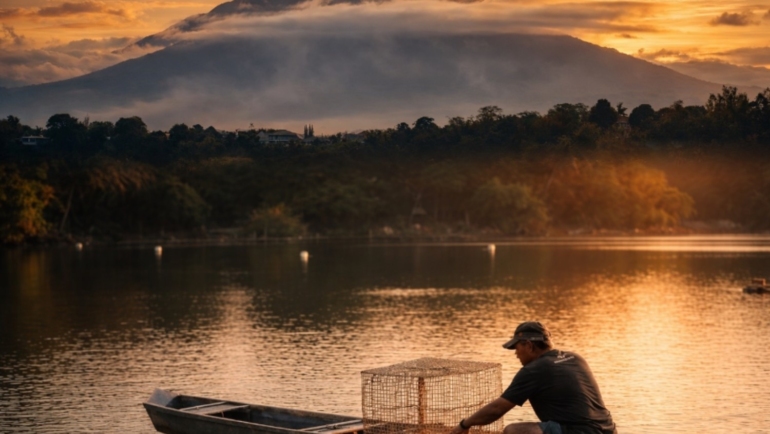
One of the Philippines’ most horrifying biodiversity disasters happened beneath the waters of Lake Lanao in Mindanao, where 15 endemic fish species have been declared extinct.
The International Union for Conservation of Nature (IUCN) assessments published in 2020 identified 15 of Lake Lanao’s endemic cyprinids as extinct and two others—Barbodes lindog and Barbodes sirang—as critically endangered and possibly extinct, according to Quantitative Aquatics, whose freshwater experts participated in the assessments.
These were not ordinary fish populations that could simply be replenished from somewhere else.
They were species found nowhere else on Earth.
Lake Lanao once supported an extraordinary radiation of closely related cyprinids that evolved into different species occupying different ecological niches. Their diversification has been described by scientists as a remarkable example of rapid or “explosive” evolution.
Among the 15 species now classified as extinct are Barbodes amarus, B. baoulan, B. clemensi, B. disa, B. flavifuscus, B. herrei, B. katolo, B. lanaoensis, B. manalak, B. pachycheilus, B. palaemophagus, B. palata, B. resimus, B. tras and B. truncatulus.
The scale of the catastrophe was staggering.
Quantitative Aquatics reported that the 15 Lake Lanao fishes represented almost half of the species declared extinct in that IUCN Red List update.
Invasive fish helped destroy a unique ecosystem
Scientific research points strongly toward introduced predatory fishes as a major driver of the collapse.
Research into the disappearance of Lake Lanao’s endemic cyprinids has implicated introduced species, particularly predatory fishes that preyed on native species and competed with them for resources.
The University of Santo Tomas has also reported that the decline and extinction of the endemic fishes, including the once-prized Barbodes baoulan, were linked to the proliferation of introduced predatory fish in the lake.
Other pressures compounded the destruction. Scientific studies have identified overexploitation, pollution and changes to the lake and Agus River system alongside introduced species as threats to Lake Lanao’s native fishes.
By the time scientists could formally pronounce many species extinct, decades had already passed without confirmed sightings.
And the disaster may not be finished.
Barbodes lindog and Barbodes sirang have been assessed as critically endangered and possibly extinct, prompting calls for intensive surveys to determine whether any populations remain.
There is at least one fragile sign of survival from Lake Lanao’s broader native fish heritage. Researchers have confirmed Barbodes tumba in the Agus River system through DNA barcoding, and the species has become the subject of conservation efforts.
Lake Lanao should therefore terrify us.
Extinction is not an abstract environmental catastrophe happening somewhere in the Amazon or on a distant island.
It happened here.
Fifteen fish species that evolved in a Philippine lake and existed nowhere else on the planet are now gone.
There is no second Lake Lanao somewhere else.
And once the last member of a species dies, extinction is forever.
READ: