Debates continue over the program’s long-term impact and the public’s perception of it.
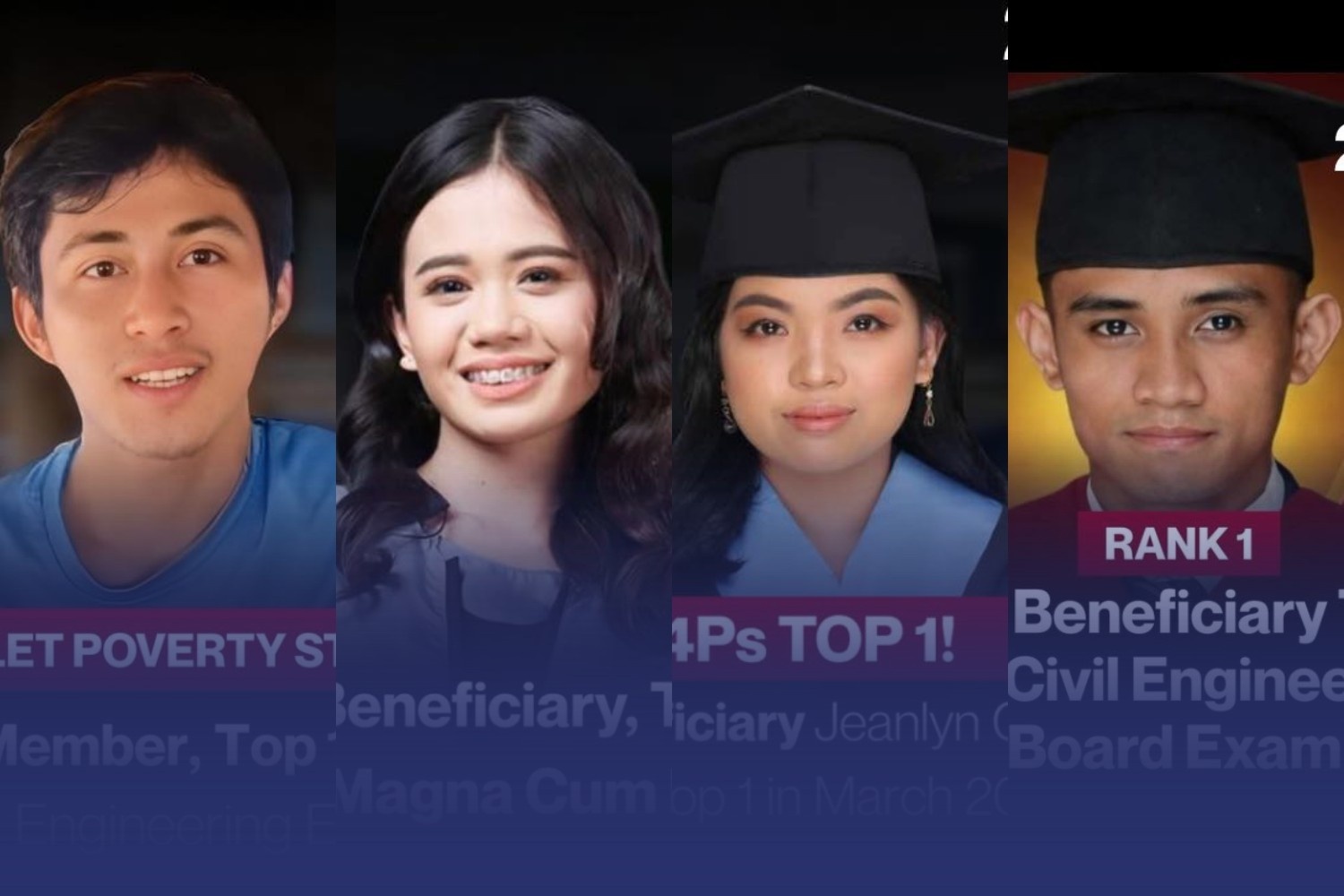
Did you know that for four years now, a 4Ps beneficiary has emerged as a top-notcher in the Philippine Regulatory Commission’s licensure examinations?
For the civil engineer licensure exams, Alexis Alegado led the exams in April 2023 and Rico Elao in March 2026. For the licensure examination for teachers, Khane Cervantes and Jeanlyn Colipano went No. 1 in March 2024 and 2025, respectively.
“Through grit, perseverance, and unwavering faith, they turned challenges into stepping stones and dreams into reality,” read the Facebook post of Iskolar ng Bayan, a page dedicated to providing review materials for UPCAT. “To every dreamer out there: your story is still being written. Keep going. The world is waiting for your breakthrough,” it added.
The formula for success
Launched in 2008 and institutionalized in 2019, 4Ps—or the Pantawid Pamilyang Pilipino Program—provides conditional cash transfers to poor households for up to seven years. They’re chosen through the Philippine Statistics Authority’s standardized targeting system.
Households must include members who are 0 to 18 years old or are pregnant at the time of registration. 4Ps conditions include children three to 18 enrolling in school and having at least an 85% attendance rate. They must be dewormed twice a year, while children up to five must be fully immunized and weighed periodically.
Pregnant women must undergo pre- and postnatal health check-ups, with their delivery attended by a professional healthcare provider. Parent beneficiaries must attend family development sessions.
Cash grants are as follows:
- Health grant – ₱750.00 per month for each household
- Education grant – ₱300.00 per child in elementary, ₱500.00 in junior high school, and ₱700.00 in senior high school. Maximum of three children per household for 10 months in a school year
- Rice subsidy – ₱600.00 per month for active and compliant households, released every two months.
The friction points
Despite its intended goals, 4Ps has long faced criticism over its long-term impact on poverty reduction, with some arguing that it fosters dependency instead of self-sufficiency. Other concerns include gaps in financial literacy, targeting issues, delayed payouts, and alleged irregularities in implementation.
Recently, there’s been a renewed discussion on higher electricity rates, as Meralco bills showed added charges like the so-called “lifeline,” which partially supports 4Ps and low-income households that can’t pay their electricity—as mandated by the Electric Power Industry Reform Act.
4Ps provides conditional cash transfers to poor households for up to seven years.
For the fourth year in a row, a 4Ps beneficiary has emerged as a PRC topnotcher. Discover the stories of these scholars and why the debate over “lifeline” subsidies and long-term dependency is heating up this April.
READ: