The word that bridges the gap between the dining table and our identity.
There is a certain awkward pause that happens when a Filipino tries to translate “ulam” into English. The sentence stalls, the brain scrambles, and what comes out is often a word that feels just a little off: viand.
For decades, “viand” has been the default classroom answer— a neat, supposedly proper equivalent drilled into students learning English. But outside the Philippines, the word barely exists in everyday conversation. It reads like something pulled from an old dictionary, formal to the point of sounding unnatural.
That’s why a recent viral post struck a nerve online. A netizen bluntly pleaded: “begging Filipinos to please just use ulam in English stop usin the term ‘viand’… if you use the term viand it just makes you sound insanely pretentious to me lmao.” The tone may be casual, even cheeky, but the sentiment echoes a quiet truth many have long felt.
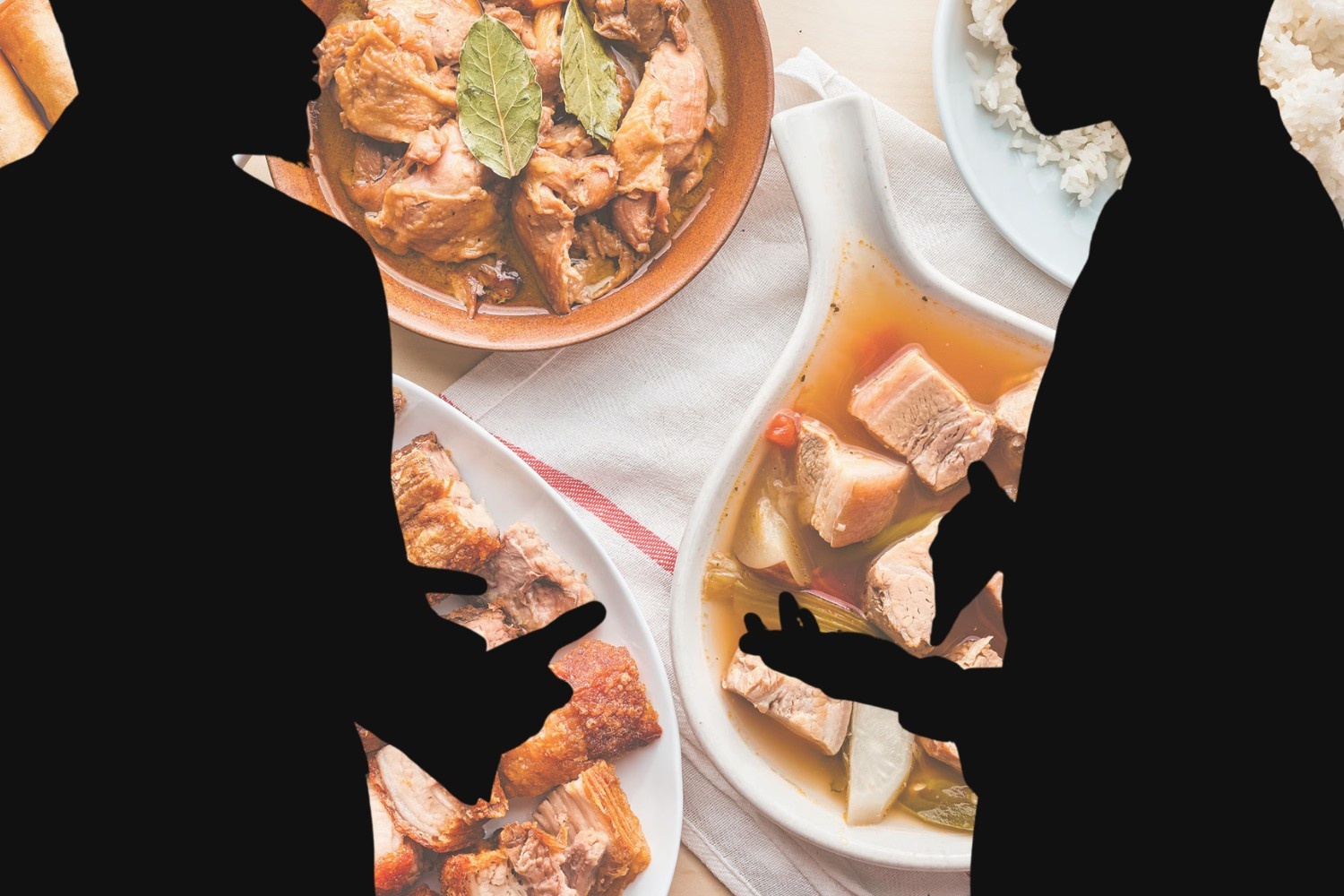
Because “ulam” is not just a “dish,” a “main course,” or an “entrée.” It is something more specific— the savory partner to rice, the centerpiece of a Filipino meal that only makes sense within the rhythm of how Filipinos eat. It is adobo shared at the table, sinigang poured over steaming rice, fried fish eaten with bare hands. No single English word fully captures that.
“Viand,” meanwhile, tries too hard. It carries the weight of colonial-era vocabulary, of textbook English that sounds correct but feels disconnected from lived experience. In global English, no one asks, “What’s the viand?”— they simply ask what’s for dinner.
So perhaps the solution is simpler than translation: don’t.
Using “ulam” in English conversations may require a brief explanation— but so does “viand,” and arguably more so. The difference is that “ulam” carries culture with it. It invites curiosity, not confusion. It names something uniquely Filipino without flattening it into a generic term.
In a time when language is increasingly fluid and identity-driven, keeping “ulam” exactly as it is feels less like a linguistic gap and more like a deliberate choice.