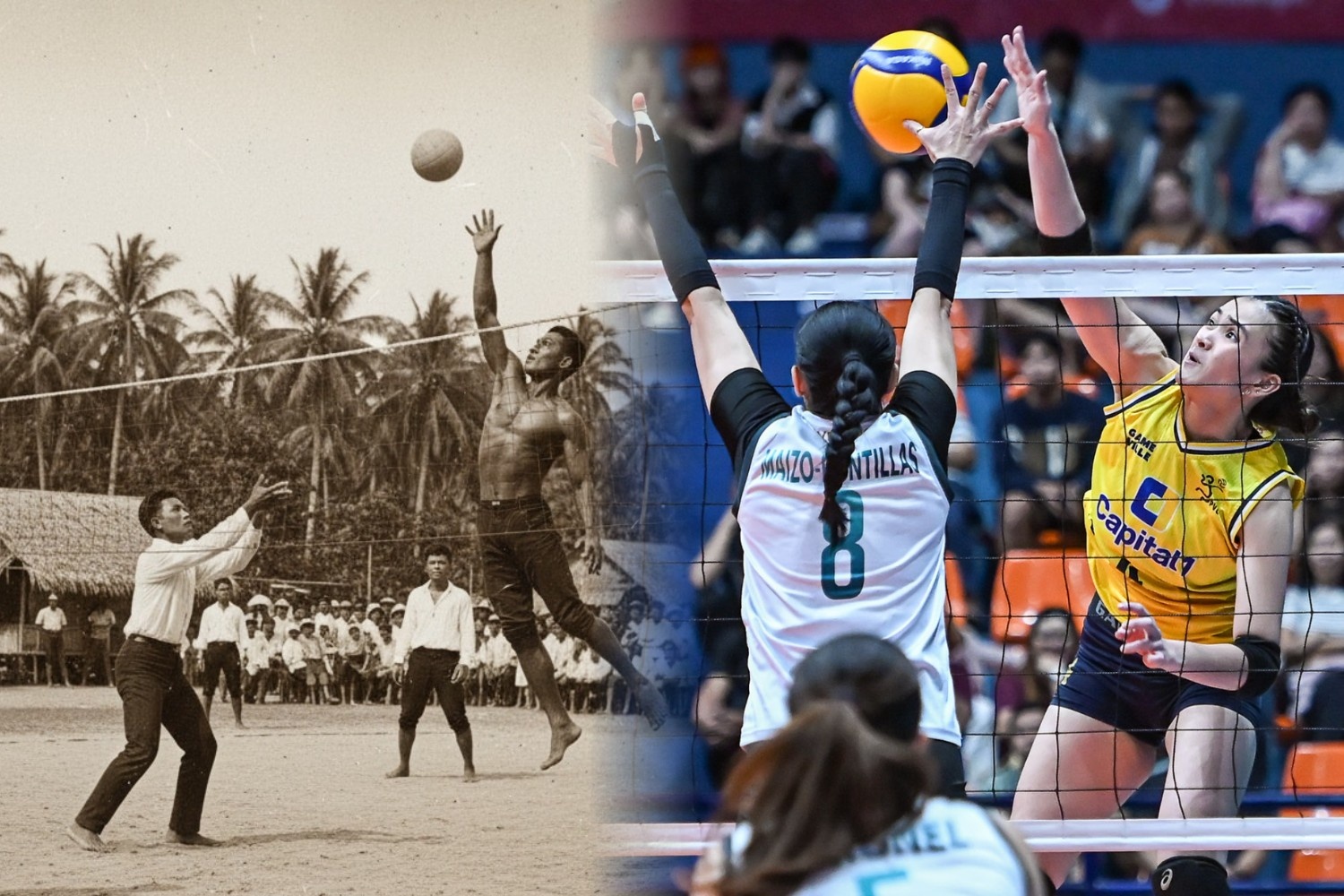
The untold story of how the Philippines invented modern volleyball’s greatest move.
Every time a UAAP crowd erupts over a thunderous hit from Alyssa Valdez, Bella Belen, or a towering men’s volleyball spike inside a packed arena, few Filipinos realize they are witnessing a move that the country itself helped invent.
Volleyball may have started in the United States, but the sport that the world knows today was heavily shaped in the Philippines.
When volleyball first arrived in the country through the YMCA in the early 1900s, it was still a slow-paced game focused mostly on keeping the ball alive. But Filipinos, known for turning even casual games into something fast, creative, and competitive, changed the sport forever around 1916.
Local players developed a strategy where one player tossed the ball high while another smashed it downward with force — what we now know as the “set” and the “spike.” At the time, the move was called the “Filipino Bomb,” while the attacker earned the nickname “bomberino.”
Today, that exact play is the heartbeat of modern volleyball. Without it, there would be no explosive rallies, no dramatic crosscourt kills, and no highlight-reel spikes that send Pinoy crowds screaming inside packed UAAP and PVL games.
The Philippines also helped influence volleyball’s famous three-hit rule, since the pass-set-spike sequence eventually became the standard structure of the sport worldwide.
Ironically, despite helping create modern volleyball itself, the Philippines has never competed in Olympic volleyball.
It remains one of the strangest twists in sports history. Filipinos are among the most passionate volleyball fans on Earth. College games trend online. Players become celebrities. Arenas fill up with screaming fans carrying school banners and inflatable thunder sticks. Yet when the Olympics begin, the country still watches from home.
Still, the Philippines continues to hold an important place in volleyball history. In 2025, the country hosted the FIVB Men’s Volleyball World Championship for the first time — proof that the world still recognizes the Philippines as one of the sport’s spiritual homes.
And maybe someday, the country that taught the world how to spike will finally get its Olympic moment too.
Today, that exact play is the heartbeat of modern volleyball. Without it, there would be no explosive rallies, no dramatic crosscourt kills, and no highlight-reel spikes that send Pinoy crowds screaming inside packed UAAP and PVL games.
READ: