Long before digital screens, children in the Philippine countryside found joy in the simple, popping pods of a wild vine that mirrored the shape of Christmas lanterns.
Growing up in the province in the ‘80s and ‘90s, children played with whatever nature offered.
There were no smartphones, no tablets, and for many families, not even expensive toys. Childhood entertainment came from rivers, trees, empty fields, mountain trails, and wild plants that quietly grew along dirt roads and forest paths.
One of them was parol-parolan.
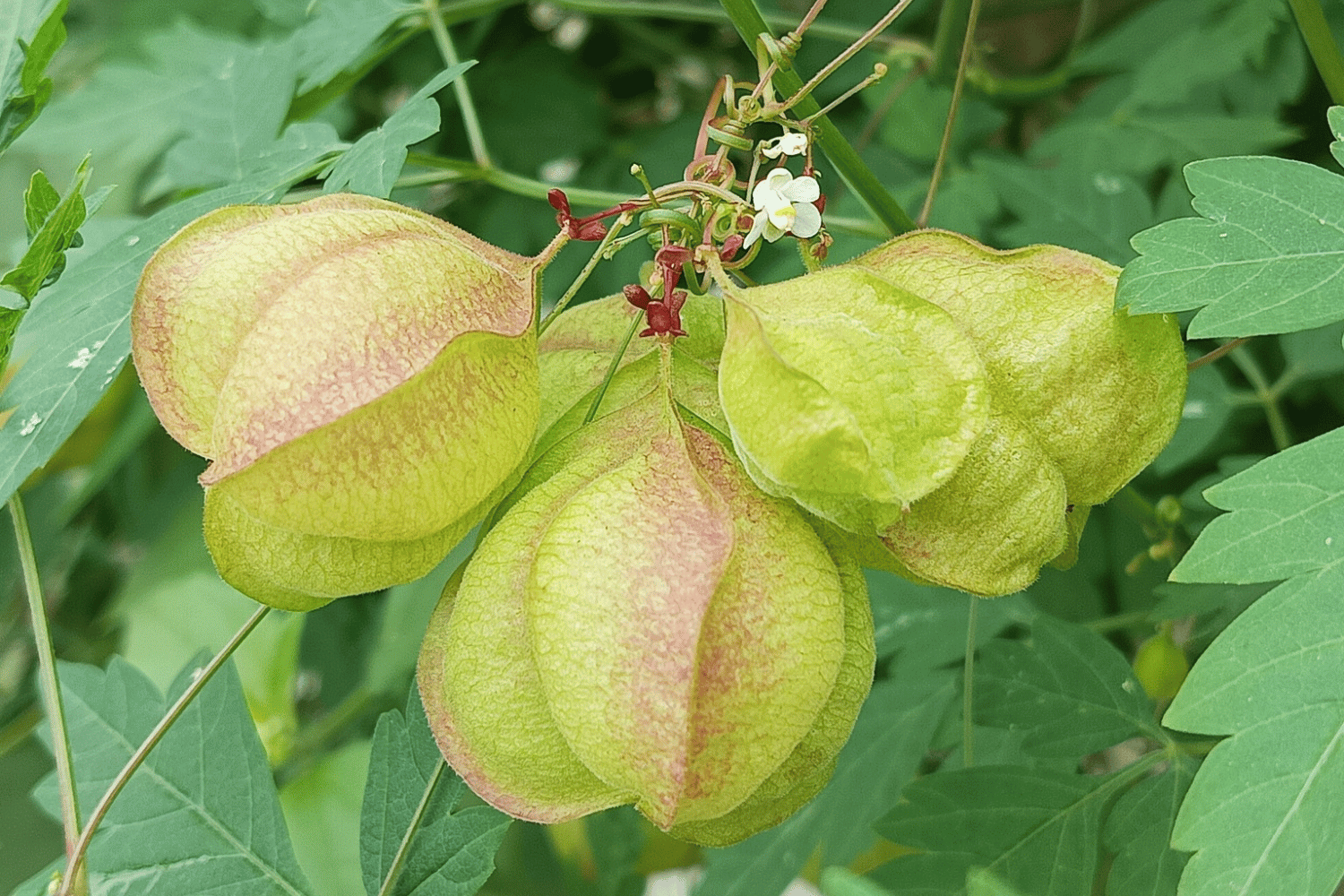
You would usually spot the vine creeping over shrubs, bamboo fences, or patches of talahib while walking uphill to the bukid or wandering near forested areas with cousins and neighborhood friends. Its tiny balloon-like pods instantly caught a child’s attention — light green, puffed up like miniature lanterns swaying in the wind.
And once you picked one, the game immediately began.
Some children pinched the pod until it popped softly between their fingers. Others stepped on it for fun just to hear the tiny crackling sound. Many carefully peeled it open to reveal the small black seeds inside, each marked with a tiny white heart.
And when the fruit was young and fresh enough, kids would sometimes taste its faint sweetness and fragrant flesh while continuing their afternoon adventures through the grass and trails.
Back then, rural childhood often meant spending entire afternoons outdoors. You walked long distances under the sun without complaining. You climbed guava trees, chased dragonflies near rice paddies, swam in creeks, and came home before dark with slippers covered in mud.
Nature itself became the playground.
Parol-parolan, scientifically known as Cardiospermum halicacabum or balloon vine, was one of those small but unforgettable details of growing up in the countryside. Its Filipino name came from its resemblance to a tiny parol, the iconic lantern displayed during Christmas season.
For many Filipinos, the plant is tied not to science or botany, but to memory.
It reminds them of quiet provincial roads lined with coconut trees, the smell of damp soil after rain, afternoons filled with cicadas, and the freedom of being young in a time when boredom pushed children outdoors instead of online.
Today, many younger Filipinos may no longer recognize parol-parolan. The empty lots where it once grew have become subdivisions and highways. Childhood itself has changed — more digital, more indoors, more connected to screens than to forests and fields.
But for those who grew up in the province, all it takes is seeing that tiny balloon-shaped pod again to remember what childhood once felt like: simple, slow, and deeply connected to the land.