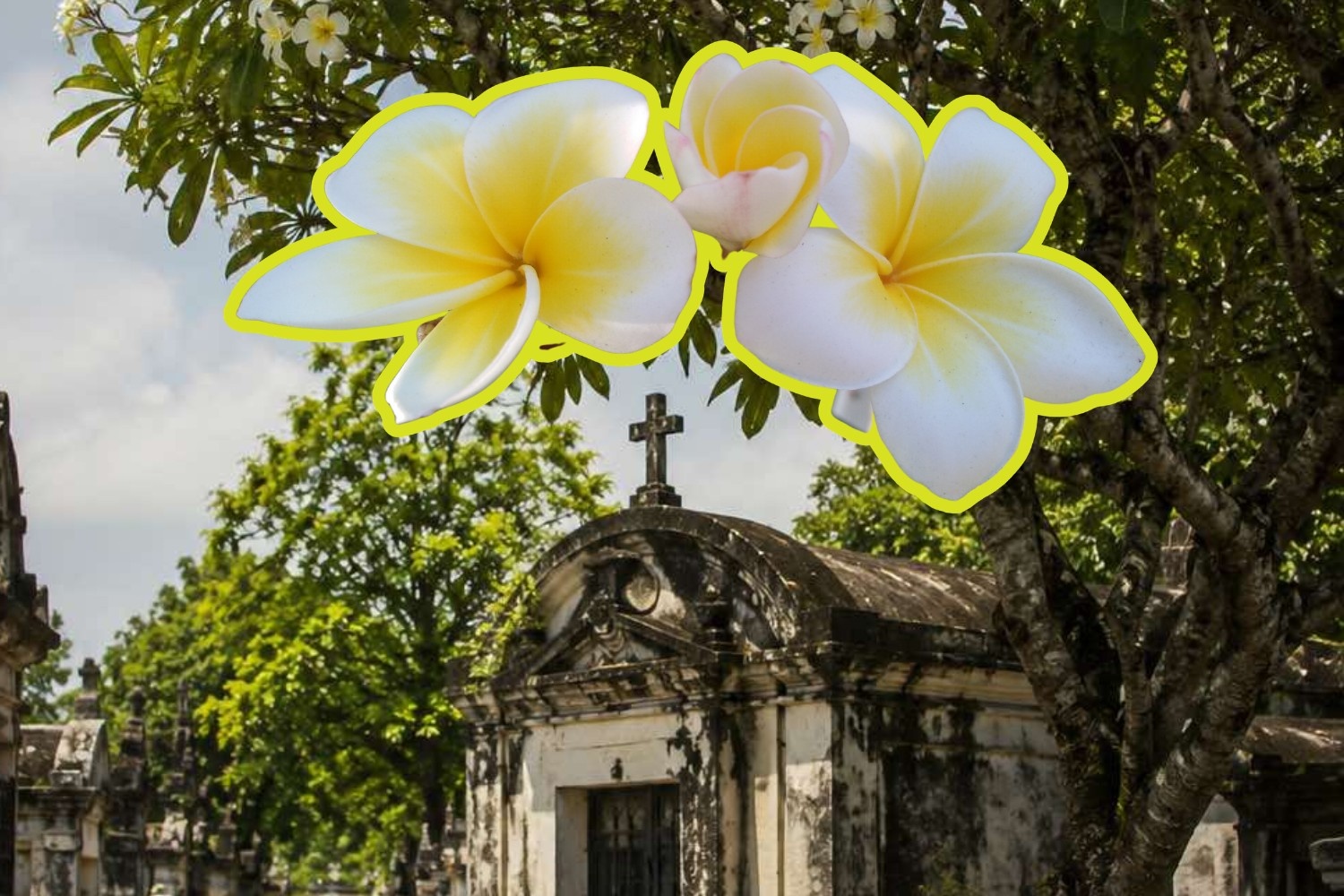
The lore behind kalachuchi is tied to its scent.
You catch the scent of kalachuchi on a quiet evening and instantly think of someone who has passed away.
For many Filipinos, that reaction comes naturally. Long before it became a favorite landscaping tree, kalachuchi earned a reputation as the country’s “bulaklak ng patay”—the flower of the dead.
The belief began with a practical reason. Kalachuchi, also known as plumeria, is an extremely hardy tree. It can survive drought, poor soil, and long periods of neglect, making it ideal for cemeteries and churchyards. Over generations, Filipinos grew accustomed to seeing its white-and-yellow blooms near graves, creating a powerful association between the flower and death.
Its fragrance deepened the mystery.
Kalachuchi releases a sweet scent that becomes stronger in the evening. In Filipino folklore, suddenly smelling kalachuchi at night was often interpreted as a sign that a spirit or deceased loved one was nearby. Stories of ghosts, apparitions, and “nagpaparamdam” relatives helped cement the flower’s supernatural reputation.
The tree also carries symbolism that goes beyond fear. A cut kalachuchi branch can remain alive for weeks and eventually grow roots and bloom again. Many saw this remarkable ability as a metaphor for resurrection, immortality, and the enduring nature of the soul.
Ironically, the tree itself is not native to the Philippines. It arrived from Mexico through the Spanish galleon trade and eventually became woven into local Catholic and folk traditions.
Today, much of the superstition has faded. Kalachuchi trees now grace parks, resorts, subdivisions, and private gardens. Yet the old belief remains surprisingly resilient.
Perhaps because whenever that unmistakable scent drifts through the air, it does more than remind us of ghosts.
It reminds us of people we loved, people we lost, and the idea that some memories never truly leave.
READ: