Why a once-familiar pantry staple quietly disappeared from Filipino homes.
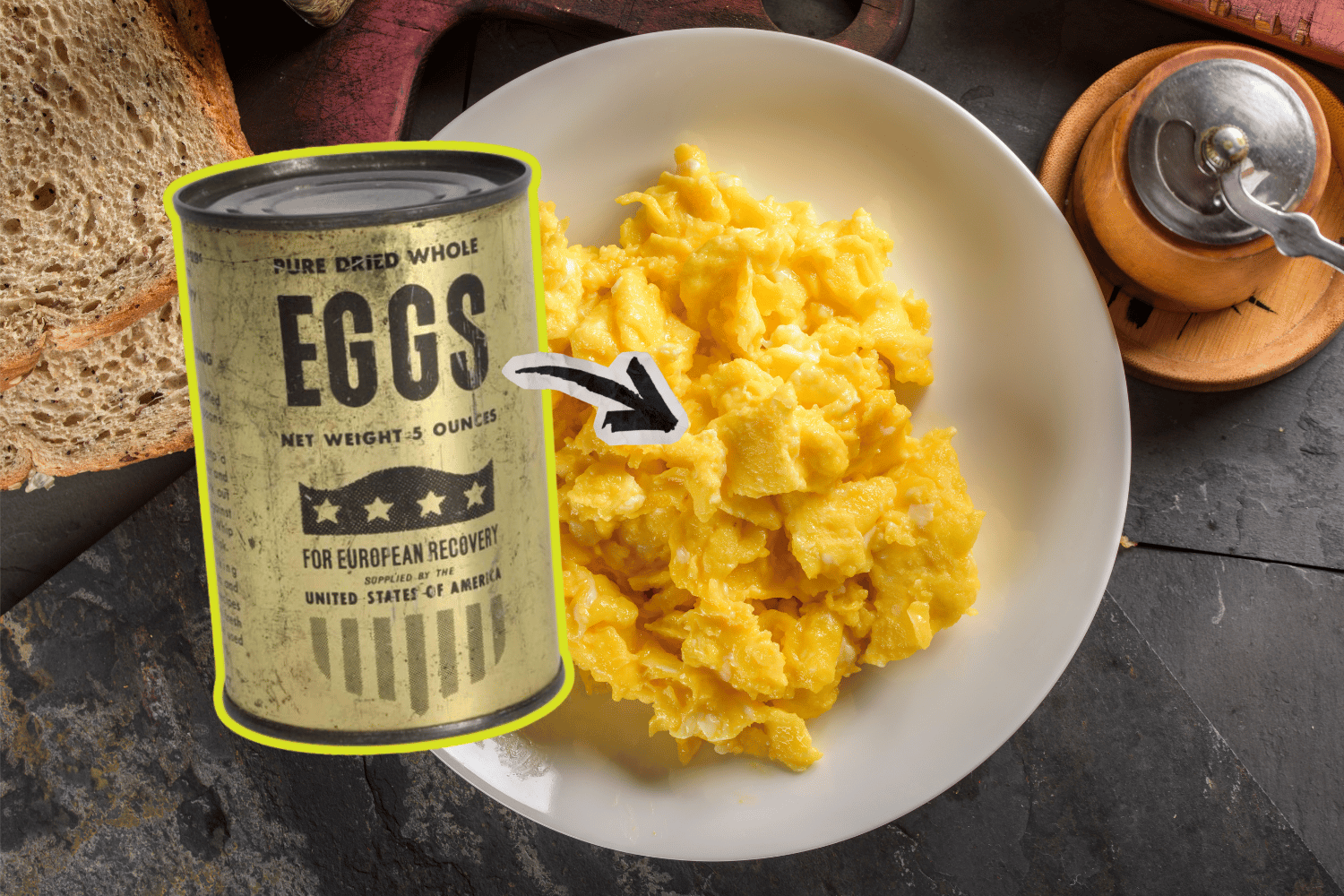
If you grew up in a military or police household in the 1970s or 1980s, chances are you’ve eaten something many younger Filipinos have never even seen: powdered eggs.
For children then, it was almost a novelty. Mom would open a can, mix the pale yellow powder with water, and minutes later, scrambled eggs would appear on the table. They looked close enough to the real thing, but one bite revealed a different story. The texture was firmer, slightly rubbery, and the flavor had a faint sulfur aftertaste. Still, for many families, especially those connected to the military or government service, powdered eggs were simply part of everyday life.
Today, they’ve virtually disappeared from supermarket shelves.
What happened?
The answer begins not in the Philippines, but in the United States.
Most of the powdered eggs that reached Filipino households during the 1970s and 1980s were never intended as commercial grocery products. They arrived through U.S. government assistance programs, particularly USAID’s Food for Peace initiative under Public Law 480. Alongside powdered milk, wheat flour, and other food commodities, powdered eggs were distributed to help address food shortages, support feeding programs, and provide emergency relief after major disasters.
Many Filipinos also unknowingly consumed powdered eggs through the famous Nutribun program. The fortified bread distributed to schoolchildren during the early 1970s often used imported powdered eggs to boost its protein content.
Unlike today, the Philippines had no industrial facilities capable of converting fresh eggs into shelf-stable powder. Local poultry farms focused on producing fresh shell eggs, forcing the country to rely almost entirely on imports whenever dehydrated eggs were needed.
But as the years passed, powdered eggs slowly lost their place in home kitchens.
The biggest reason was simple: Filipinos preferred fresh eggs.
While powdered eggs worked well in baking and institutional kitchens, they were never particularly enjoyable as scrambled eggs. Early manufacturing methods often left them with a slightly metallic taste, a stronger sulfur smell, and a texture many described as rubbery or grainy.
Then came better refrigeration.
By the 1980s and 1990s, fresh eggs had become cheaper, easier to transport, and readily available almost everywhere in the country. There was little reason for ordinary households to rehydrate powdered eggs when they could simply crack open fresh ones.
The food aid that once supplied them also gradually declined as emergency feeding programs changed and the Philippines became less dependent on imported relief commodities.
Ironically, powdered eggs never really disappeared.
They simply found a different market.
Today, they’re still widely used by commercial bakeries, instant noodle manufacturers, processed food companies, hotels, and emergency food suppliers. Because they can last for years without refrigeration, powdered eggs remain indispensable for industrial food production, disaster preparedness, military rations, and camping supplies.
Just not for breakfast at home.
For many older Filipinos, however, powdered eggs remain a curious childhood memory—a reminder of a time when food aid, military commissaries, and government feeding programs introduced families to ingredients that have since faded into history.
It may not have tasted exactly like the eggs we enjoy today.
But for one generation of Filipinos, it was simply what eggs tasted like.
READ: