From rejection and personal finance to human connection.
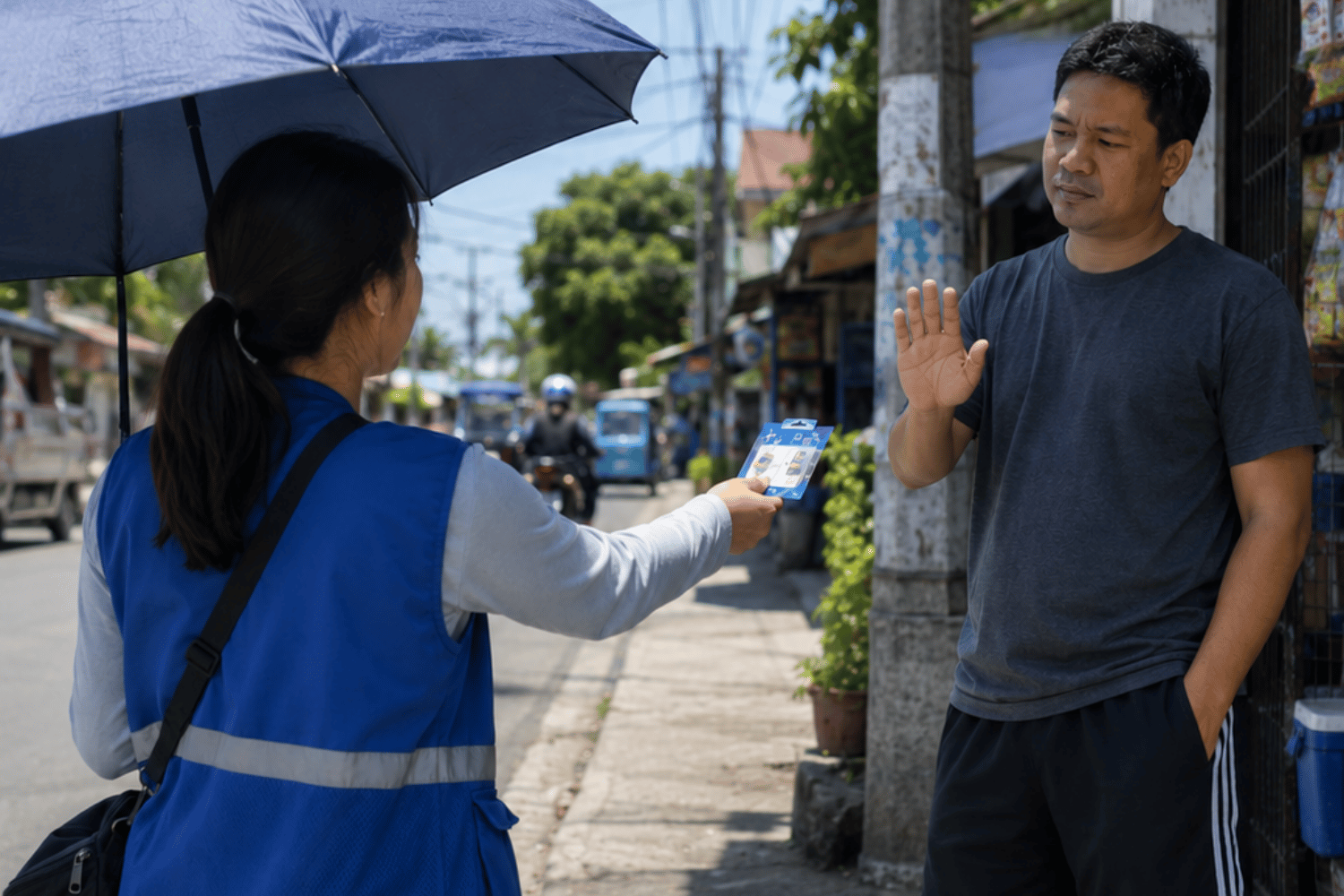
My first ever job: selling SIM cards on the street to random strangers. Under the heat of the sun, wearing jeans and a long-sleeved shirt, with a belt bag, holding an umbrella on my right, walking. At the time, that was the marketing strategy to push SIM card sales.
I remember my dad, who was our driver-team leader at the time, telling me, “Punta ka doon sa may tindahan, yung may mga nakatambay, alukan mo ng SIM”. He was soft-spoken, but he said it in a firm voice. I remember being tearful because I didn’t want to talk to strangers. At first, I thought doing that kind of sales was shameful. What if I met a classmate, or someone else I knew?
I was 17. I’ve always known what my parents did for a living, but never had I imagined I would be part of it before I was even of legal age to work without parental consent.
To some kids today, they may think that starting work at 17 is child abuse, that the parents are incapable of providing. Some parents may also disagree, believing that letting their kids work means they’ve failed at their job as providers. I understand where that comes from. Nobody wants their child sweating under the sun instead of studying, or being turned away by strangers on a sidewalk.
But to me, I am grateful for the experience, because it taught me things no classroom ever could—about money, about people, about that thing we call “diskarte sa buhay.”
The rejection that didn’t kill me
The first thing the streets teach you is rejection. It was fast, repeated, and completely impersonal. Someone would wave me off before I even finished my sentence. Someone would pretend not to hear me. A few were kind enough to at least smile and say no.
At 17, that stings. But it also does something valuable: it separates your worth from someone else’s reaction. A stranger’s “no” isn’t a verdict on who you are. It’s just a no, from someone who has their own day, their own problems, their own reasons. Kids who never have to face that kind of small, everyday rejection often grow into adults who fall apart at the first sign of criticism, because they were never given the chance to practice getting back up.
Money stops being abstract
My mom would tell me, “Hindi tayo nagtatae ng pera.”
There’s a difference between being told “money doesn’t grow on trees” and actually standing under one, sweating, for eight hours, to earn a few hundred pesos in commission. Once you’ve felt how slow and how hard money can be to earn, you start to understand its weight. You think twice before wasting it. You start to see the connection between effort and reward, not as a lesson from a textbook, but as something you lived.
That first paycheck—being able to help with tuition, buy something for myself without asking anyone for it—is a feeling I don’t think entitled kids will ever fully understand. Not because they’re bad people, but because they’ve never had to earn the thing they were handed.
Talking to strangers is a skill, not a threat
Social media has made a lot of kids fluent in typing and terrible at talking. Selling SIM cards forced me to read people quickly, figure out who’s open to a conversation, who’s in a hurry, who’s being polite but really means no. That kind of read-the-room instinct doesn’t come from a phone screen. It comes from standing in front of another human being and having to figure out, in real time, how to be heard.
That skill followed me into job interviews, into asking for help when I needed it, into negotiating, into simply being comfortable in rooms full of people I didn’t know. It’s not something schools grade you on, but it might matter more than most things they do grade you on.
Am i saying every kid should work at 17?
No, I’m not asking parents to send their kids out to sell SIM cards, or telling teenagers that if they haven’t had a “hard” job yet, they’re somehow soft. Every family’s circumstances are different, and there’s nothing noble about hardship for its own sake.
What I am saying is this: somewhere between overprotecting kids from every discomfort and expecting them to fend for themselves too early, there’s a middle ground being lost. Kids today are excellent at things my generation never had to be. But a lot of them have never been told “no” by a stranger, never had to make small talk to survive a shift, never felt what it’s like to earn money slowly instead of watching a number rise on a screen.
Those are skills too. And if we don’t find some way to let kids practice them before adulthood hits all at once, we shouldn’t be surprised when adulthood hits hard.
I didn’t want to talk to strangers under an umbrella in the heat when I was 17. I’m glad someone made me anyway.
READ:

Maxine Medina’s journey: teenage struggles to morena confidence and motherhood
Marinel Cruz
January 27, 2026

BPO workers cry foul over alleged mass layoffs
Kiara Gorrospe
June 23, 2026

Traffic and long work hours leave Filipinos with no time for hobbies
Allyson Capati
July 1, 2026