Part of the citrus family, gingging is a distant relative of oranges, lemons, and curry leaves.
You spot a tiny pink berry growing on a shrub and pop it into your mouth, expecting something sweet and familiar. Instead, you’re greeted by the unmistakable citrusy, herbal flavor of a freshly poured gin and tonic. No, the fruit isn’t fermented—nature simply came up with one of its most surprising flavor combinations.
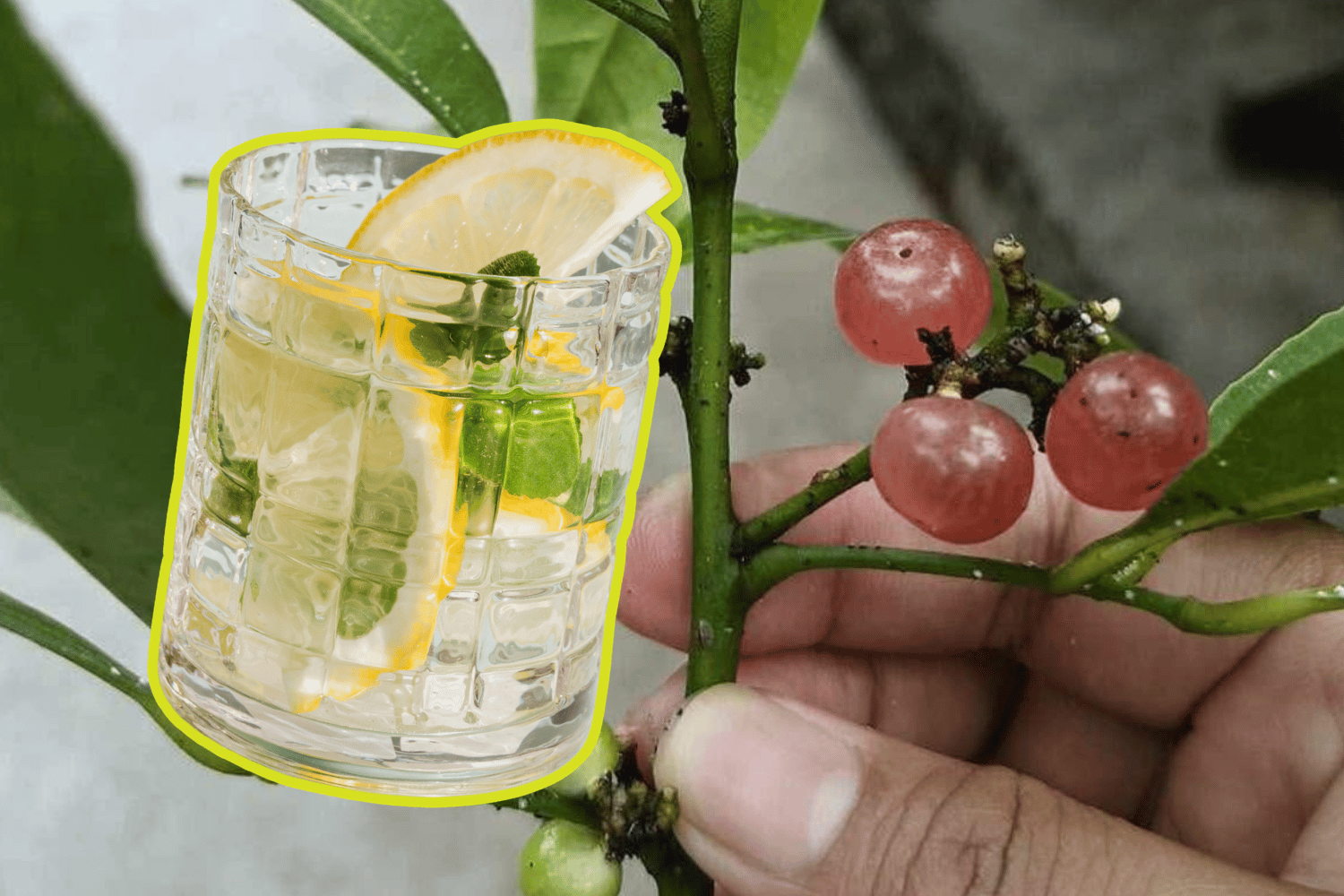
That fruit is gingging, also known locally as linawin and internationally as the Gin Berry (Glycosmis pentaphylla).
Despite its cocktail-like taste, gingging contains no alcohol. According to horticultural references, its leaves and ripe berries are rich in aromatic oils and citrus compounds that closely resemble the botanical profile of gin, particularly the combination of juniper-like and citrus notes. The result is a juicy fruit with a sweet-tart flavor, hints of orange candy, resin, and tonic water that has fascinated fruit collectors around the world.
Gingging belongs to the citrus family, making it a distant relative of oranges, lemons, and curry leaves. It grows as a compact evergreen shrub with glossy leaves, fragrant white flowers, and translucent pink berries. In tropical climates like the Philippines, it flowers and fruits almost year-round, making it a hardy addition to home gardens.
Its unusual taste has also made it popular among food forest enthusiasts. Some crush the berries into sparkling water to create a naturally flavored tonic-style drink, while others pair the fruit with actual gin for an intensely aromatic homemade cocktail.
Beyond its distinctive flavor, gingging has also been valued in traditional medicine for generations. According to StuartXchange and published pharmacological reviews, the plant contains hundreds of naturally occurring compounds, including flavonoids, alkaloids, limonoids, and terpenes that have demonstrated antioxidant, antibacterial, anti-inflammatory, and liver-protective properties in laboratory studies.
Researchers have also explored extracts from its leaves, bark, and roots for their potential to fight harmful bacteria, reduce inflammation, relieve pain, and help protect liver tissue. However, scientists emphasize that most of the evidence comes from laboratory and animal research, so more human clinical studies are needed before these medicinal benefits can be confirmed.
For now, gingging remains one of the Philippines’ best-kept botanical secrets—a tiny native fruit that surprises people not only with its unforgettable gin-and-tonic flavor, but also with its rich history in traditional herbal medicine.
READ: