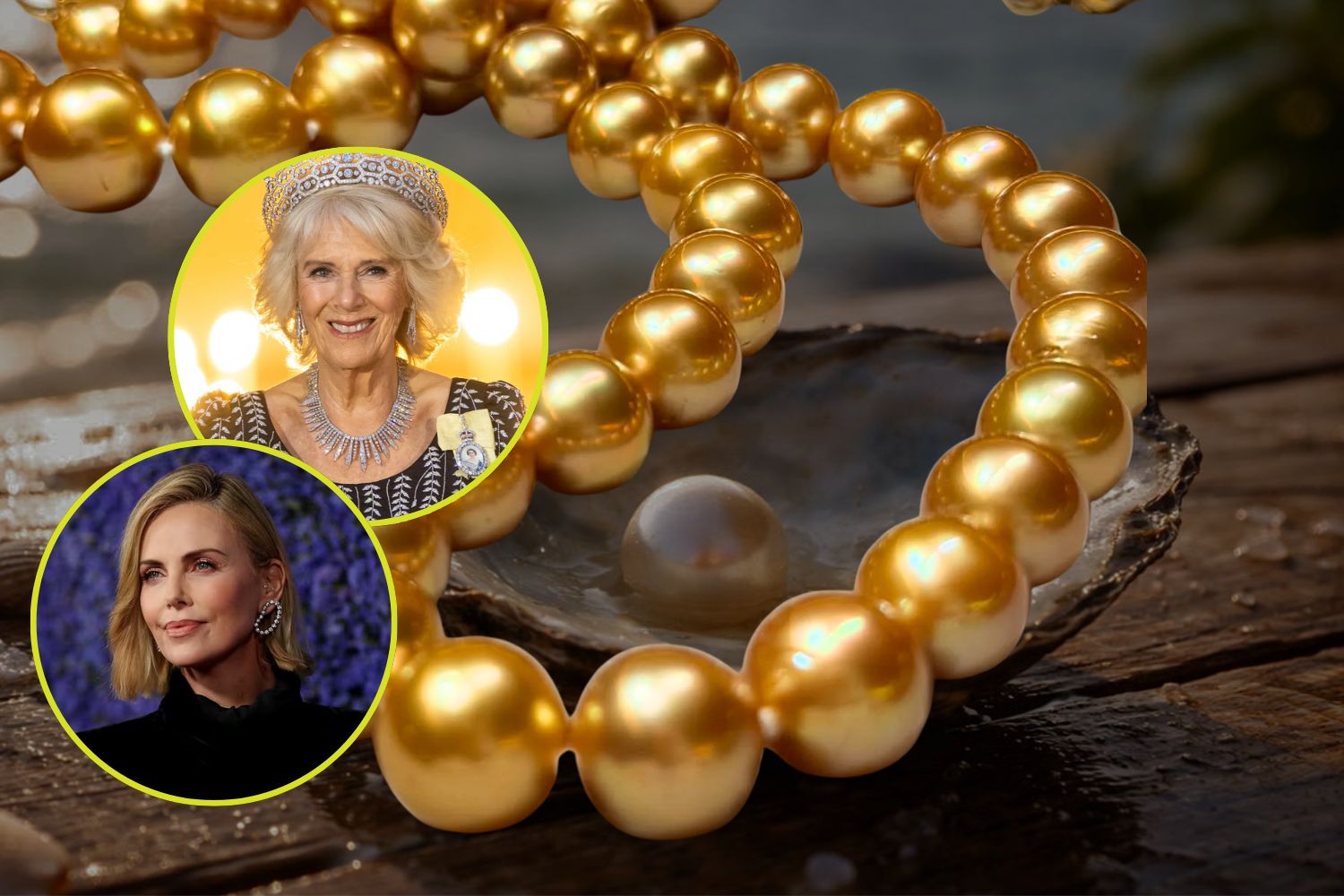
Only about 10% to 15% of these pearls are perfectly or nearly round.
Imagine walking through the bustling aisles of Greenhills Shopping Center and spotting a
member of royalty or a Hollywood celebrity browsing the pearl stalls.
It has happened before.
From Queen Camilla, then the Duchess of Cornwall, to Hollywood stars Charlize Theron, Jeremy Renner, and Rachel Weisz, high-profile visitors have quietly shopped in Greenhills for one thing: authentic South Sea pearls.
It’s easy to wonder why. After all, pearls are everywhere in Greenhills. They seem abundant, accessible, and surprisingly affordable compared to the jaw-dropping prices they command in luxury boutiques abroad.
The answer lies in just how difficult South Sea pearls are to produce.
One oyster, one pearl
Unlike freshwater pearls, which can be cultivated by the dozens inside a single mussel, South Sea pearls come from the Pinctada maxima, the largest pearl-producing oyster in the world.
Each oyster can produce only one pearl at a time.
Even then, success is never guaranteed. The oyster thrives only in pristine waters found in places such as the Philippines, Indonesia, and Australia. A slight change in water quality, pollution, or temperature can cause it to reject the implanted nucleus—or die altogether.
A process that takes years
South Sea pearls cannot be rushed.
Farmers spend nearly two years raising an oyster before it is large enough to receive a nucleus. Once implanted, the pearl remains inside the oyster for another two to five years, slowly building layer upon layer of nacre.
That long wait also means years of financial risk. A typhoon, disease outbreak, or environmental disaster can wipe out an entire harvest before a single pearl reaches the market.
Nature makes the final decision
Not every oyster produces a gem worthy of fine jewelry.
Only about 10% to 15% of harvested South Sea pearls are perfectly round or nearly round. An even smaller percentage possess the flawless surface, rich natural color, and exceptional luster that luxury jewelers seek.
The coveted golden South Sea pearls from the Philippines are among the rarest and most valuable.
Size that no other pearl can match
South Sea pearls are also the largest cultured pearls available, typically measuring 8 to 20 millimeters in diameter.
Their unusually thick nacre gives them a soft, deep glow that gem experts describe as satiny rather than shiny—a hallmark that distinguishes them from cheaper pearl varieties.
The real luxury is a matching set
Finding one beautiful pearl is already rare.
Finding dozens that perfectly match in size, shape, color, and luster is exponentially harder. Jewelry houses can spend years—even a decade—assembling enough matching South Sea pearls to create a single necklace.
That painstaking process is one reason complete strands command extraordinary prices at international luxury retailers.
Greenhills’ hidden treasure
Ironically, one of the world’s best places to buy these prized gems doesn’t look like a luxury shopping district.
For decades, Greenhills has earned an international reputation as a destination for authentic South Sea pearls sourced from Philippine waters, particularly Palawan. Buyers can handpick loose pearls and have them mounted into custom jewelry by local artisans for a fraction of what similar pieces sell for overseas.
So while South Sea pearls may appear plentiful behind the glass cases of Greenhills, each one represents years of cultivation, extraordinary patience, and a remarkable stroke of nature’s luck. That’s what makes them among the most expensive cultured pearls in the world.
READ: