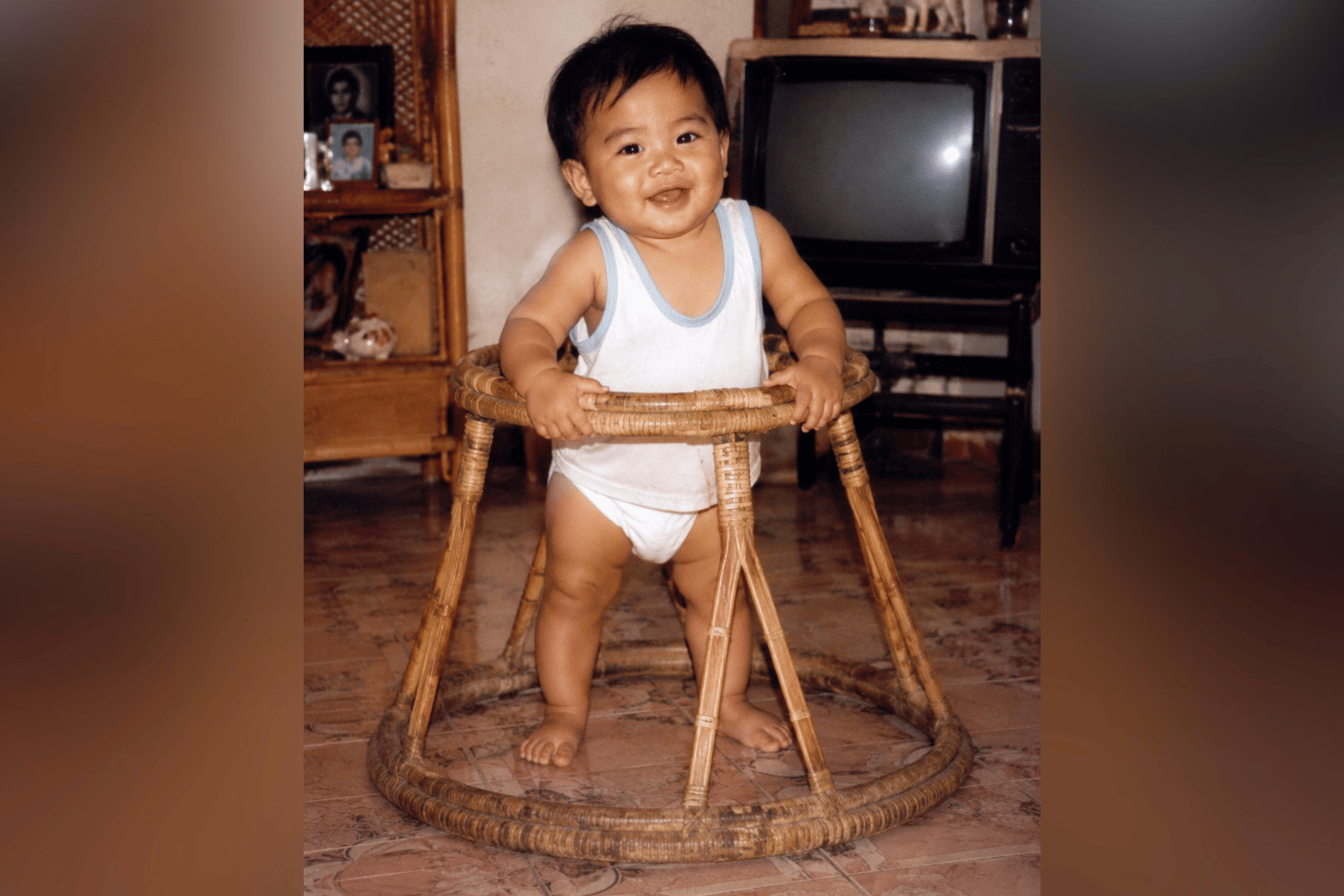
The andador has become a nostalgic reminder of Filipino childhood.
You spot one in your grandparents’ house—a dome-shaped wooden frame wrapped in woven rattan, quietly gathering dust.
To younger generations, it might look like an antique. But for countless Filipino families, the humble andador was where babies took some of their very first steps.
Handcrafted from yantok (rattan) and hardwood, the traditional andador was a household staple long before plastic baby walkers became common. Unlike today’s colorful walkers with wheels, the authentic Filipino version had none. Its wide, rounded rattan base simply slid across smooth floors, allowing babies to move only by pushing with their own feet.
The design is far older than many realize. Historians have traced baby walkers back to medieval Europe, where wooden “walking cages” helped keep infants safe while parents worked. In the Philippines, the concept evolved into the familiar rattan andador that became a fixture in homes for generations.
Eventually, plastic walkers with toys, music, and wheels took over the market. But pediatricians later raised concerns that wheeled walkers could delay normal motor development and increase the risk of accidents, leading some countries, including Canada, to ban their sale.
Today, the andador has become a nostalgic reminder of Filipino childhood. Built by local craftsmen using native materials, many were sturdy enough to be passed from one sibling to another.
For many families, those first wobbly steps didn’t happen in a battery-powered walker—but inside a simple wooden andador that quietly helped generations of Filipino babies learn to walk.
READ: