From elegant theaters and pioneering shopping arcades to financial headquarters and civic landmarks.
Some of the Philippines’ most beautiful buildings did not fall because they were old. Some were casualties of war, others were lost to fire, redevelopment, or controversial demolition.
Today, they survive only in photographs, memories, and history books—silent reminders of an architectural heritage that can never truly be rebuilt.
Manila Jai Alai Building
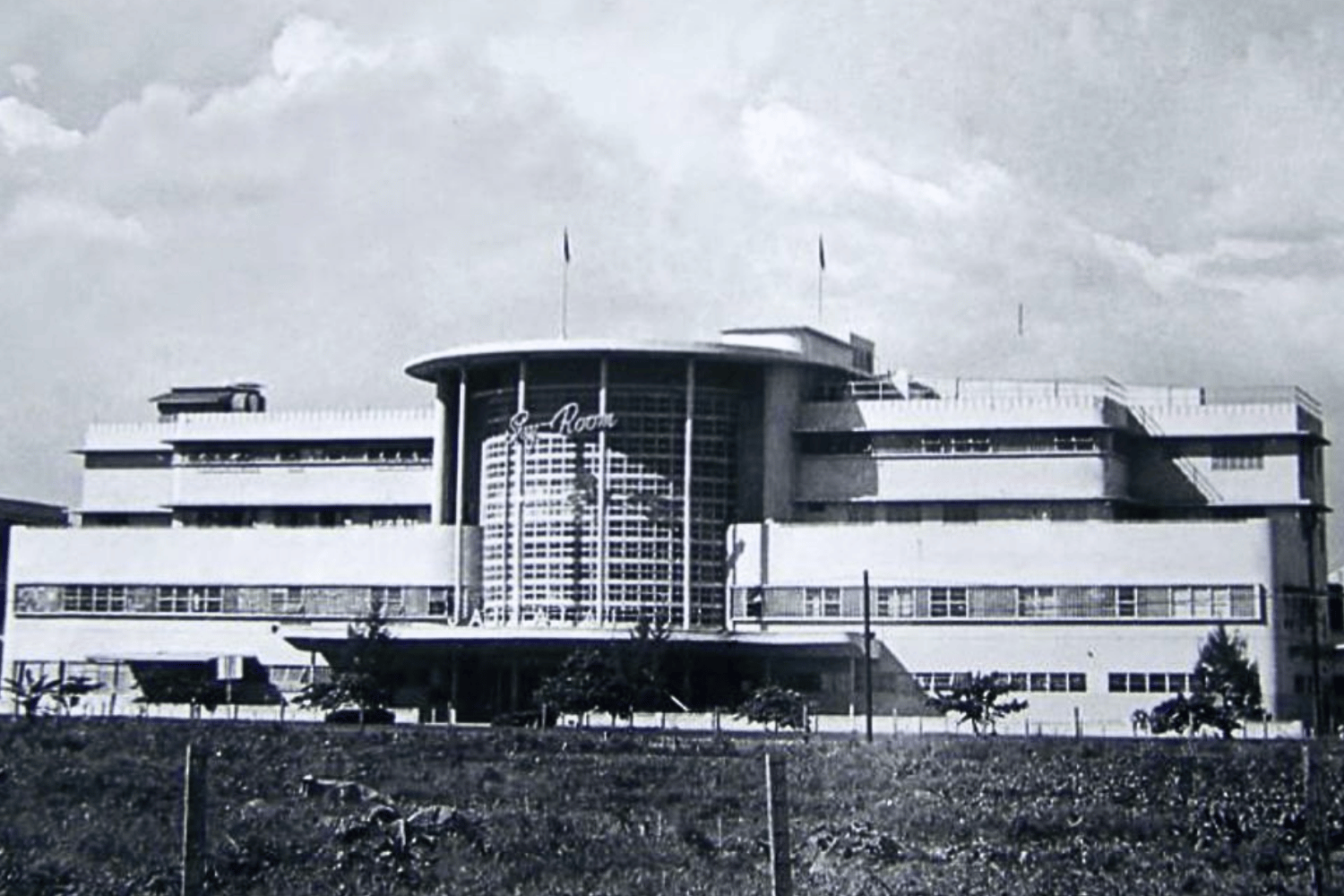
Before sports arenas became commonplace, the Manila Jai Alai Building on Taft Avenue was one of the country’s most glamorous destinations.
Completed in 1940, the Art Deco masterpiece was considered among the finest examples of Streamline Moderne architecture in Asia. Beyond hosting thrilling jai alai matches, it was home to the famed Sky Room, a rooftop restaurant and social club where Manila’s elite gathered.
Remarkably, the building survived World War II. But in 2000, it was demolished under the administration of then-Manila Mayor Lito Atienza to make way for a planned Hall of Justice—a project that never materialized. Its destruction remains one of the country’s most controversial heritage losses.
Crystal Arcade
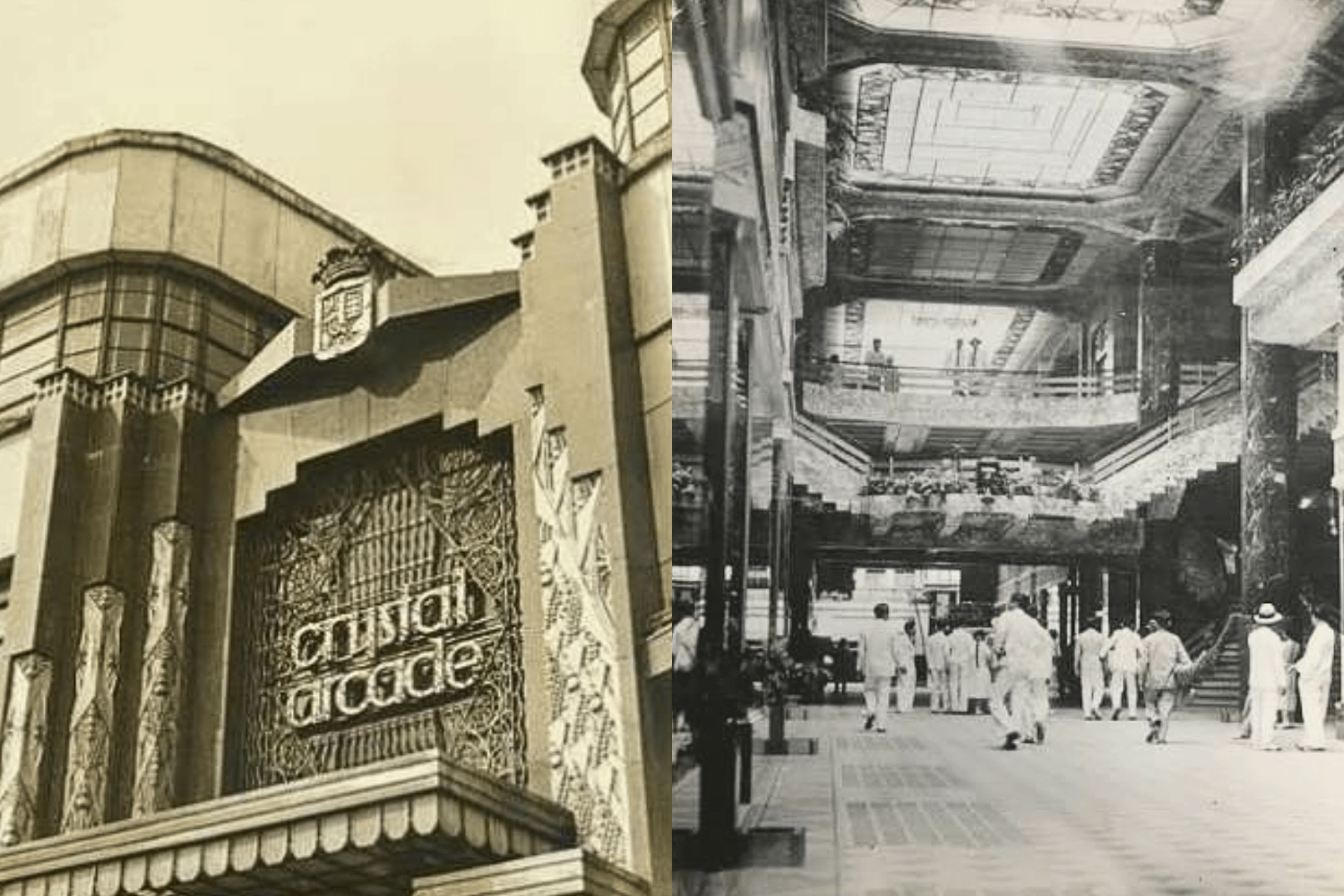
Long before Filipinos shopped inside modern malls, there was the Crystal Arcade on Escolta.
Designed by Andrés Luna de San Pedro and inaugurated in 1932, the building was envisioned as the base of an even grander “Crystal Palace.” Inspired by London’s Crystal Palace, it became the country’s first air-conditioned commercial building and is widely regarded as one of the earliest enclosed shopping centers in the Far East.
Its glass-lined galleries, elegant staircases, skylights, and upscale boutiques made it the pride of pre-war Manila. It also housed the Manila Stock Exchange.
The Battle of Manila in 1945 left the building heavily damaged. Although part of it reopened after the war, the structure was demolished in 1966 to make way for the Philippine National Bank headquarters.
Capitol Theater
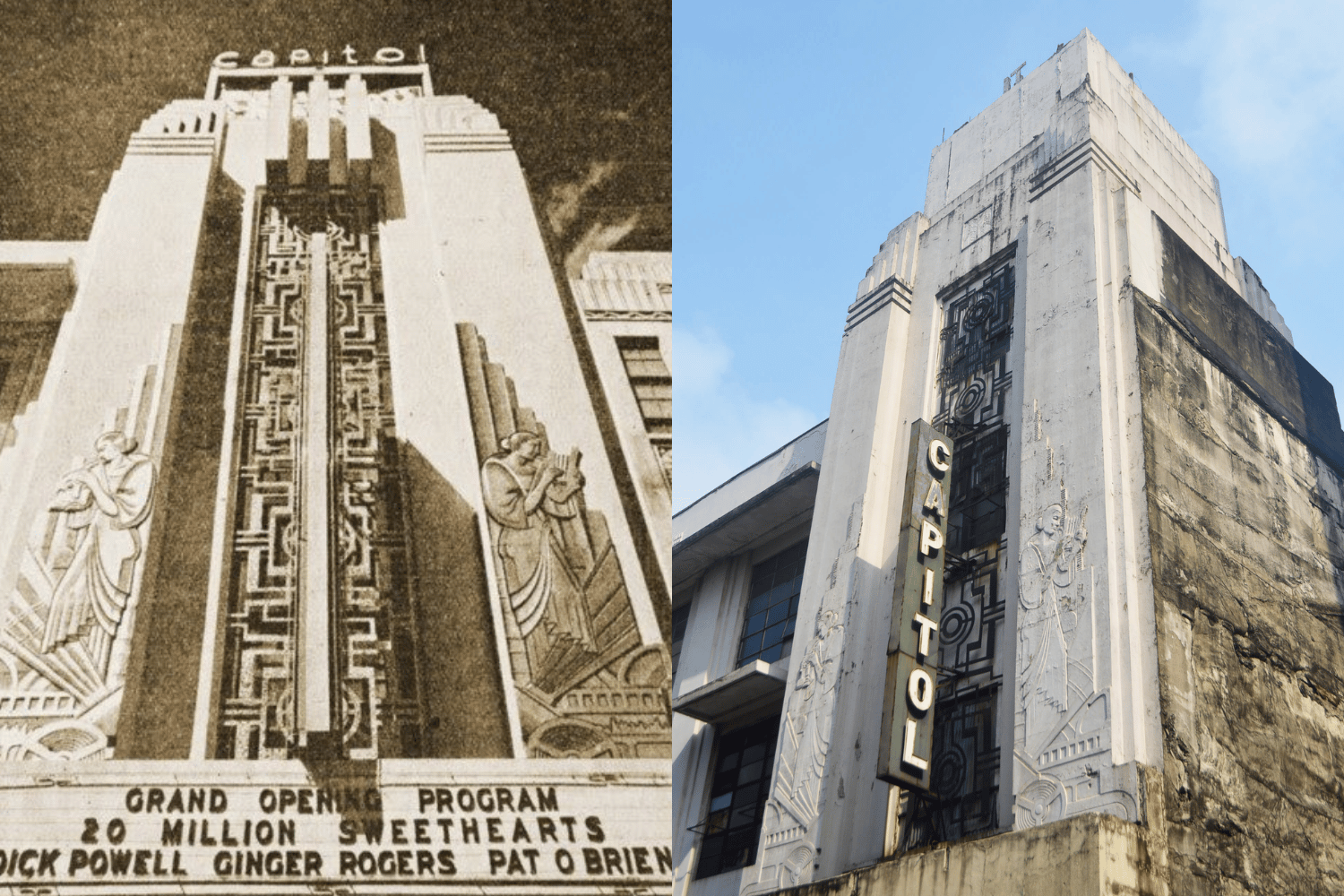
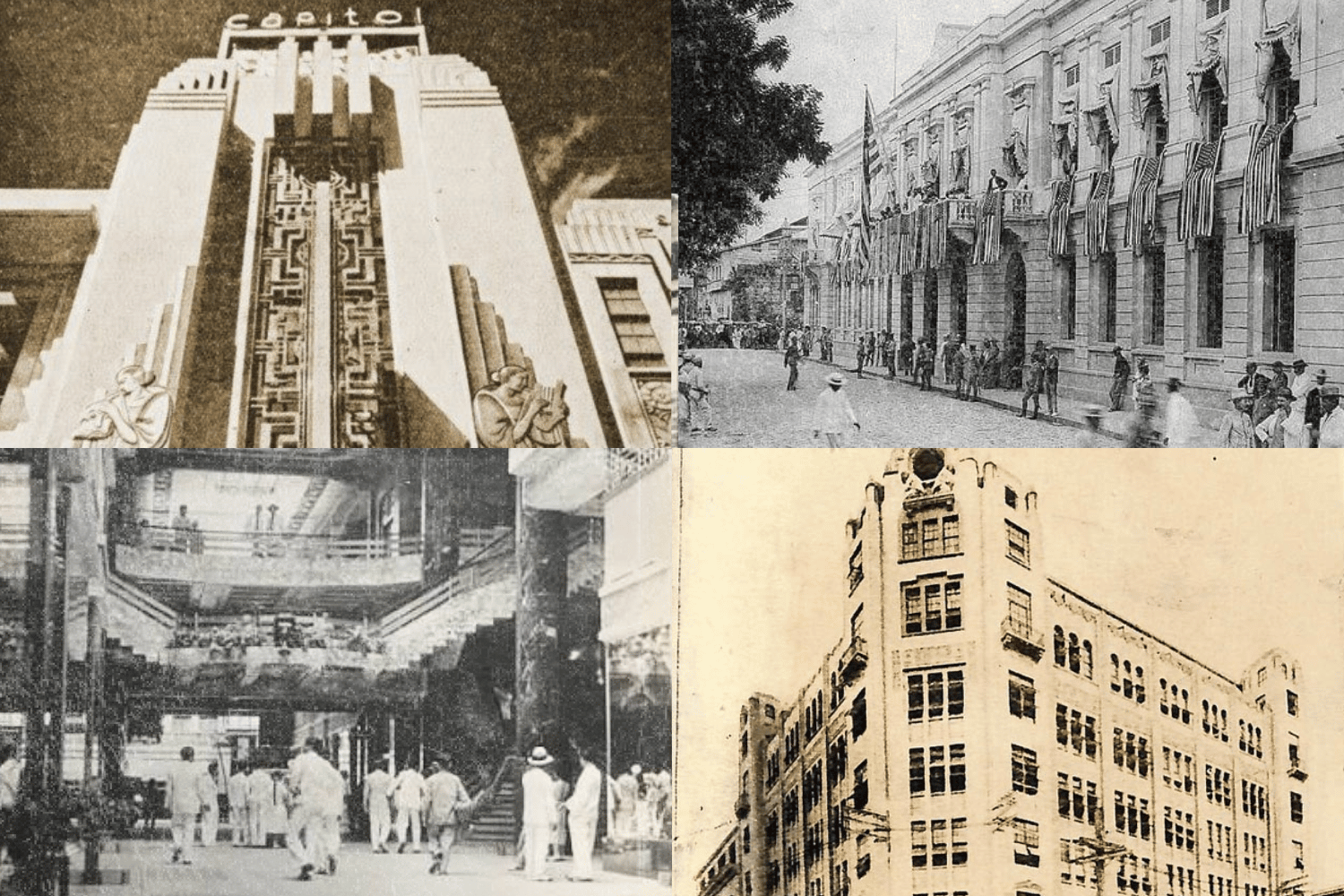
Escolta’s entertainment district once revolved around the Capitol Theater.
Designed by National Artist for Architecture Juan Nakpil and completed in 1935, it earned the title “The Showplace of the Nation.” Its soaring Art Deco tower and sculpted muses became one of downtown Manila’s most recognizable landmarks.
Decades of neglect eventually sealed its fate. In 2020, the building was demolished to pave the way for a residential tower. Only its iconic tower and portions of its façade were preserved and incorporated into the new development.
Sta. Cruz Building
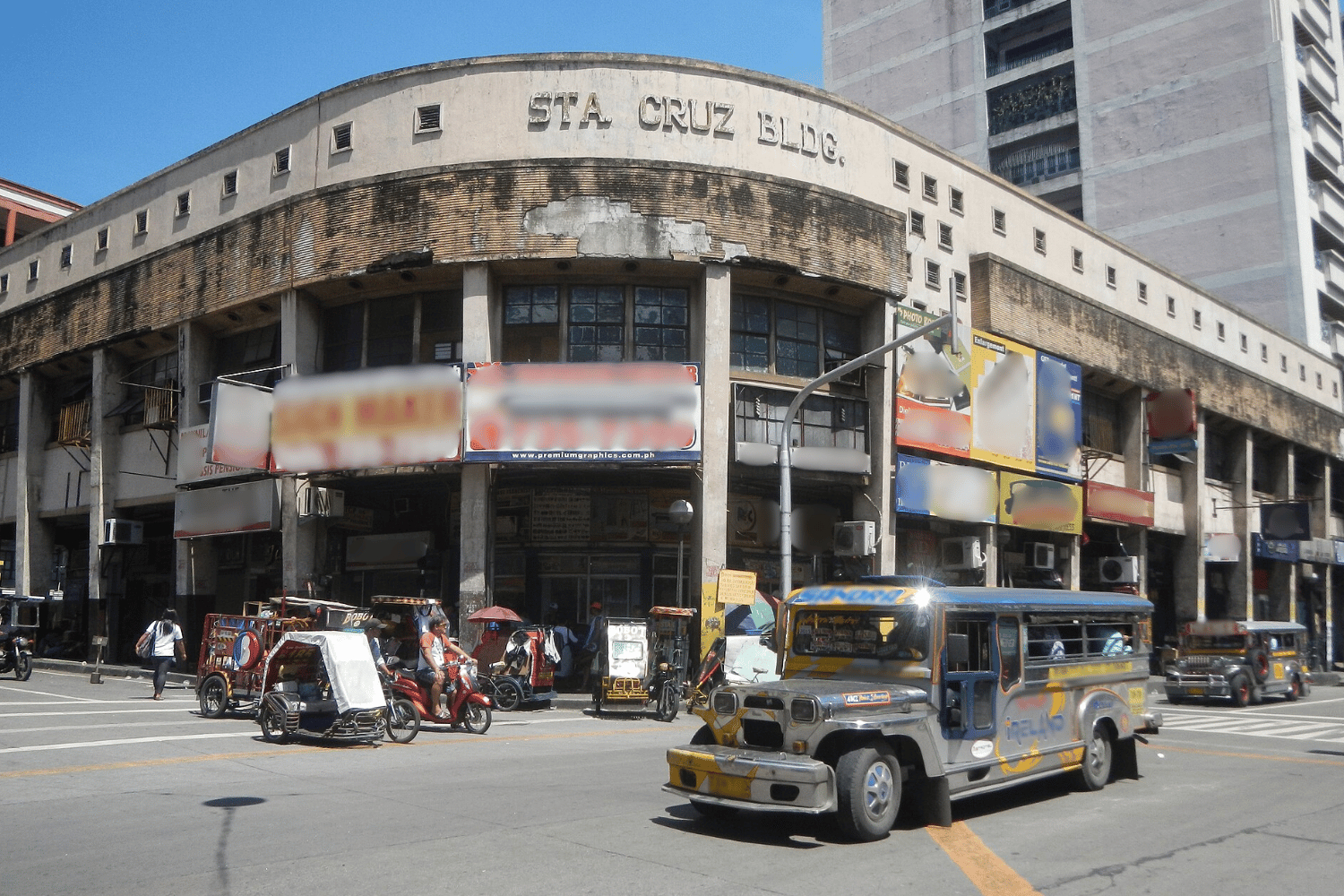
For generations of Manileños, the Sta. Cruz Building was synonymous with watches.
Built in 1948 at Plaza Lacson, it became known as the “Watch Center of Downtown Manila,” housing dozens of watch repair shops, jewelry stores, restaurants, and longtime family businesses. It was a familiar landmark at the gateway to Escolta.
A massive fire devastated the building in 2019, while the 2021 Luzon earthquake further weakened the remaining structure. It was demolished later that year, ending another chapter of old Manila.
Ayuntamiento De Manila
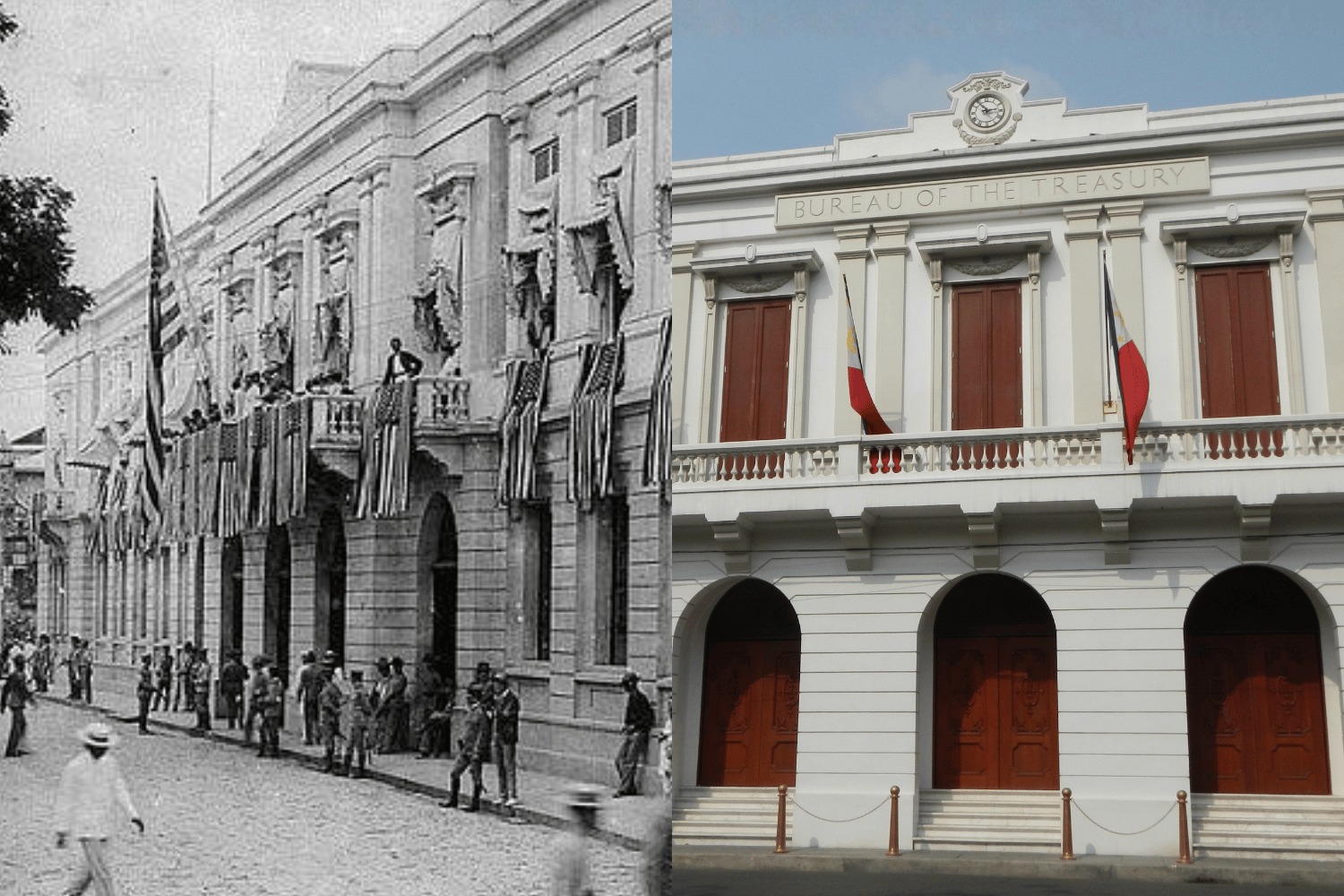
Few buildings witnessed as much Philippine history as the Ayuntamiento de Manila inside Intramuros.
Originally built during the Spanish colonial era and reconstructed in 1879, the so-called “Marble Palace” served as Manila’s city hall and later became the venue where Spain formally surrendered Manila to the United States in 1898.
The original structure was completely destroyed during the Battle of Manila in 1945. Although a faithful exterior reconstruction now stands on the site and houses the Bureau of the Treasury, the original centuries-old building—and the materials that witnessed history firsthand—are gone forever.
Rizal Theater
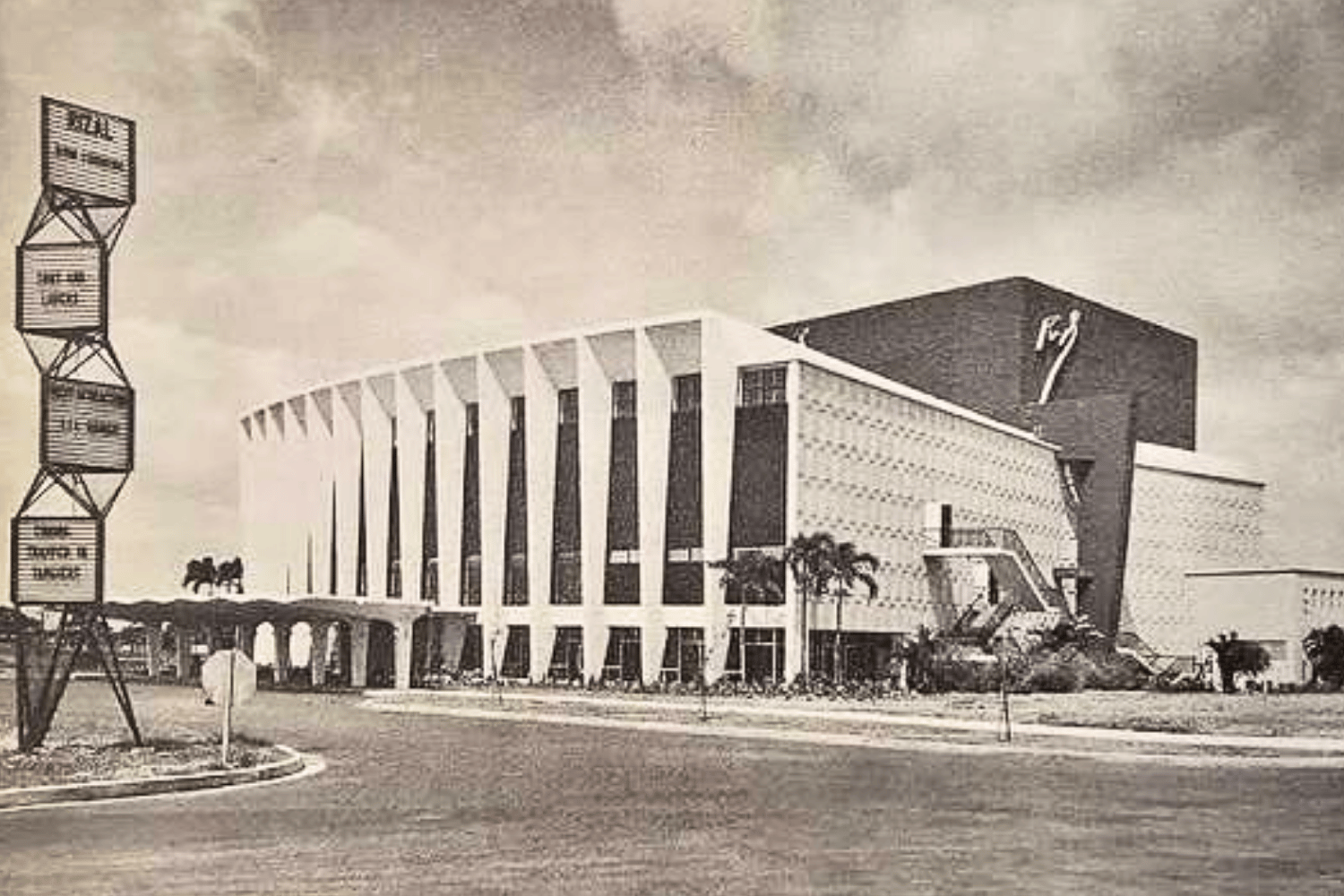
Long before the Cultural Center of the Philippines became the country’s premier performing arts venue, Makati had the Rizal Theater.
Opened in 1960 and designed by National Artist Juan Nakpil, the mid-century modern landmark welcomed Hollywood premieres, concerts, ballets, orchestras, and major cultural productions as Makati emerged as the country’s new business district.
As land values soared in the 1980s, the theater gave way to commercial redevelopment. It was demolished in 1989, and the Makati Shangri-La Hotel later rose on its site.
From elegant theaters and pioneering shopping arcades to financial headquarters and civic landmarks, these seven buildings helped shape the identity of the Philippines during different eras. While progress transformed the cities around them, their disappearance also sparked an important conversation: development may be inevitable, but once a heritage landmark is lost, no amount of reconstruction can truly bring back the history, craftsmanship, and memories it once held.