The innovation could create new opportunities for Filipino farmers.
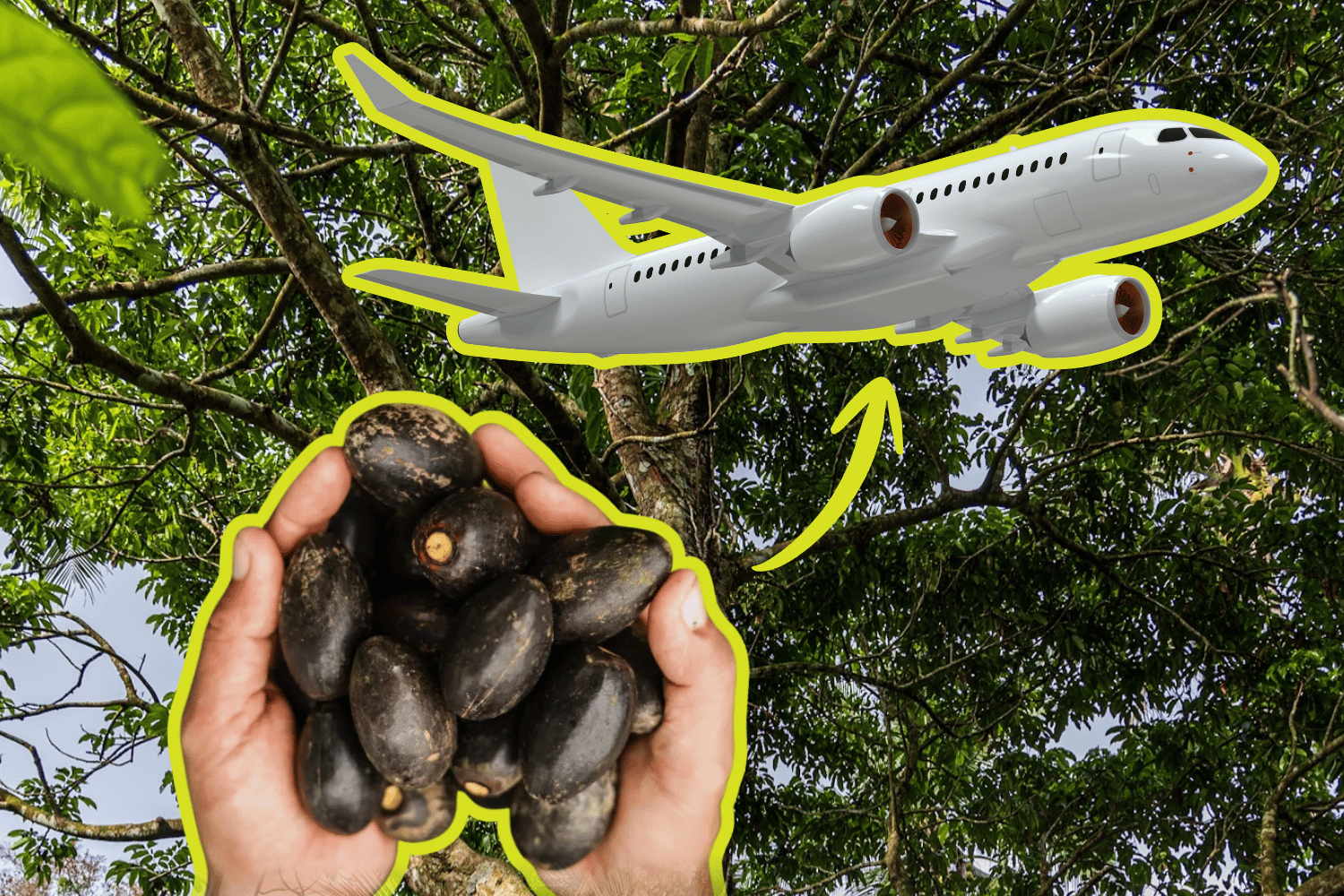
Most Filipinos know the pili tree for its prized nuts and local delicacies. Few would imagine that the same tree is now behind a homegrown invention that could help keep airplanes from leaking fuel.
Filipino aeronautical engineer and materials scientist Mark Kennedy Bantugon developed Pili Seal®, an aircraft-grade sealant made primarily from discarded pili resin—an agricultural byproduct that would otherwise go to waste. Instead of relying on petroleum-based chemicals commonly used in aviation, the invention transforms the resin into an eco-friendly material capable of sealing aircraft fuel tanks.
The innovation begins with what the pili industry throws away.
When raw pili resin is processed for perfumes and cosmetics, only about 10% becomes valuable essential oil. The remaining 90%—known as spent or de-oiled resin—is typically discarded. Bantugon realized that this overlooked waste still possessed remarkable adhesive properties. By combining it with a hardener, he created a durable sealant designed to withstand the demanding conditions inside aircraft.
Originally formulated for aircraft integral fuel tanks, Pili Seal has successfully passed more than 20 industry-standard material tests. It resists aviation fuel, lubricants, moisture, water, and harsh weather while maintaining the flexibility required for aircraft structures. The material has also passed aviation flammability tests without producing toxic chemical fumes.
Its potential goes far beyond aviation.
Researchers see applications for Pili Seal in the automotive, marine, construction, defense, and metal roofing industries, where durable industrial sealants are also in demand.
Perhaps its biggest advantage is its environmental impact.
Conventional aviation sealants are petroleum-based and may contain hazardous chemicals that pose health risks to maintenance workers. Pili Seal is biodegradable and significantly less toxic, offering a safer and more sustainable alternative without compromising industrial performance.
The invention could also create new opportunities for Filipino farmers.
The Philippines generates an estimated 155 million kilograms of discarded pili resin every year. Turning that waste into a valuable industrial product could provide an additional source of income for more than 15,000 pili farmers in regions such as Bicol, Quezon, and Marinduque while reducing agricultural waste through a circular economy.
The innovation has already earned international recognition.
Pili Seal won the Philippine leg of the James Dyson Award in 2021, received patent protection from the Intellectual Property Office of the Philippines, and helped Bantugon secure a place among the Top 10 finalists of the European Patent Office’s Young Inventors Prize 2025. The Department of Science and Technology has also supported the technology as it moves toward commercial production.
From something once considered agricultural waste, a Filipino inventor has created a material that could one day become a standard component in aircraft and other industries. It’s proof that sometimes, world-class innovation doesn’t begin with rare materials—it starts with finding extraordinary value in something everyone else overlooked.
READ: