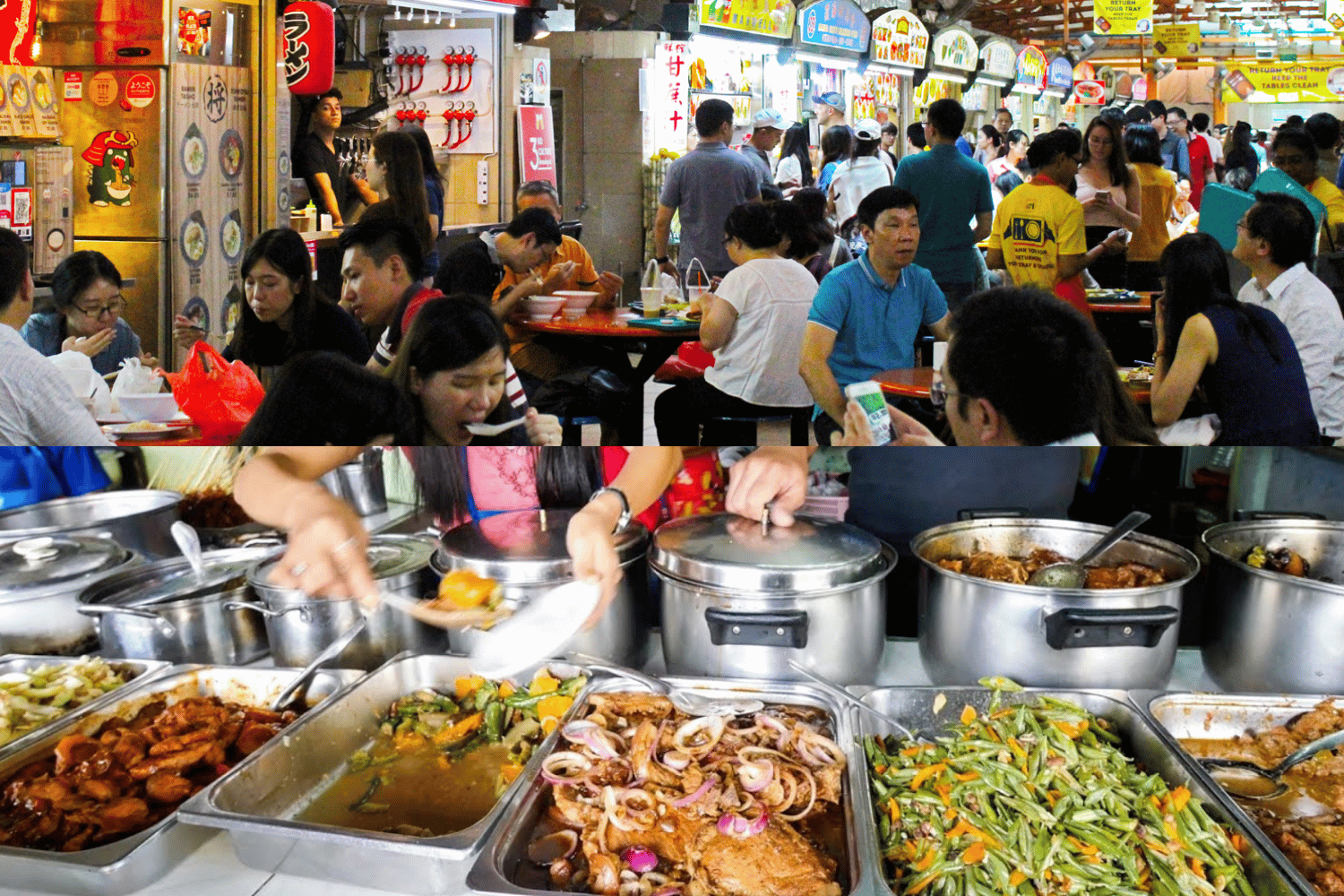
Singapore turned street vendors into a thriving hawker centre culture. Could a similar approach give Manila’s smallest food businesses a clearer path to growth?
Across Southeast Asia, small businesses built on modest capital and daily hustle have become an important part of urban life. Singapore turned its hawker stalls into a regulated and celebrated institution, while Bangkok developed a street economy that draws both locals and tourists.
Manila has its own version through karinderya, turo-turo eateries, and street food vendors that feed communities every day, yet many of these entrepreneurs continue to operate on their own, with little oversight from the government, and without a clear path toward stability and growth.
The contrast offers more than a glimpse into each city’s food culture. It shows how governments can shape the future of small businesses. While the discussion in Metro Manila often revolves around clearing sidewalks and enforcing local ordinances, Singapore approached the same challenge by creating spaces where street vendors could operate legally, safely, and with more stability.
As the city-state modernized in the 1960s and 1970s, street hawkers became a growing public concern because of sanitation, congestion, and food safety issues.
Rather than removing them from urban spaces, the government relocated thousands of vendors into purpose-built hawker centres equipped with water, electricity, waste disposal systems, and regular inspections. Vendors received licenses, customers gained cleaner dining spaces, and affordable food remained accessible.
Over time, hawker centres became part of Singapore’s identity. In 2020, UNESCO recognized Singapore’s hawker culture as an Intangible Cultural Heritage of Humanity, highlighting the role these spaces play in preserving culinary traditions and bringing communities together. The government has also continued supporting the sector through programs that help stall owners improve operations and adopt digital tools.
Preserving street food culture
Bangkok followed a different route. Instead of moving most vendors into centralized facilities, the Thai capital largely preserved its street food culture through designated food streets, markets, and vending zones.
Authorities have conducted clearing operations and introduced restrictions in certain areas, particularly when concerns over congestion and public access arise, but street vendors remain a visible part of Bangkok’s economy and tourism experience.
Singapore and Bangkok reached similar goals through different approaches. One created dedicated spaces for vendors, while the other largely kept them within the streets where they built their businesses. Both cities, however, recognized that these entrepreneurs contribute to the economy and deserve a place within the urban system.
Metro Manila continues to wrestle with the same challenge.
Across the capital region, karinderya, turo-turo eateries, food carts, and street food stalls provide affordable meals for workers, students, commuters, and entire neighborhoods. These small businesses also create livelihoods for families who often start with limited capital and few resources.
The difficulty lies in the lack of a consistent system.
A siomai rice vendor may be allowed to sell along a particular street one day, only to be asked to leave by officials the next. Some vendors return home without income after their carts are confiscated during clearing operations. In other areas, enforcement may be strict for a period before gradually easing, allowing vendors to return to the same spaces.
This cycle creates uncertainty for both entrepreneurs and local governments. Vendors hesitate to invest in better equipment, larger inventories, or business improvements because they cannot be certain whether their location will remain available. Meanwhile, authorities repeatedly spend resources on clearing operations that often provide only temporary solutions.
Operating outside the formal system
The Philippines has a large base of small entrepreneurs, with micro, small, and medium enterprises accounting for 99.63% of registered business establishments in the country, according to the Department of Trade and Industry. Yet many of the smallest businesses continue to operate outside the formal system, limiting their access to financing, training, and programs that could help them grow.
A Philippine version of a hawker centre would come with its own challenges. Singapore’s model cannot simply be copied because Metro Manila has different urban conditions, governance structures, and land constraints. Questions around location, affordability, customer demand, and vendor participation would need to be addressed.
Still, the idea raises an important possibility. Instead of repeatedly moving vendors from one street to another, could cities create spaces where small entrepreneurs can operate within clear rules and build sustainable businesses?
Maybe the Philippines should be asking what kind of environment would allow these entrepreneurs to grow.
Behind every karinderya, turo-turo stall, and food cart is someone trying to build a livelihood. Creating a system that gives these businesses a legitimate place in the economy could determine whether they remain informal ventures struggling to survive or become stronger contributors to local communities.
READ:
ANALYSIS: Japan is paying people to leave Tokyo. Could Metro Manila ever do something similar?
Kenneth M. del Rosario
July 26, 2026

ANALYSIS: EU bans destruction of unsold clothing by large fashion firms. What it means for Philippine retail
Kenneth M. del Rosario
July 29, 2026
Street food is a cultural treasure — but our stupid LGUs are killing it
Matahari
July 9, 2026