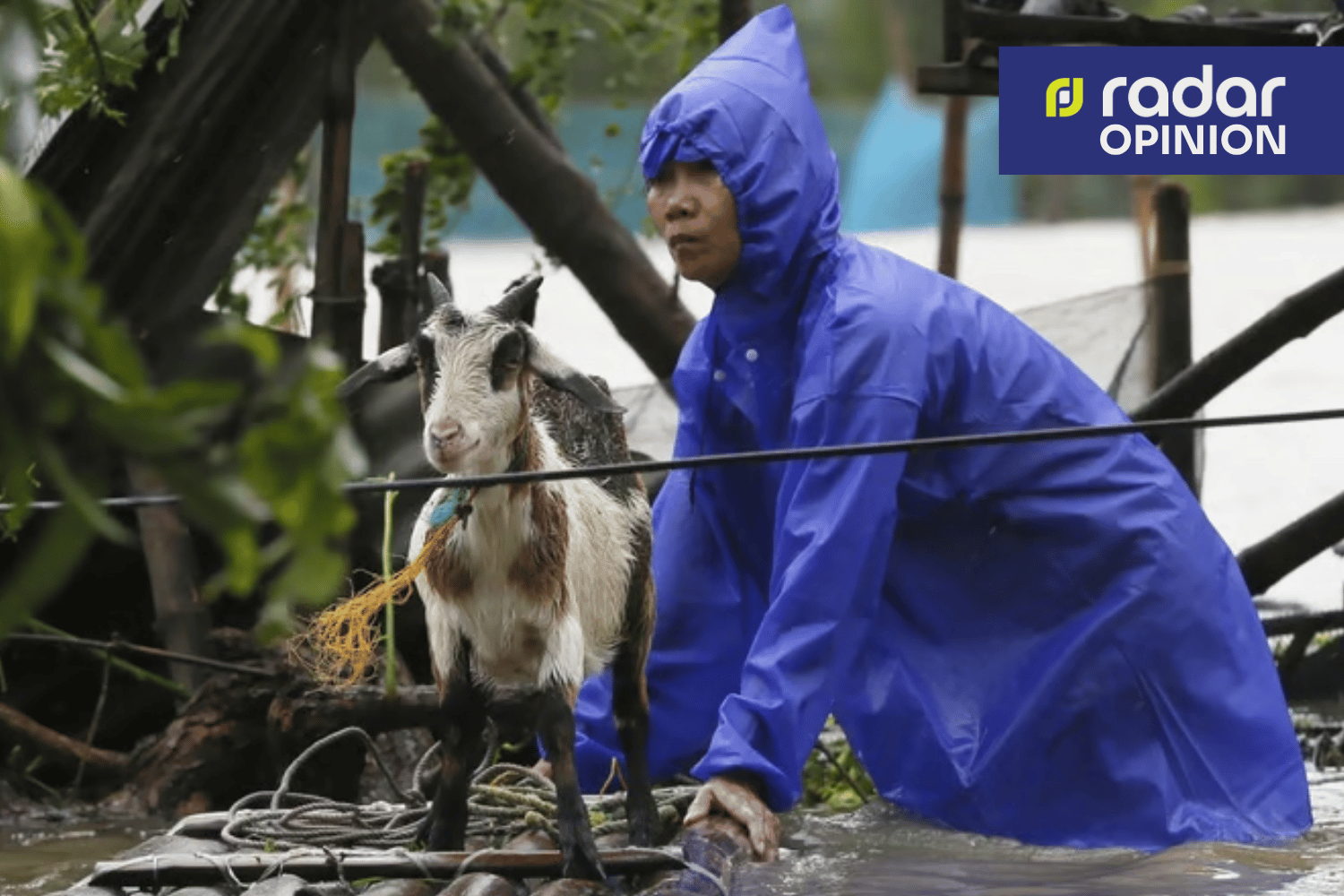
Including pets and livestock in household disaster plans helps keep entire families safe when typhoons strike.
When evacuation orders come, families are told to leave quickly, but pets are sometimes left behind, tied up, locked in cages, or separated from the people they depend on.
It is a problem that returns with every rainy season, even as some local governments have started including animals in disaster response plans.
Quezon City, for instance, has operated pet evacuation facilities and veterinary response teams. Its government advises residents to bring pets and livestock to safe areas or designated animal evacuation sites before typhoons hit.
The city rescued 32 pets and brought them to a dedicated pet evacuation center during Severe Tropical Storm Kristine in 2024, where they received food, veterinary care, and anti-rabies vaccinations as needed.
Last year, the city’s veterinary response team assisted 684 pets across 10 evacuation centers and flood-affected areas during the habagat and several storms.
But not every community has the same facilities, leaving families to make their own arrangements when evacuation becomes necessary.
The Philippine Animal Welfare Society has long urged pet owners to include animals in disaster preparedness and evacuation plans, rather than leaving them tied up or confined during emergencies.
Preparing for a typhoon, then, should include more than food, water, and clothes for the human members of a household.
A pet emergency kit can include food, water, medicines, vaccination records, identification tags, a leash or carrier, and other necessities to keep an animal safe while away from home.
Knowing which evacuation centers, veterinary clinics, or animal rescue groups can accept pets can also save precious time once an evacuation order is issued.
The same principle applies to livestock, which can represent a family’s livelihood and may be especially difficult to replace after a disaster.
Typhoons are a recurring reality in the Philippines, so leaving animals out of disaster planning should not have to be an unavoidable part of every storm.
When families are told to evacuate, the safest plan should allow every member of the household, including the animals that keep them company, to leave safely, too.
READ: