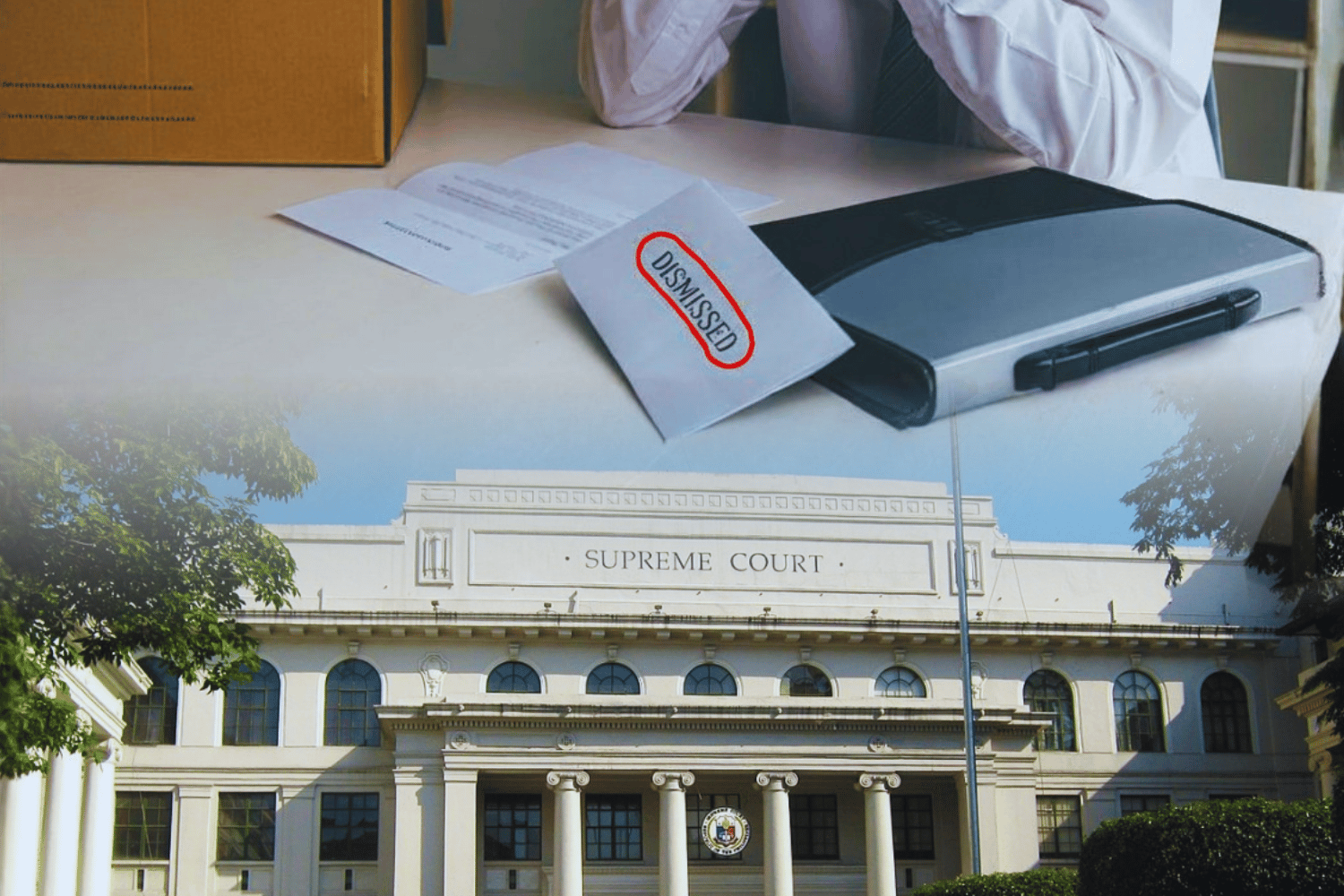
The case involved four illegally dismissed Lopez Sugar Corporation employees who were ordered reinstated with full backwages.
Employees who are illegally dismissed are entitled not only to full backwages but also to Social Security System contributions covering the period they were prevented from working, the Supreme Court has ruled.
In a decision penned by Associate Justice Maria Filomena D. Singh, the Supreme Court’s Third Division held that an employer’s obligation to remit SSS contributions continues during the period covered by an employee’s illegal dismissal.
The ruling stemmed from the case of four employees of Lopez Sugar Corporation (LSC) who were illegally dismissed and later ordered reinstated to their former positions with full backwages.
After the decision became final, the employees asked LSC to remit their SSS contributions corresponding to the period covered by their backwages so they could qualify for retirement benefits.
LSC refused, arguing that under the Social Security Act of 1997, its obligation to make contributions ended when the workers were separated from employment, regardless of whether their dismissal was legal.
The Social Security Commission rejected the company’s argument, saying the employer-employee relationship was deemed to have continued because the workers had been illegally dismissed.
The Supreme Court upheld this position.
Citing Article 294 of the Labor Code, the SC said illegally dismissed employees are entitled to full backwages and other benefits. Because they are considered to have remained employed during the period covered by their backwages, they are also entitled to benefits that would have accrued had they not been unlawfully dismissed.
The ruling means an employer cannot use an illegal dismissal itself as the basis for avoiding SSS contributions that should have been paid while the employee was considered continuously employed.
The SC also ruled that LSC must pay a penalty for failing to remit the workers’ contributions. The penalty was set at three percent per month, counted from the date the contributions became due until they are fully paid.
The case is “Lopez Sugar Corporation v. Perrin, Jr.,” G.R. No. 260447.
READ: