The truth behind planting coconut trees in natural forests.
A photo circulating online carries a striking warning: “A forest with Coconut is a disturbed forest.” It is accompanied by the hashtag #stopplantingcoconutinforestedareas.
The message gets an important ecological principle right: coconut plantations should not be confused with natural forest restoration. But taken literally, the statement goes farther than the science supports.
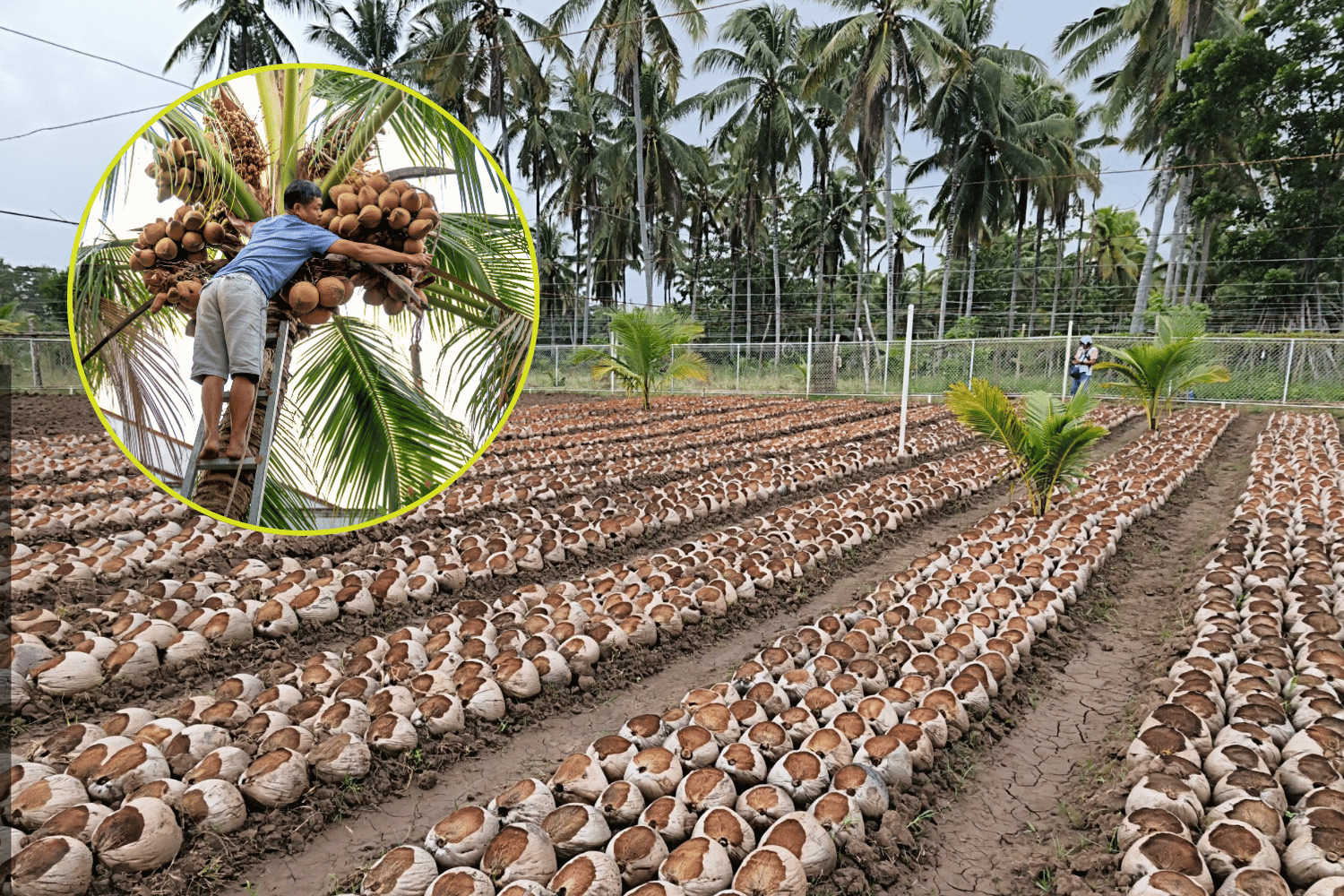
Coconut, or Cocos nucifera, is one of the Philippines’ most important agricultural crops. There is nothing inherently destructive about growing it on farms. The ecological problem begins when coconut cultivation replaces native forest, or when large numbers of palms are introduced into natural forests and eventually dominate them.
A 2010 peer-reviewed study in the Journal of Vegetation Science found that forests on Palmyra Atoll with high coconut abundance had lower diversity of established trees and regenerating understory plants. Coconut-dominated areas also showed significant differences in forest structure and soil chemistry.
In other words, a forest can remain visually green while becoming ecologically poorer.
That distinction matters because a forest is more than a collection of trees. Natural forests contain layers of native vegetation that provide specialized food, shelter and breeding habitat for wildlife. Replacing these communities with an agricultural crop—even another tree—does not recreate the original ecosystem.
Research has also found evidence that coconut palms can compete with native vegetation for water. A study published in Ecohydrology found that native Pisonia grandis trees growing among coconut palms on Palmyra Atoll showed substantially lower sap flow than those growing away from coconut stands, suggesting competition for water.
The Philippine government’s own forestry planning recognizes the distinction between coconut agriculture and natural forests. A forestry development document in the DENR library recommends coconut development in existing plantations and adjacent alienable and disposable lands, while explicitly stating there should be “no promotion of coconut plantations on forest land.”
This is also why calling every coconut-planting project “reforestation” can be misleading.
Coconut farming can provide livelihoods, and diversified coconut agroforestry can offer environmental benefits compared with intensive monoculture. But agroforestry is not the same as restoring a native forest. DENR-supported conservation programs themselves distinguish natural forest protection and rehabilitation from agroforestry areas planted with coconut, coffee, cacao, banana and other crops.
There is, however, an important problem with the viral statement.
A single coconut growing among native trees does not automatically make an entire forest “disturbed.” Coconuts have spread both naturally and through thousands of years of human movement, and their fruits can disperse through seawater.
Ecologists therefore look at a forest’s history, vegetation structure, species composition, regeneration and coconut abundance—not simply whether a coconut palm happens to be present.
So the hashtag #stopplantingcoconutinforestedareas is broadly supported by ecological science, particularly when referring to intact native forests.
But the statement “A forest with coconut is a disturbed forest” is misleading as written. A coconut-dominated forest created through cultivation or expansion can indeed be a heavily altered ecosystem. Scientific evidence shows that coconut dominance can affect biodiversity, soil properties, forest structure and water availability.
Merely finding coconut trees inside a forest, however, is not enough to prove that the entire ecosystem is disturbed.
A more scientifically accurate warning would be: Planting coconut in a natural forest can disturb the ecosystem. Coconut plantations are not substitutes for native forests.
READ:
Veggies to waste? Benguet farmers dump excess crops as buyers run out
John Lloyd Aleta
August 17, 2026
‘Tumbong ng niyog’ is surprisingly good for you
Top Dagohoy
August 6, 2026

EXPLAINER: Why do locally made products cost more than global brands?
Top Dagohoy
August 18, 2026