You probably laughed the first time you heard its name.
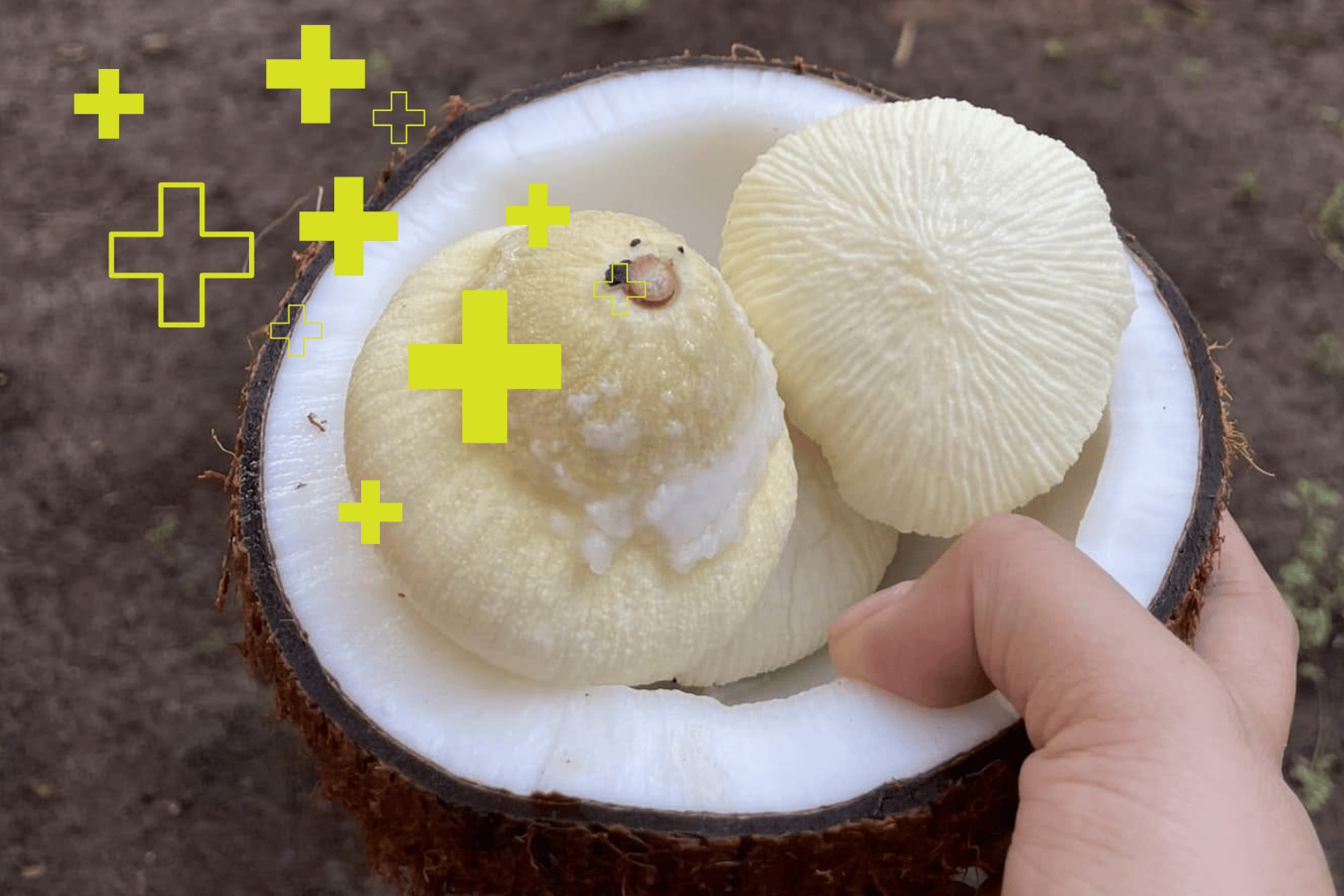
Tumbong ng niyog.
It sounds like a joke, an insult, or something you definitely shouldn’t say out loud. But here’s the surprise: not only is tumbong ng niyog real, you can actually eat it—and it’s one of the sweetest, most nutritious delicacies hiding inside a sprouted coconut.
Depending on where you are in the Philippines, you may know it by a different name. In most Tagalog-speaking provinces, it’s called tumbong ng niyog or tubo ng niyog. In Cebuano, Hiligaynon, Waray, and many other Visayan languages, it’s known as bu-ay, buwa, or buha. Ilocanos call it para or parra, while some communities in Marinduque know it as ibutod.
Whatever the name, they all refer to the soft, spongy coconut embryo that forms inside a mature coconut after it begins to sprout. As the embryo grows, it absorbs the coconut water and meat, transforming them into a fluffy, marshmallow-like ball with a naturally sweet, nutty flavor.
For many Filipinos who grew up in the provinces, finding one inside a germinating coconut felt like discovering a hidden prize.
What many don’t realize is that this childhood favorite is also packed with nutrients.
A natural antioxidant boost
Tumbong ng niyog contains antioxidants, including vitamin C and flavonoids, which help protect the body’s cells from damage caused by free radicals. These compounds support healthy aging and help the body cope with everyday oxidative stress.
Good for digestion
Its soft, airy texture comes with dietary fiber and naturally occurring compounds that help support digestion, promote a healthier gut, and improve nutrient absorption.
A quick source of energy
Like mature coconut meat, tumbong ng niyog contains medium-chain triglycerides (MCTs)—healthy fats that the body converts into energy more quickly than many other fats. It’s a natural energy booster without the heaviness of processed snacks.
Supports the immune system
Sprouted coconut also contains lauric acid and caprylic acid, natural compounds known for their antimicrobial properties that may help the body defend itself against certain bacteria, fungi, and viruses.
Promising for blood sugar
Emerging studies suggest that bioactive compounds found in sprouted coconut may help improve insulin activity and support healthier blood sugar regulation. While more human research is needed, scientists see encouraging potential for metabolic health.
Pick the right one
If you’re lucky enough to crack open a sprouted coconut, timing matters.
The best tumbong ng niyog is about the size of an apple or tennis ball. At this stage, it’s moist, airy, and naturally sweet. Once the sprout grows too large, the embryo becomes dry, cottony, and less flavorful.
Don’t judge it by its name
The coconut has long been called the “tree of life” because almost every part of it has a purpose. Hidden inside is one of its best-kept secrets—a delicacy whose name may make people laugh but whose nutritional value deserves far more attention.
So whether you call it tumbong, tubo, bu-ay, buwa, buha, para, parra, or ibutod, don’t let the name fool you.
It isn’t just edible.
It may be one of the healthiest treats hiding inside a coconut.
READ: