Through the digital app Presyo ng Kopra, farmers can access information on daily copra prices.
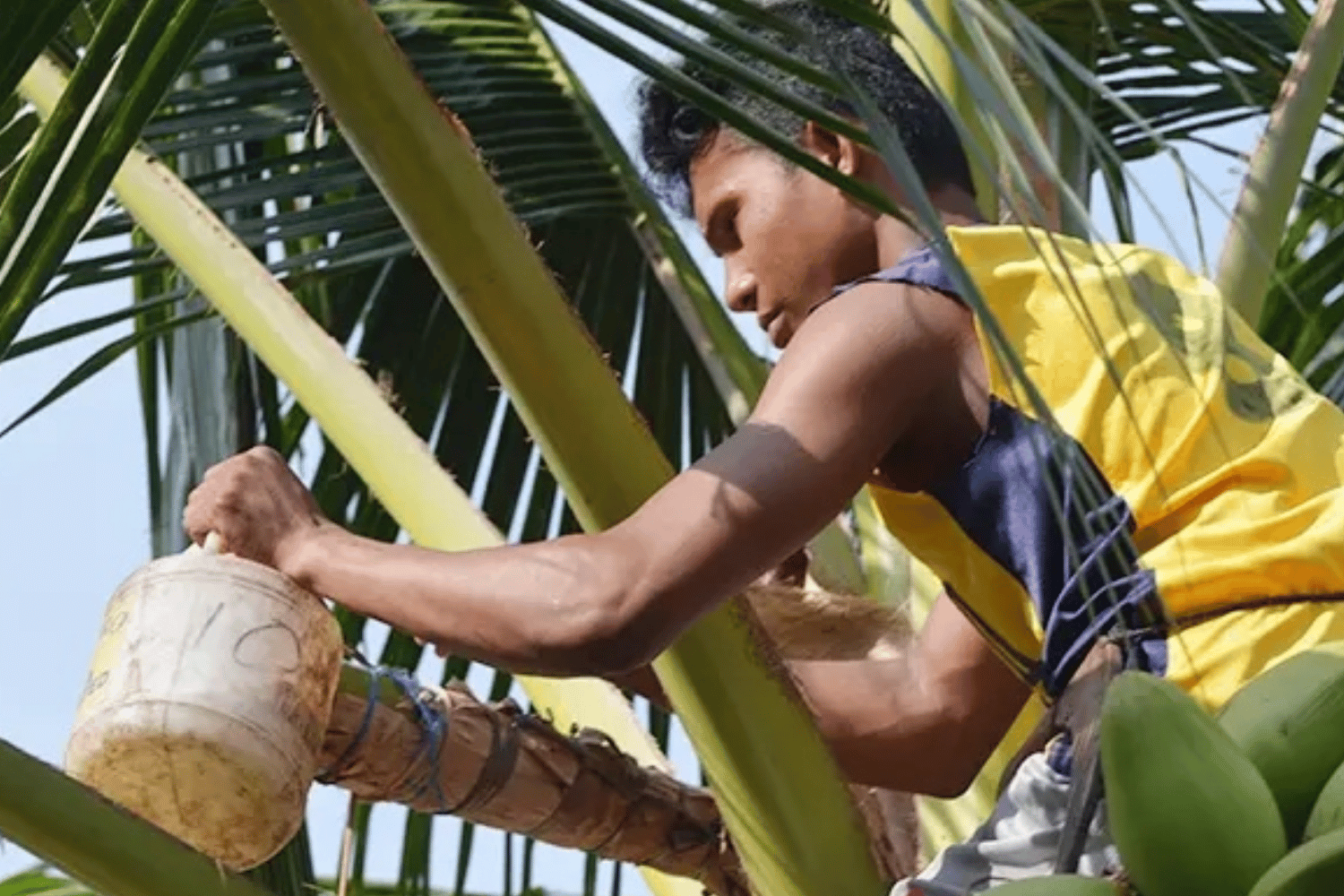
Coconut farmers help supply a multibillion-peso industry, yet many still earn barely survivable incomes from the crop they grow.
The Philippines remains one of the world’s major coconut-producing countries, with the Philippine Statistics Authority valuing coconut production at ₱187.6 billion as of 2025.
However, PSA data showed farm workers earned an average daily wage of ₱331.10 in 2019, with CALABARZON workers receiving the highest average pay and Central Visayas workers the lowest, underscoring the relatively low earnings at the farm level.
The PSA 2019 Trends in Agricultural Wage Rates Survey put coconut farm workers’ daily wage at ₱271.72—below palay workers at ₱303.98 and only slightly above sugarcane and corn workers at ₱253.69 and ₱246.05, respectively.
That disparity is particularly relevant to the coconut industry, as much of the country’s coconut production and processing activity is concentrated in rural provinces.
Farmers can also have limited information about prevailing copra prices, leaving them dependent on buyers and intermediaries when selling their harvest.
The free mobile app Presyo ng Kopra is addressing that information gap by showing farmers daily copra prices before they sell.
The app provides municipal-level prices, the Bicol average, and a Lucena millgate reference price, with local figures based on verified submissions from copra buying stations.
It also features a real-time interactive map showing reported copra prices and supply across Philippine provinces. Current data is concentrated largely in the Visayas, with coverage expected to expand to other areas.
The platform is also recruiting “Data Specialists” who upload daily price information and earn ₱10 per upload, increasing to ₱12 after three months and ₱15 after six months of consistent uploads.
The app comes alongside persistent challenges in the coconut sector, including low farm productivity, aging trees and farmers’ dependence on intermediaries.
READ: