Look around a classroom today and eyeglasses on young faces are hardly unusual.
It is easy to blame smartphones and tablets. But research into childhood myopia, or nearsightedness, points to another important factor: children who spend more time outdoors have a lower risk of developing myopia.
That doesn’t mean staying indoors automatically ruins eyesight. Genetics and other environmental factors matter. But outdoor time has emerged as one of the most consistent modifiable factors associated with lower myopia risk.
And in the Philippines, where gadgets increasingly compete with afternoons of patintero, habulan, biking and basketball, that matters.
Why children become nearsighted
Myopia commonly develops when the eyeball grows too long from front to back, causing light to focus in front of the retina instead of directly on it. Distant objects then appear blurry.
Genetics plays a major role, particularly when one or both parents are myopic. But prolonged near work and insufficient outdoor time have also been associated with myopia.
Screens shouldn’t be blamed as the sole cause. Greater screen use is associated with myopia, but researchers are still untangling the effects of screens from prolonged near work and reduced outdoor activity.
Why going outside matters
Outdoor daylight is vastly brighter than typical indoor lighting.
Scientists are still studying precisely why this appears to protect developing eyes. One leading explanation involves bright light stimulating retinal pathways, including dopamine signaling, that help regulate eye growth.
In a major randomized study in China, adding just 40 minutes of outdoor activity to the school day reduced the three-year incidence of myopia from 39.5% to 30.4%.
Childhood has moved indoors
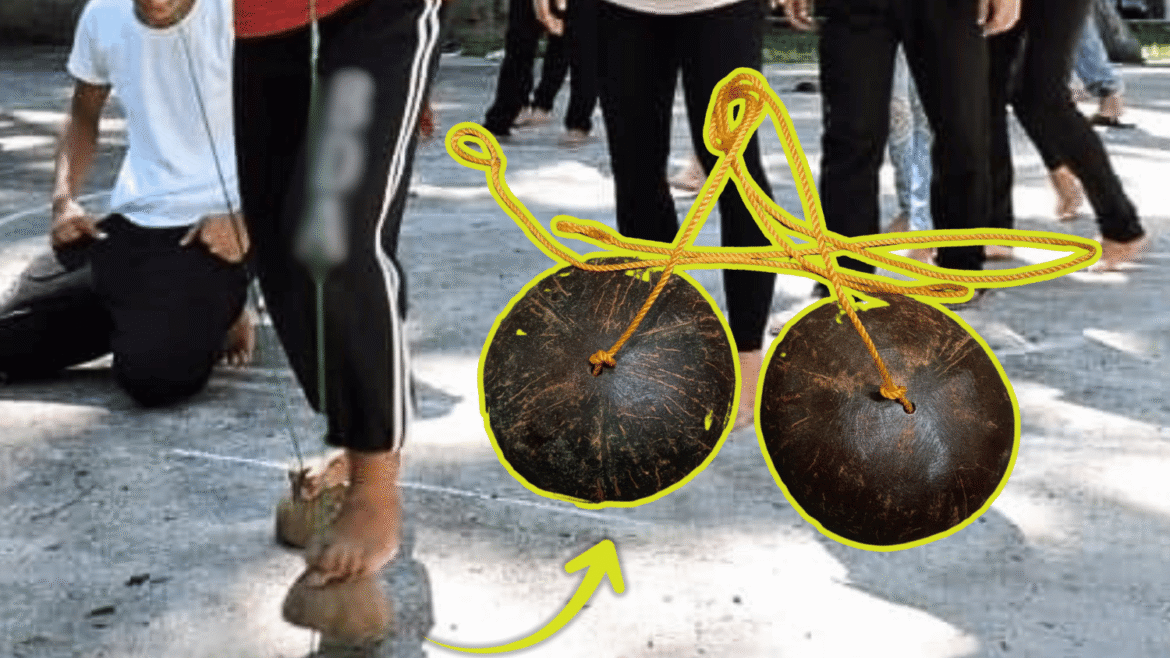
Remember afternoons of tumbang preso, taguan, biking and basketball?
Today’s child can spend those same hours moving from laptop to tablet to television to smartphone.
The concern isn’t simply gadgets. It is a lifestyle combining more near work with less time outdoors.
And myopia isn’t merely an inconvenience fixed by glasses. Higher levels of myopia are associated with increased lifetime risks of serious eye conditions.
Many eye-health recommendations encourage children to spend around two hours outdoors daily when practical. Outdoor time is best supported as a way to reduce the risk of developing myopia, not as a cure or guaranteed way to stop existing myopia.
Children should never stare directly at the sun. Ordinary outdoor play provides the ambient daylight being studied.
And children already struggling to see distant objects should receive a proper eye examination.
So don’t panic over every screen or blame every book.
But don’t let childhood become entirely indoors either.
Sometimes protecting developing eyes can begin with three simple words:
Go outside and play.
READ: