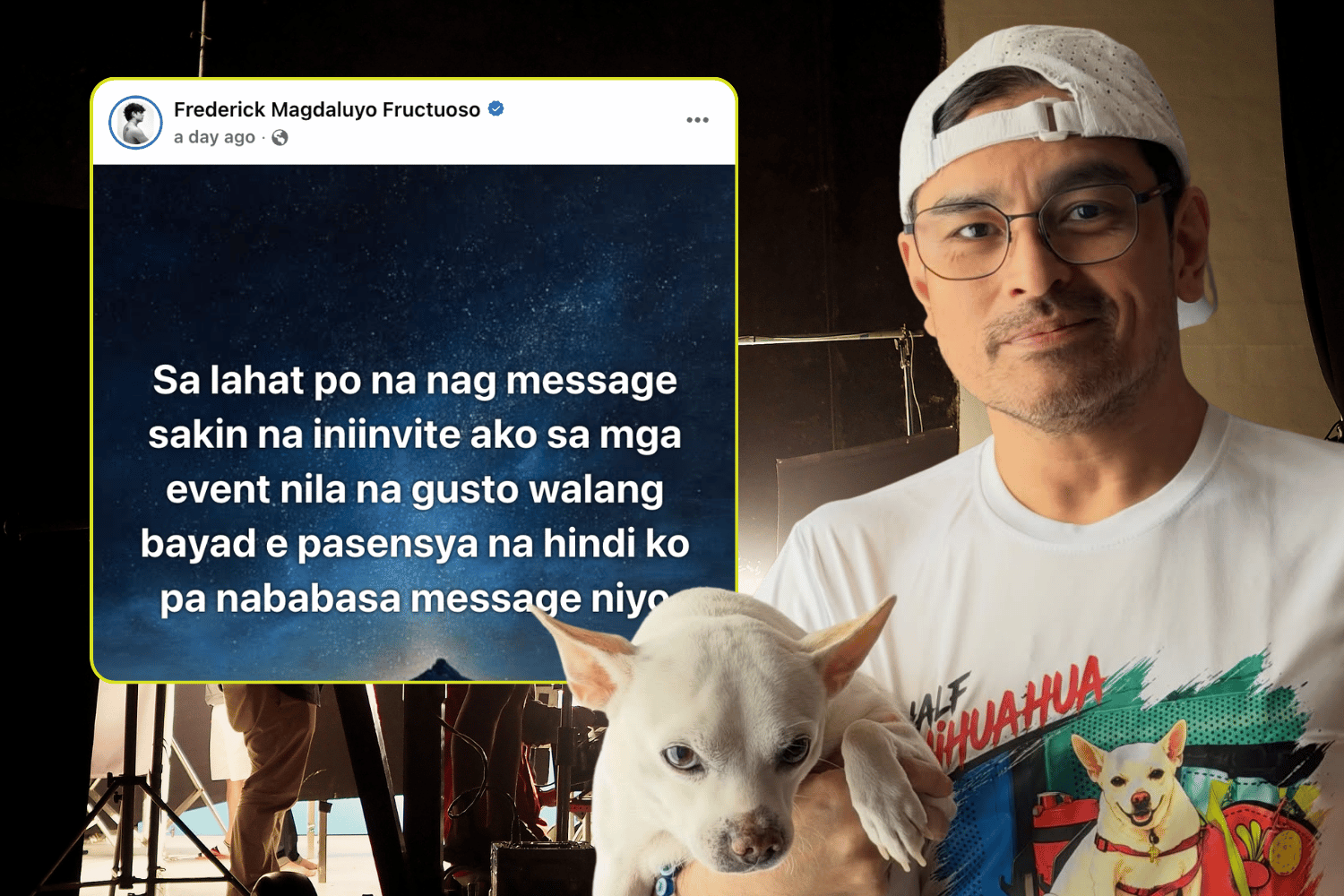
“Hindi ko pa nababasa message niyo,” the actor joked on his Facebook page.
The banter may have been lighthearted, but the situation behind it reignited a familiar discussion about how society perceives people who work in entertainment and the creative industries.
If you’re an aspiring actor, a freelance creative, or a struggling writer, chances are you’ve heard it before: “Kailan ka ba magkakaroon ng totoong trabaho?” or “Hindi ka naman mapapakain ng passion mo.”
But why do people so often treat creative work as less “real” than other jobs?
One explanation is that creative work is closely associated with passion, self-expression, and personal fulfillment. This can blur the line between someone’s passion and profession, making it easier for others to assume that creative workers should be willing to work simply because they enjoy what they do.
Communication scholar Brooke Erin Duffy and Elizabeth Wissinger explored this idea in their 2017 study, “Mythologies of Creative Work in the Social Media Age,” examining the mythology of creative work as “fun, free, and ‘just being me.’” Their research shows how the perception that creative work is inherently enjoyable can obscure the labor and economic realities behind it.
Research on aspiring artists has likewise found that many creative workers navigate unstable, low-paying, part-time, or short-term employment while building careers in the arts. Many combine creative work with other jobs to make ends meet.
Which brings us back to the seemingly simple question: why should someone be expected to work for free just because they work in entertainment?
An actor’s appearance at an event is still an appearance. A photographer’s shoot, a writer’s article, and a musician’s performance are still work. Loving what you do does not make the labor behind it disappear.
The “do it for the exposure” mentality can be especially complicated in creative industries, where opportunities and visibility are often tied to whether someone can afford to keep working. Passion can coexist with insecure working conditions; loving the work does not mean the work has no value.
Not every creative opportunity has to come with a paycheck. Collaborations, passion projects, and volunteer work can be meaningful when people knowingly agree to them. The problem begins when passion becomes an excuse to undervalue labor.
Creatives also have a role to play. They have to value their work, set boundaries, and speak up when “exposure” is being used to replace fair compensation.
The public also has to broaden its understanding of labor. Not all work happens behind a desk or involves physical exertion. Sometimes, labor is writing, performing, designing, or showing up with a skill that took years to develop.
Fructuoso’s post may have been a joke, but the point underneath it is worth taking seriously: entertainment is an industry, creativity is labor, and the people who make the things we watch, hear, read, and enjoy are workers, too.
So the next time someone says, “Maghanap ka ng totoong trabaho,” maybe the better question is: who decided creative work wasn’t real work in the first place?
READ: