Its disappearance carries a warning for the country.
Imagine casting a fine net into Lake Buhi and pulling up hundreds of tiny, almost transparent fish.
For generations, people in Camarines Sur would have immediately called them sinarapan—the legendary Bicolano fish so tiny that several could practically fit on a fingertip.
But scientists have discovered something alarming.
The real sinarapan may no longer be there.
A comprehensive survey by the National Fisheries Research and Development Institute (NFRDI) found no true sinarapan (Mistichthys luzonensis) in Lake Buhi, historically the species’ most famous habitat.
Researchers conducted surveys in 2023 and 2024 and examined tiny fish collected from the lake. What appeared to be sinarapan turned out to be larvae or juveniles of other fish species.
It is a remarkable disappearance for a fish once synonymous with Lake Buhi.
The world’s smallest food fish
Sinarapan is found naturally only in the Bicol Region.
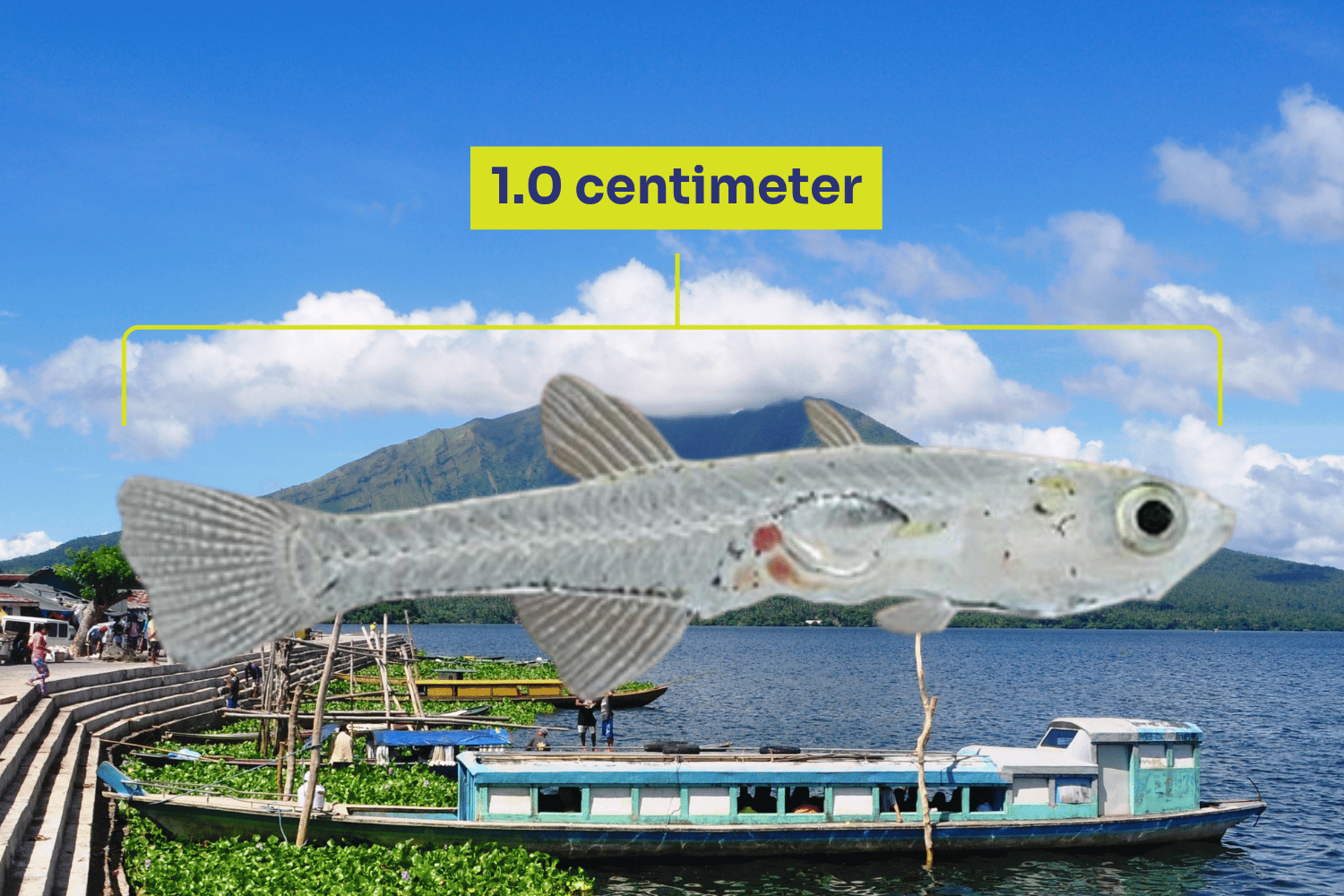
Adults are extraordinarily tiny, commonly measuring around one centimeter long. Guinness World Records has recognized it as the world’s smallest commercially harvested food fish.
Its nearly transparent body made enormous schools of sinarapan shimmer through the water.
For generations, the fish was also food. Sinarapan could be dried or cooked with vegetables, tomatoes and chili, making this biological rarity part of Bicolano culinary culture.
But humans eventually took too much from its home.
How Lake Buhi lost its sinarapan
The disappearance did not happen overnight.
Sinarapan was heavily harvested for decades. Because thousands of the tiny fish were needed for substantial catches, increasingly intensive fishing methods put enormous pressure on the population.
Then Lake Buhi itself changed.
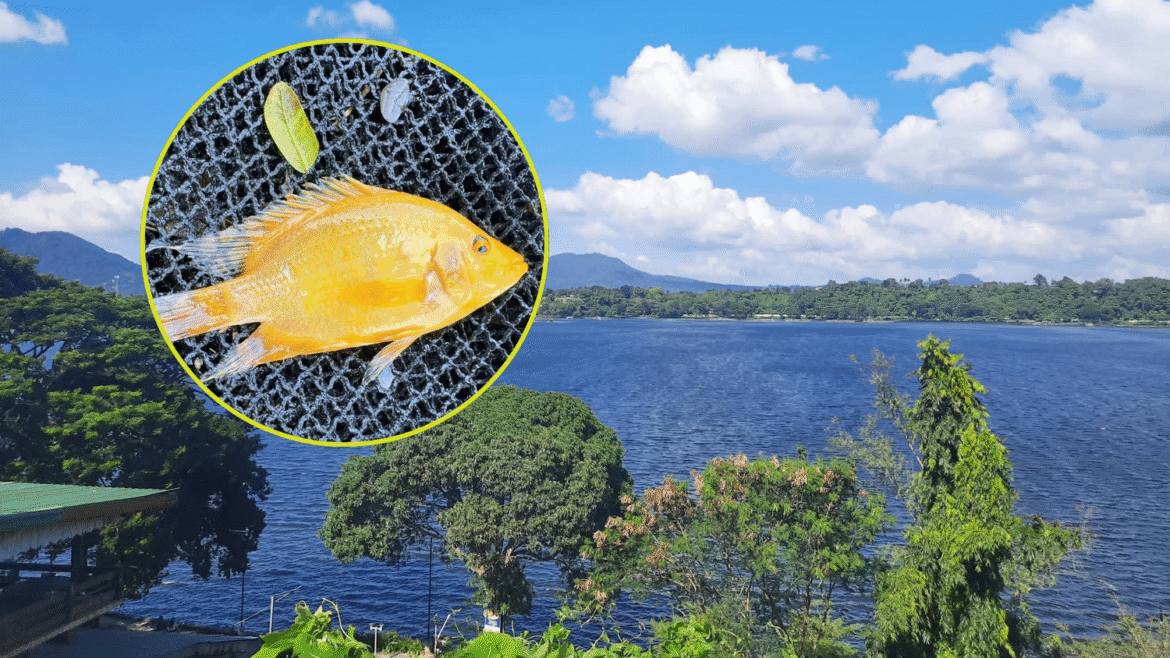
Aquaculture expanded and introduced fish such as tilapia into an ecosystem built around much smaller native species. Larger fish competed for resources and could prey on sinarapan eggs and young.
The proliferation of fish cages also placed additional pressure on water quality as uneaten feeds and fish waste accumulated.
For a fish barely a centimeter long, changes throughout an entire lake could be devastating.
The last refuge
There is one crucial distinction: sinarapan is not extinct.
Populations have survived outside Lake Buhi, most importantly in small lakes around Buhi. Conservation efforts have focused on protecting these remaining populations and restoring the species to places where it disappeared.
That makes what happened in Lake Buhi more than a story about one tiny fish.
Sinarapan survived for countless generations before overfishing, introduced species and drastic changes to its habitat pushed it out of the lake with which its name became inseparable.
And its disappearance carries a warning for the Philippines, one of the world’s great centers of freshwater biodiversity.
A species does not have to become globally extinct before we have already lost something irreplaceable.
Sometimes extinction begins one lake at a time.
READ: