50 years of Mali’s captivity is as a mark of shame for the Philippines.
The Manila city government continuing to profit from Mali even after death is a gross and disrespectful attempt at beating a dead horse—or elephant, in this case.
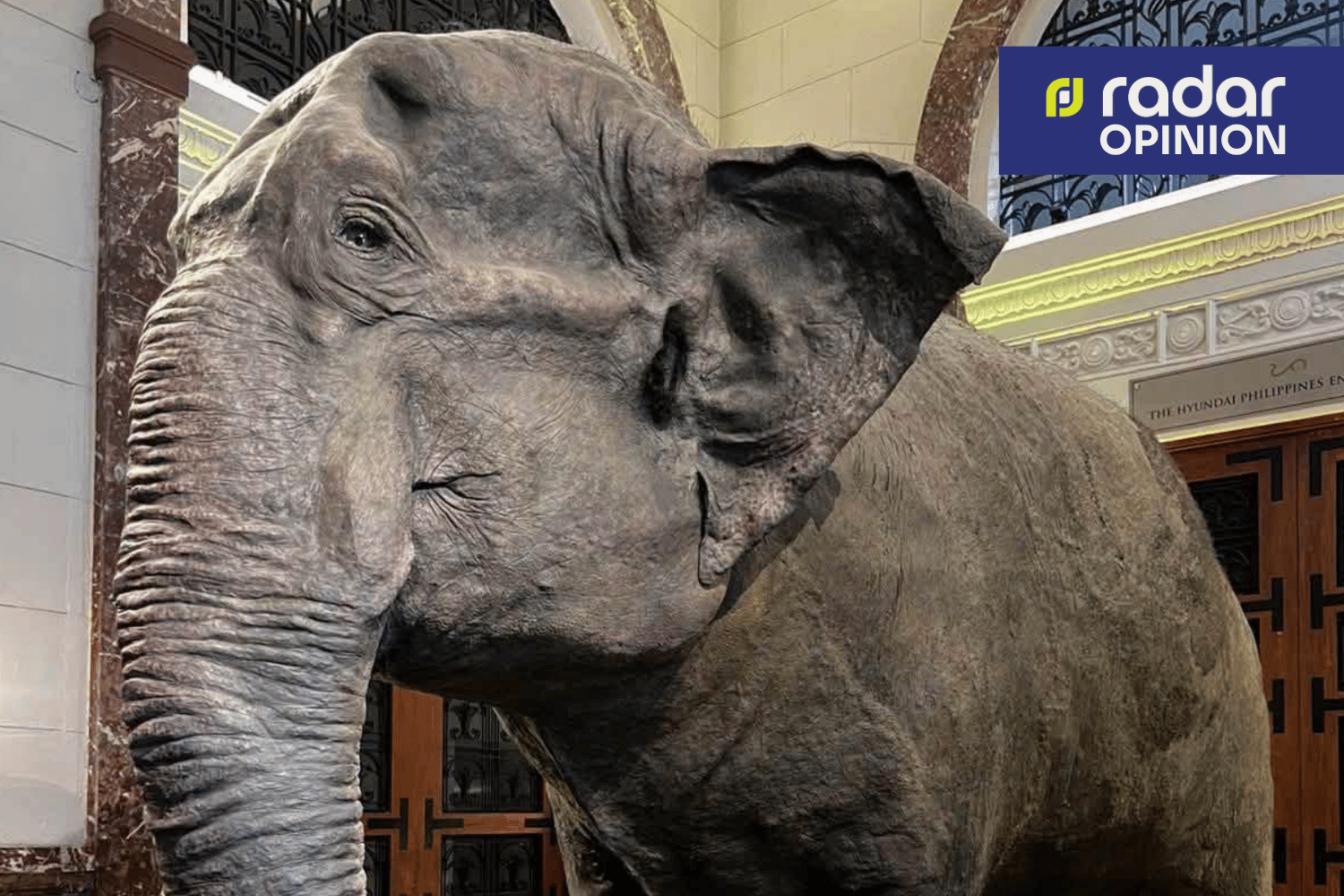
The taxidermied body of Mali the Elephant was unveiled as the newest exhibit at the National Museum of Natural History in Manila.
Vishwa Ma’ali, nicknamed Mali, was a female Asian elephant gifted by the government of Sri Lanka to former first lady Imelda Marcos in 1981. Mali was then transferred to the Manila Zoo, where she was estimated to be 11 months old at the time.
Animal welfare groups and influential figures around the world dubbed Mali “the World’s Saddest Elephant,” since she was the lone elephant in the entire Philippines and spent her whole life in captivity. Her health while still alive had been heavily debated, with some believing Mali was being neglected and others saying she was in healthy condition.
“Had the government not blocked her transfer, Mali could have lived out her days in a sanctuary, bonding with other elephants and getting the care she desperately needed,” said People for the Ethical Treatment of Animals Asia president Jason Baker in a statement.
Mali passed away in November 2023, estimated to be 43 to 49 years old, due to congestive heart failure and various organ issues.
Not even two weeks after Mali’s passing, the Manila city government announced plans in December 2023 to preserve the elephant’s remains. It had commissioned the Davao City-based D’Bone Collector Museum to treat the bones and skin, with initial plans for them to be displayed at the museum for three months.
The taxidermied Mali only made her formal public debut this week at The Lady of The Land exhibit at the National Museum.
The display is indeed educational. But instead of teaching the public about animals and conservation, it is a learning experience about the lack of concern that public institutions have towards innocent animals like Mali—forced to be used as vessels of profit even in death.
Animal captivity was normalized
Mali had already gone through enough. While many visitors will likely recall happy memories of seeing the elephant at Manila Zoo, or will remark that nothing seemed inherently wrong with the elephant when she was still alive, this is where the problem lies: animal captivity has become so normal that nobody begins to question why an elephant, which is not at all native to the Philippines, was treated as a gift and kept for human entertainment.
The Nonhuman Rights Project, a global organization advancing animal rights, makes the case against keeping elephants in captivity because it hampers their development in the name of business interests.
“Zoos defend elephant captivity and breeding programs as educational, but what kind of message are they really sending? Elephants in captivity are denied space, social complexity, and autonomy (…) They exhibit signs of chronic distress—swaying, rocking, aggression—classic symptoms of psychological breakdown,” the NhRP said on its website.
While there were valid arguments against transferring Mali to a proper sanctuary, including fears that the elephant may experience stress in adapting to a new environment, keeping Mali away from her natural environment should not have happened in the first place.
The captivity of Mali for nearly 50 years should be a mark of shame on the City of Manila and the country as a whole. Her corpse put on display is a testament to how our institutions, and potentially our countrymen, had always viewed her—an unliving commodity to profit from and gain attention, without regard for the dignity or respect she deserved in her actual life—and in death.
READ:

OPINION: Transparent bags won’t stop school shootings
Top Dagohoy
August 27, 2026

OPINION: Renaming a hospital after a mayor is a waste of public funds
Kiara Gorrospe
August 27, 2026

OPINION: Stop buying dogs for content and clout
Mianne Cudal
August 14, 2026