The familiar call of “Tahoooo!” may be one of the gentlest sounds of a Filipino morning. But a viral Threads post has made thousands look differently at the man carrying those two heavy metal containers down the street.
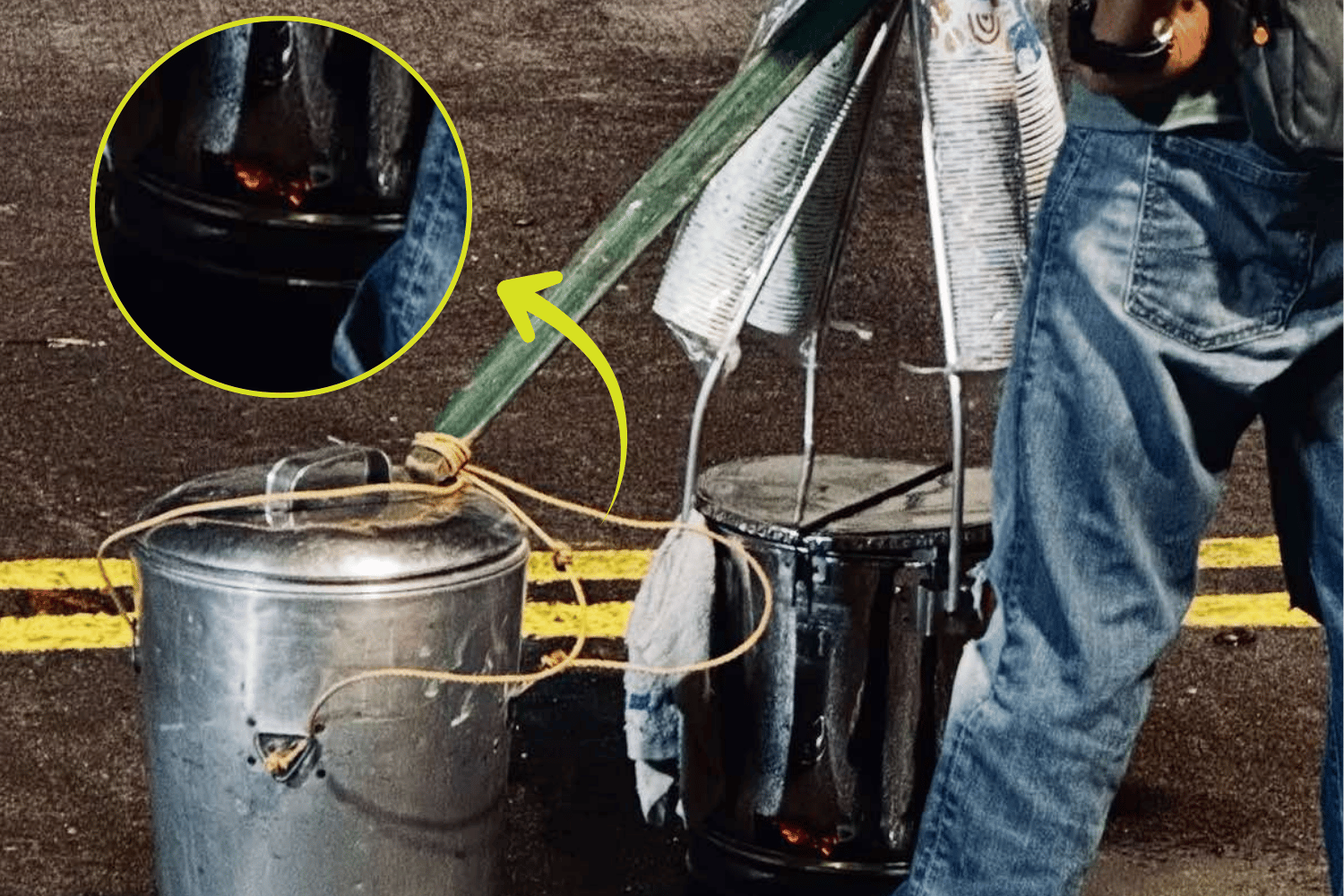
Threads user @dee.bouchr shared photos of a taho vendor whose carrying rig appeared to include burning charcoal beneath one of his containers, apparently serving as a portable heat source to keep his taho warm while making his rounds.
“I was today years old when I found out that taho buckets have burning coal under the sago and arnibal tubs,” she wrote.
The post quickly went viral, registering more than 106,000 views and 4,300 likes in the screenshots, with many commenters admitting they had never noticed such a setup.
“Wow! I didn’t know that. Hats off to the magtataho!” one user wrote.
But commenters also pointed out an important detail: not all taho vendors use charcoal beneath their containers.
“Not all taho vendors have charcoal under the tub, but kudos to that innovative idea,” one commenter said.
Another, who said their family previously had a taho business, likewise said they did not use burning charcoal underneath their containers. Others suggested the photographed setup could simply be this particular vendor’s solution for keeping his product warm longer.
The discovery soon became more than taho trivia. It offered a glimpse of the ingenuity—and physical effort—behind one of the country’s most familiar forms of street vending.
Traditional magtataho carry two large containers suspended from a wooden or bamboo pole across their shoulders. Inside are the ingredients of the Filipino breakfast staple: soft silken tofu, arnibal and sago. The load is already substantial without the added weight and heat of burning charcoal.
The post also prompted Filipinos to share memories of neighborhood taho vendors who had become fixtures of their childhood.
One commenter recalled a vendor she had known since childhood who continues selling taho decades later, even after raising and educating his children and suffering a stroke.
Another remembered “Kuya Mandy,” a neighborhood vendor who reportedly allowed children to get taho even when their parents were away, simply putting their purchases on a list to be paid later.
Those stories helped explain why a seemingly ordinary photograph struck a nerve.
The magtataho is so deeply woven into Filipino mornings that people rarely think about what happens behind that familiar call—the heavy load, the kilometers walked and, for at least this vendor, the fire apparently traveling with him.
As @dee.bouchr wrote: “We really don’t know everything about everyone’s struggles.”
Sometimes, something as small as noticing what sits beneath a taho bucket is enough to make people see the person carrying it.
READ: