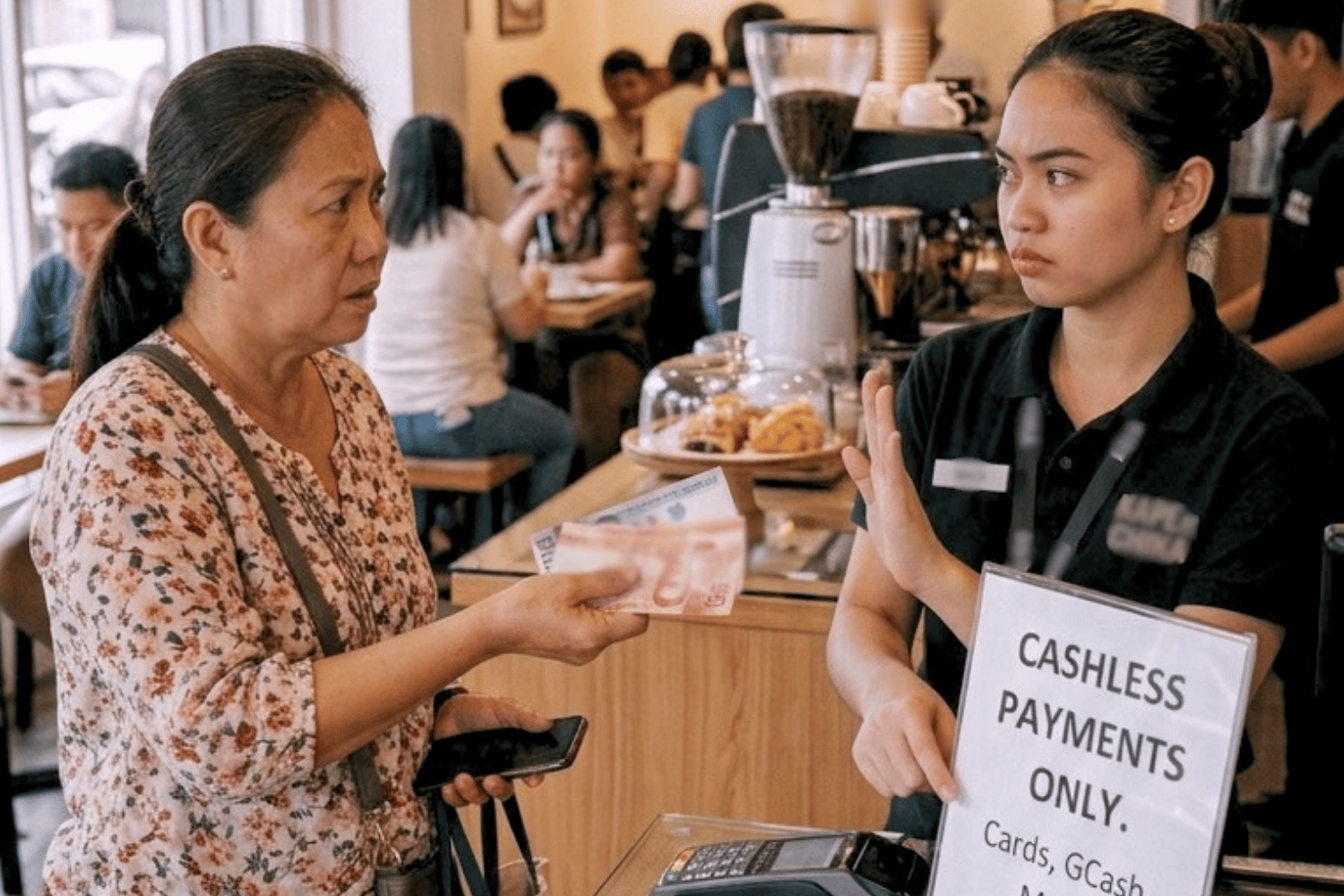
Going 100% cashless is generally allowed, but businesses need to make their payment terms clear before customers buy.
As Filipino businesses increasingly embrace digital payment infrastructure, some are taking the next step by going completely cashless. But can a business legally accept only digital payments and refuse cash from customers who want to pay?
The short answer is generally yes, but the circumstances of the transaction matter.
The widespread belief that cashless setups are illegal stems partly from a misunderstanding of Republic Act No. 7653, also known as the New Central Bank Act. Section 52 provides that Philippine banknotes and coins are legal tender in the Philippines for all public and private debts, subject to limits on the legal-tender value of certain coins.
The key point is that the law refers to debts. The Civil Code separately governs contracts of sale. Under Article 1458, a sale involves one party transferring ownership of a thing and the other paying a price certain in money or its equivalent.
In a typical retail transaction, the parties can agree on the terms of the sale before the purchase is completed, including the accepted method of payment.
For example, if you walk into a café and are told before ordering that it accepts digital payments only, you can decide whether to proceed under those terms. But if you sit down at a restaurant, are served your meal and consume it without being informed beforehand that the establishment accepts digital payments only, the situation is different.
An amount is now owed for the food or service already received, bringing the transaction into the rules governing payment of an existing obligation. Under Article 1249 of the Civil Code, payment of debts in money is made in the currency stipulated, or, when that currency cannot be delivered, in currency that is legal tender in the Philippines.
This also explains why the fact that cash is legal tender does not necessarily mean every business must accept cash for every transaction. Legal tender status applies to the settlement of debts, while businesses and customers can agree on the terms of a transaction before an obligation arises. The Supreme Court has likewise recognized the legal-tender rule in cases involving the payment of debts.
National policy also supports the wider use of digital payments. The Bangko Sentral ng Pilipinas has promoted electronic payments through its National Retail Payment System, while government programs such as Paleng-QR Ph encourage merchants and other businesses to adopt digital payment channels.
For businesses that choose to go cashless, clearly disclosing the payment policy before a customer commits to a purchase is the safer approach. It gives consumers the opportunity to decide whether they can and want to proceed under those payment terms and helps avoid disputes over how payment is to be made.
Going completely cashless can therefore be a lawful business model, but businesses should make their payment terms clear before a transaction is entered into and be mindful of situations where an existing obligation to pay has already arisen.
READ: