Study highlights the need for continuous monitoring, better drainage, proper sanitation, and total waterway management.
Leptospirosis may be lurking in Manila’s waterways even when there is no flooding, according to new research by scientists from the University of the Philippines Diliman, challenging the common belief that the disease becomes a threat only during typhoons and heavy rains.
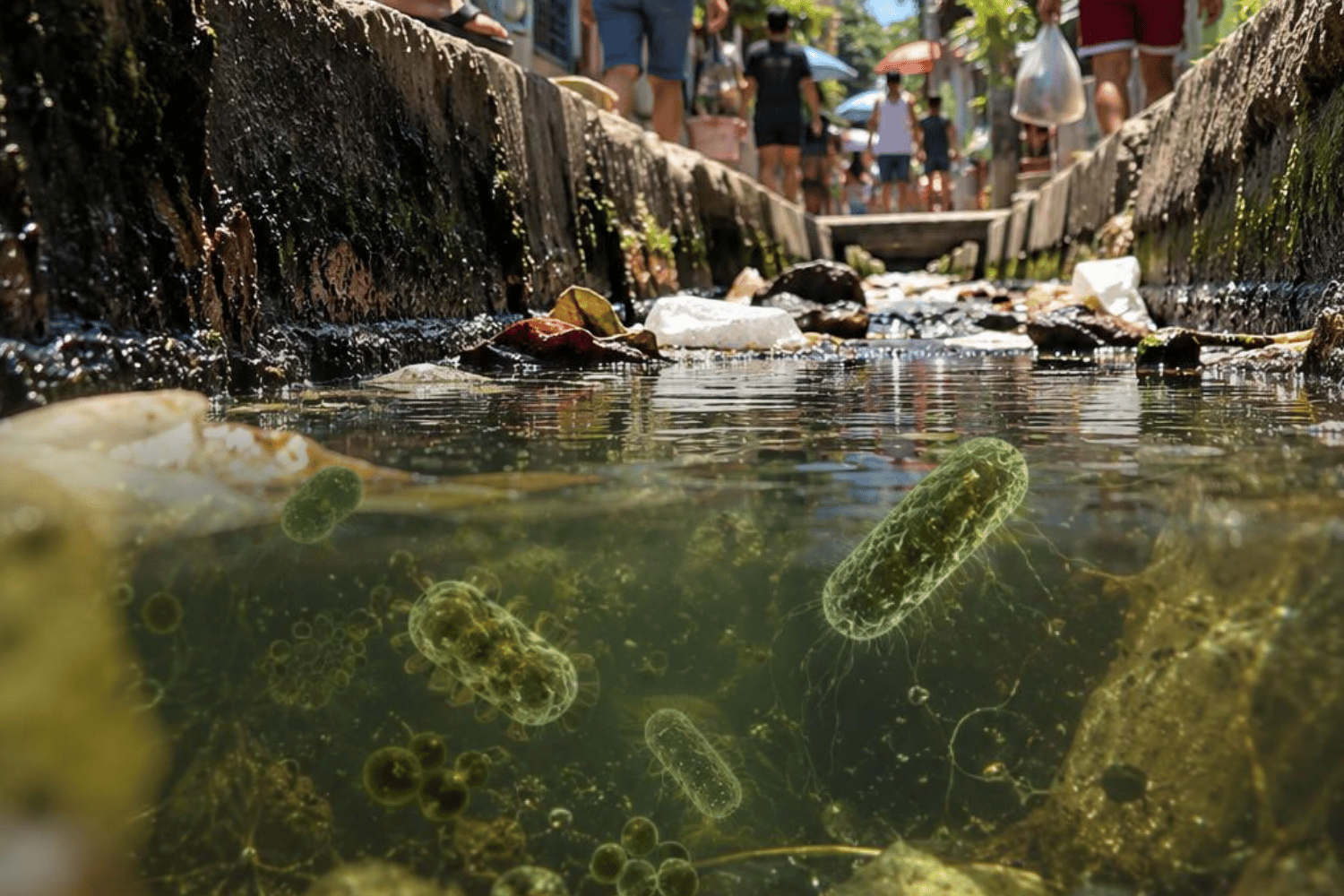
Two peer-reviewed studies conducted by researchers from the UP Diliman College of Science and the Philippine Genome Center have detected Leptospira bacteria throughout Estero de Paco, an urban waterway passing through densely populated and flood-prone communities in Metro Manila.
The findings suggest that potentially disease-causing bacteria are not confined to isolated contaminated areas but may persist across entire urban waterways.
Bacteria found in all five locations
Researchers Ram Julius L. Marababol and Dr. Windell L. Rivera of the UP Diliman Institute of Biology collected soil and water samples from five locations along Estero de Paco and examined 448 bacterial isolates.
They detected Leptospira at all five sampling sites, with no statistically significant differences between upstream and downstream locations or between soil and water samples.
This means the bacteria were not concentrated in one particular section of the waterway, suggesting that cleaning isolated hotspots may be insufficient to address contamination.
More significantly, researchers identified two strains carrying the lipL32 gene, a genetic marker commonly associated with disease-causing Leptospira.
Genetic analysis identified the strains as Leptospira yasudae, a species known to infect humans and animals.
This marks the first time the species has been genetically sequenced from samples collected in the Philippines.
A first for Philippine science
The researchers also produced the first complete draft genome of L. yasudae recovered from Philippine soil.
Containing approximately 4.5 million base pairs of genetic information, the genome represents only the 10th sequenced genome of the species worldwide.
Comparisons with previously sequenced strains from Mayotte and Brazil revealed genetic differences, suggesting that the Philippine bacteria may represent a previously undocumented local lineage.
The findings were published in the scientific journals “BMC Microbiology” and “Microbiology Resource Announcements.”
The danger is not limited to floods
“Most people picture leptospirosis risk as something you catch from an obvious flood puddle after a typhoon,” Marababol explained.
However, the findings indicate that potentially harmful bacteria can already be present in ordinary urban waterways before flooding occurs.
Dr. Rivera emphasized that the absence of isolated contamination hotspots is particularly concerning because it suggests that monitoring and cleanup efforts must address entire connected waterways rather than individual locations.
Leptospirosis is a bacterial infection commonly transmitted through water or soil contaminated with the urine of infected animals, particularly rodents. The bacteria can enter the body through broken skin or mucous membranes.
The disease can cause fever, headaches, muscle pain, and, in severe cases, kidney failure, liver damage, or death.
What the discovery means
The scientists clarified that their studies did not establish how many people had been infected by the newly identified strains or whether these bacteria were responsible for recent leptospirosis cases.
Nevertheless, the findings underscore the importance of year-round monitoring, improved drainage, sanitation, and more comprehensive waterway management.
The studies were supported by the Department of Science and Technology and conducted through a partnership between the UP Diliman College of Science and the Philippine Genome Center.
For millions of Filipinos living near polluted waterways, the research carries an important public health warning: leptospirosis prevention should not begin only when floodwaters rise.
READ:
Doctor warns severe leptospirosis cases are flooding the ER
Top Dagohoy
August 27, 2026
WARNING: The rains are back, and so is the potentially fatal threat of leptospirosis
Walter C. Villa
June 1, 2026

WARNING: Swimming in floodwaters can turn deadly
Top Dagohoy
August 16, 2026
Tags: BMC MicrobiologyDepartment of Science and TechnologydiseaseEstero de PacoLeptospiraLeptospira yasudaeleptospirosisManila Citymetro manilaMicrobiology Resource AnnouncementsPhilippine Genome Centerpreventionpublic healthRam Julius L. Marababoluniversity of the philippinesUP Dilimanwaterborne bacteriawaterwaysWindell L. Rivera