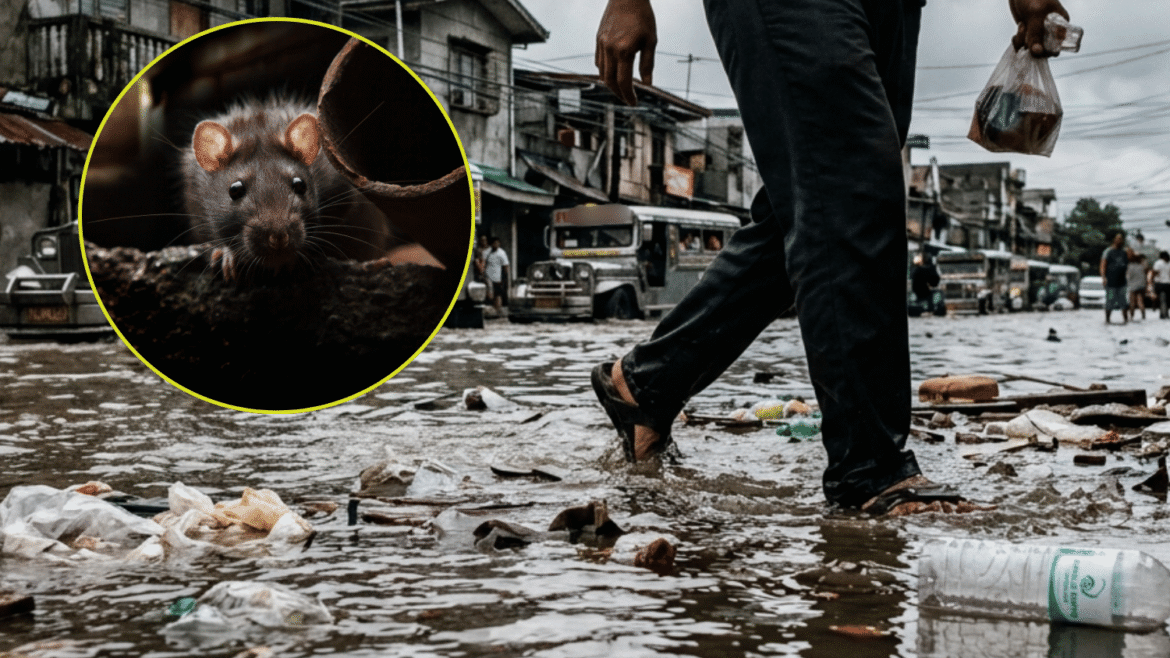
Today’s critical ER cases show that a flood’s health threat continues long after the waters drop.
Infectious diseases specialist Dr. Edsel Maurice Salvana has sounded the alarm over what he described as an “unbelievable number” of severe leptospirosis cases reaching the emergency room, days after widespread flooding forced thousands of people to wade through potentially contaminated water.
“Unbelievable number of severe leptospirosis cases in the ER. Some of them are bleeding in their lungs and are critically ill,” Salvana wrote on Facebook. “I’m on charity service and we can barely keep up.”
The warning comes in the wake of intense monsoon rains that inundated large portions of Metro Manila last week. On Aug. 17, the enhanced southwest monsoon or habagat triggered widespread flooding, stranding commuters and making several major roads impassable.
The MMDA recorded about 201 millimeters of rain over Metro Manila in just five hours, an amount President Ferdinand Marcos Jr. said was equivalent to roughly 44 percent of the rainfall dumped by Tropical Storm Ondoy over 24 hours in 2009.
As of Aug. 19, some 2,686 families or 7,840 people had been evacuated to evacuation centers in Metro Manila because of the flooding.
Salvana warned that the patients now arriving at hospitals were likely exposed during the earlier rains.
“These current cases were most likely from exposures two weeks ago when the rains began,” he said. “This is just getting started.”
The Department of Health has likewise warned that more cases could emerge because leptospirosis typically has an incubation period of five to 15 days. As of Aug. 22, the DOH had recorded 4,285 cases nationwide, with the NCR, Cagayan Valley and Central Luzon reporting the highest concentrations.
Leptospirosis is caused by Leptospira bacteria and can be contracted through water or soil contaminated by the urine of infected animals, particularly rats. Severe infections can damage the kidneys, liver and lungs and may cause internal bleeding and respiratory failure.
Salvana urged Filipinos to wear rain boots and other protective gear when contact with floodwater cannot be avoided. Those exposed should immediately consult their barangay health office or a doctor to determine whether antibiotic prophylaxis is appropriate.
The DOH similarly advises anyone who has waded through floodwater or been exposed to mud to seek medical assessment within 24 to 48 hours—even without symptoms. Doxycycline should only be taken after medical assessment and with a prescription, rather than through self-medication.
The health threat is already becoming visible at the local level. Quezon City recorded 62 leptospirosis cases and five deaths from Aug. 5 to 18, a 138-percent increase from the previous two-week period and enough to breach the city’s alert threshold.
For Salvana, the critically ill patients now appearing in emergency rooms may be an early consequence of the floods—and a warning that the health impact of the disaster does not necessarily end when the water subsides.
READ: