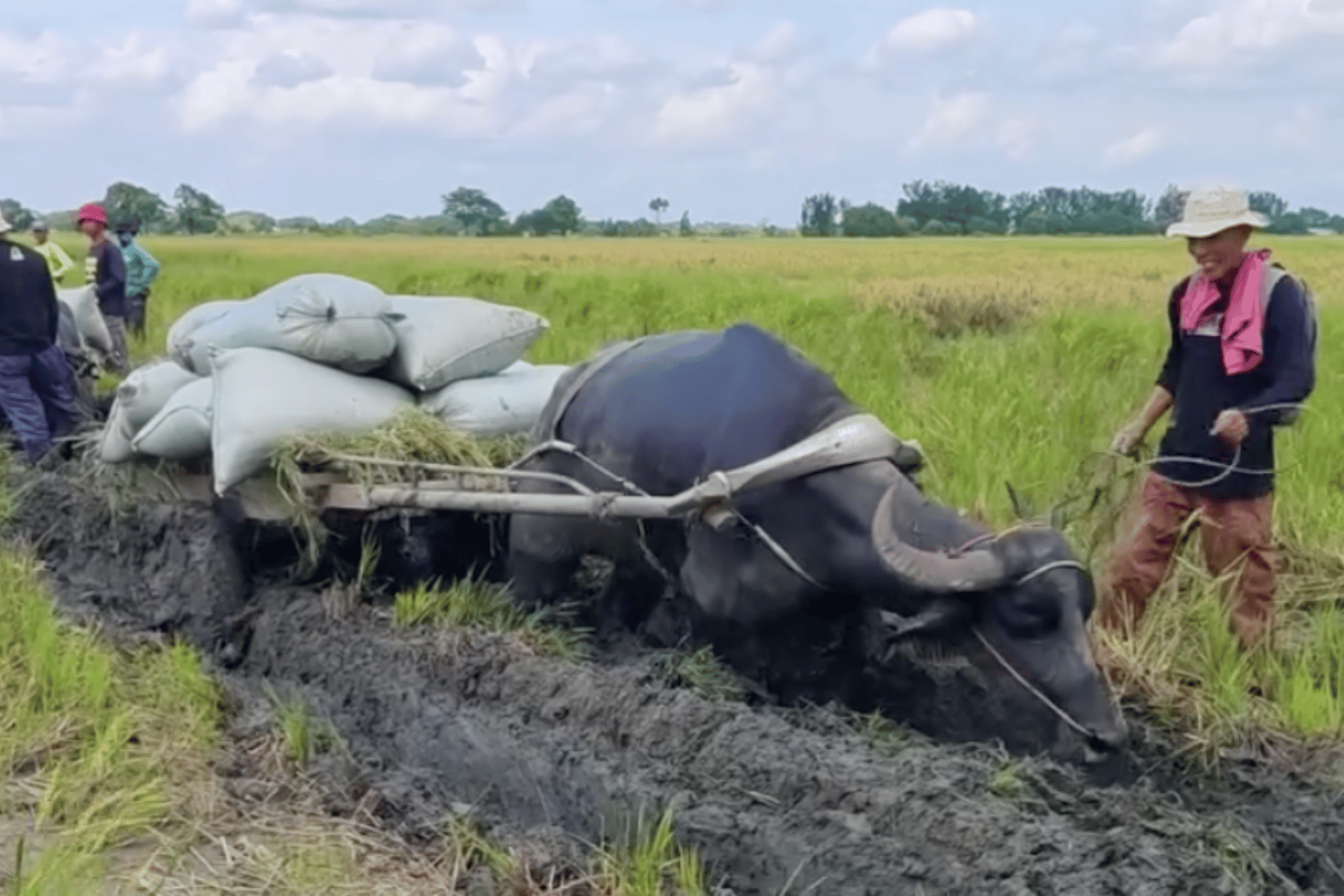
“Grabe yung putik kulyapot kawawa naman ‘yung kalabaw,” the page captioned the video.
Despite the caption seemingly aimed at eliciting sympathy for the animal, the video uploader can be heard laughing at it. “El Niño na, meron pa palang ganito,” he jokes in the video.
The page has also uploaded other videos of carabaos working in farmlands. However, other clips show the animals carrying loads and plows with ease. It remains unclear whether the carabaos were made to perform strenuous labor for the sake of content.
Netizens were outraged at the animal’s apparent struggle, alleging that the carabao was being mistreated by being forced to carry loads beyond its apparent capacity.
“Kawawa naman ang kalabaw. Ano kaya kung magpalit kayo ng posisyon? Sarap pa ng tawa eh, walang awa,” commented one Facebook user.
While official sources do not have a consensus on the maximum carrying capacity of adult carabaos, the animals are commonly used to carry and pull heavy loads, particularly for agricultural tasks such as plowing fields.
The Animal Welfare Act of 1998, or Republic Act No. 8485, penalizes the neglect and maltreatment of animals.
“It shall be unlawful for any person to torture any animal, to neglect to provide adequate care, sustenance or shelter, or maltreat any animals,” reads Section 6 of the law.
While the law does not specifically define maltreatment and neglect, it seeks to prevent unnecessary harm to animals.
Philippine carabaos also enjoy special research priority under The Philippine Carabao Act of 1992, which created the Philippine Carabao Center (PCC) under the Department of Agriculture. Among the tasks of the PCC is to train farmers on the proper care and reproduction of carabaos.
READ: