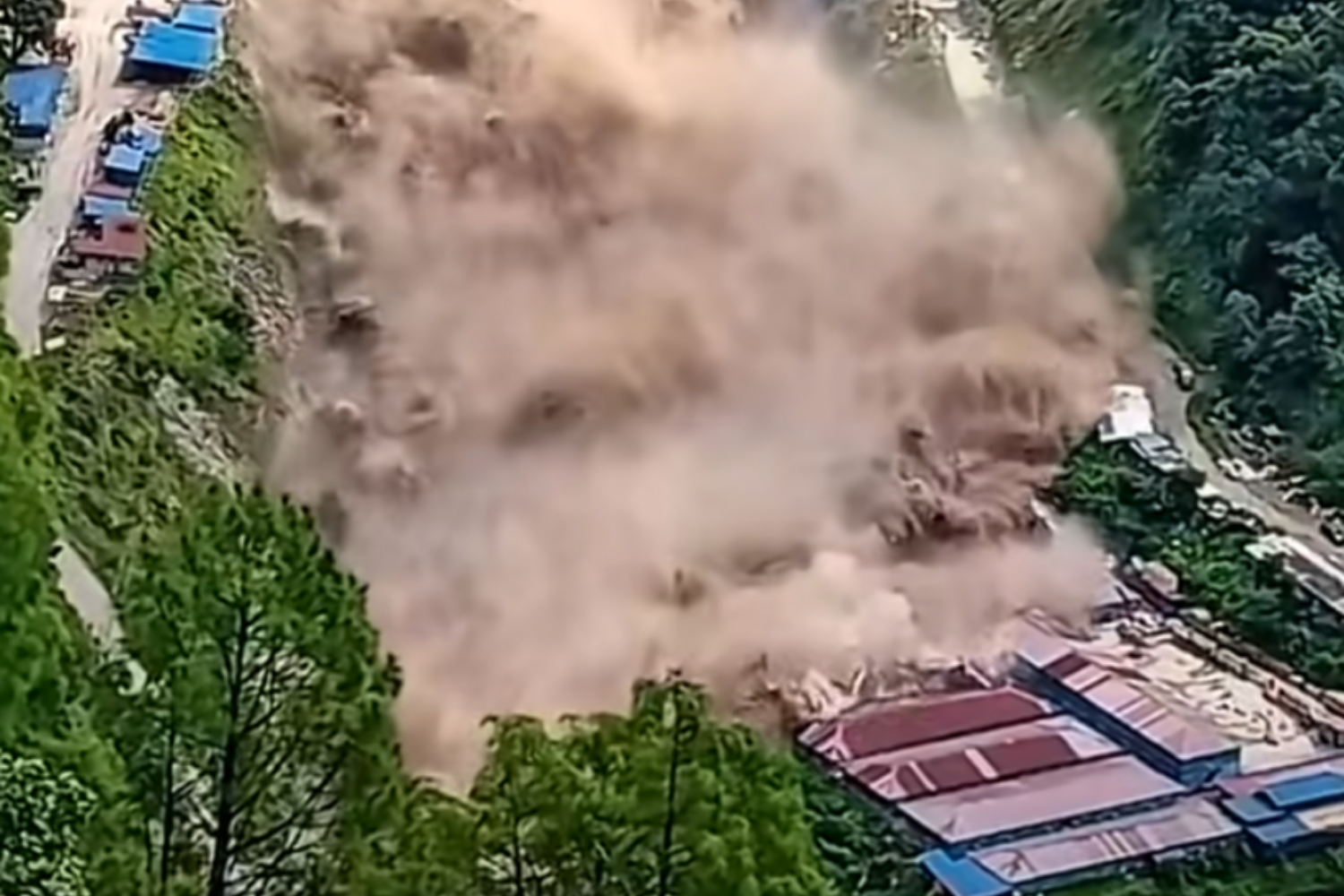
The catastrophe highlights how quickly the unimaginable can become reality.
More than 500 people dead. Over 1,500 still missing. Entire communities buried under mud and debris.
But perhaps the most frightening detail about the catastrophic flash flood that devastated parts of Nepal and Tibet this week is this: it did not begin with heavy rain where the destruction happened.
The disaster was triggered high in the Himalayas when a massive section of glacier, rock and ice collapsed, generating a seismic signal equivalent to a magnitude 5.2 event. The collapse sent an enormous torrent of water, mud, boulders and sediment racing through river valleys, destroying villages, bridges, roads and other infrastructure downstream.
Latest reports have placed Nepal’s death toll above 500, while more than 1,500 people remained missing as the scale of the disaster continued to emerge.
A glacier catastrophe of this kind is highly unlikely in the tropical Philippines. PAGASA weather specialist Benison Estareja has pointed out that the country simply does not have the enormous glaciers found in the Himalayas.
But that does not mean Filipinos should look at Nepal and Tibet and think, “That can’t happen here.”
The trigger may be different. The deadly mechanics are frighteningly familiar.
A disaster can begin somewhere else
Filipinos have become accustomed to rainfall warnings: yellow, orange and red alerts tell communities when increasingly heavy rain could produce flooding.
But rainfall over your own community is only part of the danger.
A landslide upstream can block a river and create a temporary natural dam. When that blockage collapses, the stored water and debris can suddenly surge downstream—even if people several kilometers away have no idea anything has happened.
That is one of the biggest lessons from the Himalayan catastrophe: the sky above you does not always tell you what is coming down the river.
For the Philippines, where communities, farms, roads and towns sit below steep mountains and along river systems, monitoring what is happening upstream can be just as important as measuring rainfall locally.
When water becomes something worse
The Nepal-Tibet disaster was also not simply a flood.
The torrent picked up rocks, soil, mud and other debris as it descended, creating a destructive mass capable of smashing buildings and carrying enormous objects downstream. Images from the disaster zone showed settlements overwhelmed by thick mud and rubble.
Filipinos already know what such flows can do.
Lahars around Pinatubo and Mayon, debris flows in mountainous communities and catastrophic landslides have repeatedly demonstrated that water mixed with volcanic material, soil, rocks and uprooted vegetation behaves very differently from ordinary flooding.
It can bury rather than merely inundate.
That distinction matters when disaster plans assume people will have enough time to evacuate once water begins rising.
One disaster can trigger another
Another alarming lesson emerged after the initial Nepal-Tibet catastrophe.
The huge volume of debris created new blockages and a lake in the disaster zone, raising fears that the accumulated water could breach and unleash another flood. Rescue teams in Tibet were even ordered to withdraw temporarily because of the danger.
This is what disaster experts call a cascading hazard.
An earthquake can trigger a landslide. A landslide can dam a river. The dam can eventually collapse. The resulting flood can destroy a bridge, cutting off communities and preventing rescuers, ambulances, food and medicine from reaching survivors.
In an archipelagic and mountainous country like the Philippines, the destruction of a handful of critical bridges and roads can quickly turn a natural disaster into a humanitarian crisis.
Nepal demonstrated just how devastating that infrastructure failure can become: dozens of bridges and long stretches of road were destroyed, complicating rescue and relief operations.
Climate change is altering the rules
Scientists are still examining precisely what caused the Himalayan collapse, and no single event should automatically be attributed solely to climate change.
But experts say unusually high temperatures can accelerate glacier melting and weaken the frozen material that helps stabilize high mountain terrain. A warming climate is therefore raising concerns about increasingly unstable mountain environments.
The Philippine manifestation of climate risk is different.
We do not have Himalayan glaciers hanging above our towns. We do, however, have steep mountains, volcanoes, landslide-prone slopes, heavily populated floodplains, rapidly urbanizing watersheds and communities increasingly exposed to extreme rainfall and powerful tropical cyclones.
And that is precisely why Nepal matters.
The warning is not about glacier
The Philippines does not need to prepare for a Himalayan glacier collapse.
It needs to prepare for the larger lesson behind it: disasters do not always behave according to the patterns people have learned to expect.
Early-warning systems cannot depend solely on whether rain is falling heavily over a particular town. Authorities also need real-time river gauges, landslide and geological monitoring, upstream surveillance, hazard mapping and communication systems capable of warning communities when something dangerous is developing kilometers away.
The Nepal-Tibet catastrophe showed how quickly the unimaginable can become reality.
A mountain collapsed. A river became a weapon. Roads and bridges disappeared. Communities downstream had minutes to react.
For the Philippines, the question should therefore not be whether the exact same disaster can happen here.
It almost certainly cannot.
The more important question is whether our own version of an unexpected, rapidly cascading disaster could happen—and whether we would see it coming.
READ:

WARNING: Swimming in floodwaters can turn deadly
Top Dagohoy
August 16, 2026

OPINION: After centuries of flooding, our government still acts clueless
Matahari
August 19, 2026
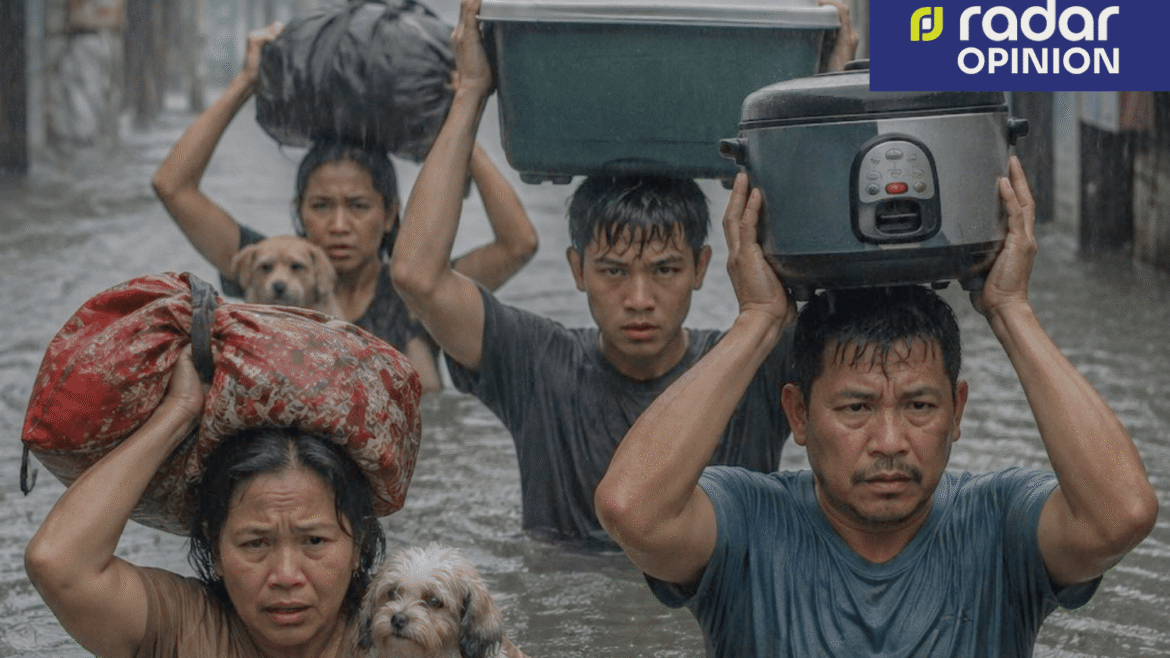
OPINION: Floodwater does not just soak people, it strips away their dignity
Kenneth M. del Rosario
August 17, 2026