Electric, cleaner and still unmistakably Filipino.
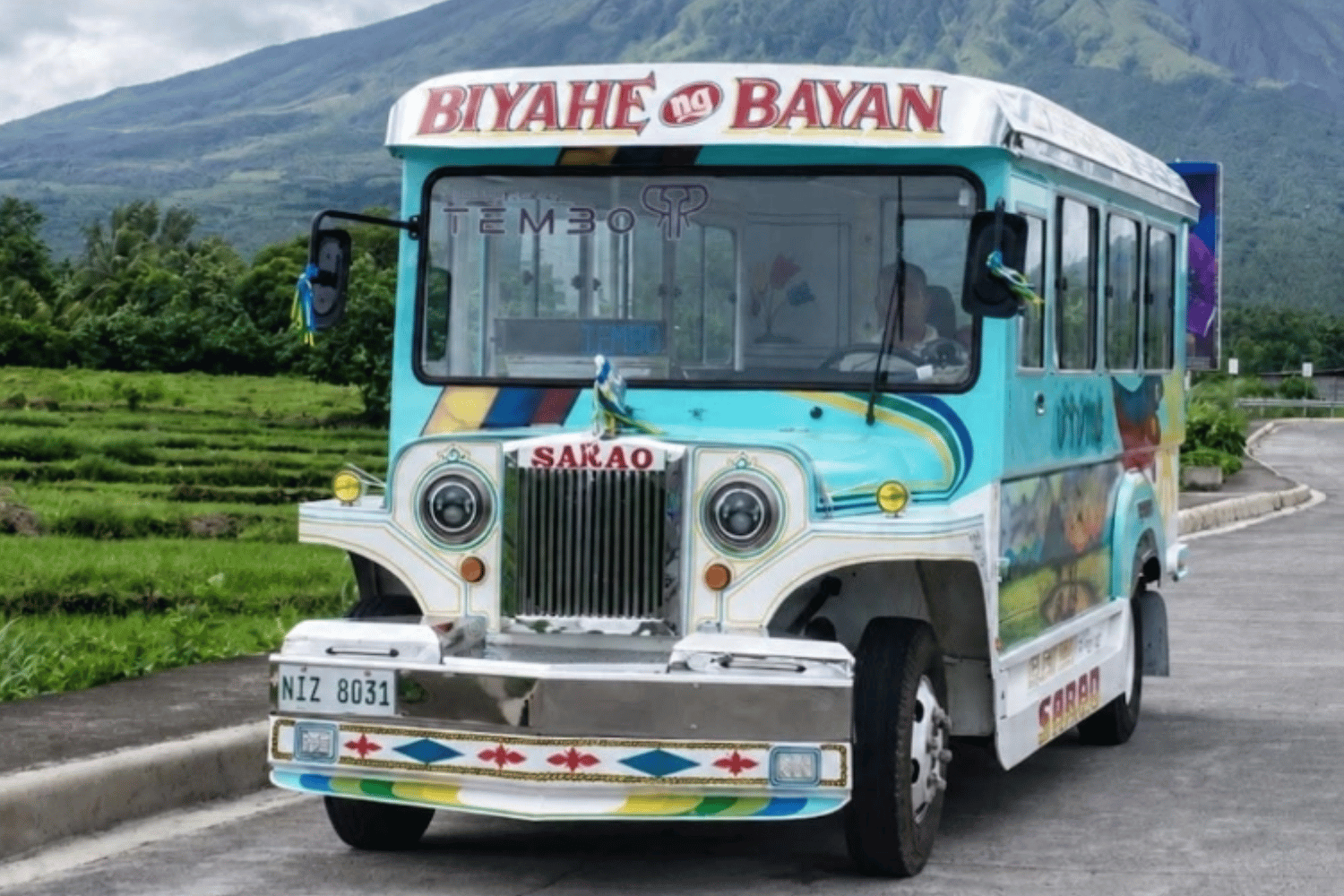
The iconic Sarao jeepney has gone electric—and it has already survived a 760-kilometer road test. But there is one number that could determine whether it actually becomes the jeepney of the future: ₱3 million to ₱3.5 million.
That is the projected price of the Sarao x Tembo Electric Jeepney, a collaboration between legendary Filipino jeepney builder Sarao Motors and international electric vehicle specialist Tembo e-LV.
For comparison, a brand-new traditional diesel jeepney can cost roughly ₱700,000 to ₱1.2 million. Older second-hand units can go for considerably less.
The difference puts the biggest challenge facing jeepney modernization in stark terms. The technology may work. But can ordinary operators afford it?
There is little question that the prototype has impressive numbers.
The electric jeepney is designed to travel up to 300 kilometers on a full charge, with fast charging reportedly capable of replenishing its battery in around 45 minutes.
And Sarao and Tembo did not simply test it around Metro Manila.
In August, the vehicle underwent what the companies described as a real-world pressure test, traveling roughly 760 kilometers round-trip from Sarao’s Las Piñas factory to Naga City and Albay, then back to Metro Manila.
The trip exposed the e-jeepney to expressways, provincial roads, uphill climbs, winding routes and rough surfaces—conditions much closer to what public utility vehicles actually face around the country.
It completed the journey while testing energy consumption, range and access to DC fast charging.
That matters because electrifying Philippine public transport is not simply about putting batteries inside vehicles. Operators need charging stations, reliable electricity, financing and enough range to keep vehicles earning money instead of sitting at a depot.
The Sarao-Tembo project also stands apart aesthetically. Instead of replacing the familiar jeepney with a generic-looking minibus, it places an electric powertrain beneath a body that remains recognizably Sarao—keeping the stainless-steel character of the Filipino “King of the Road.”
But nostalgia cannot erase the economics.
Even with the government’s ₱400,000 modernization subsidy, a ₱3.5-million unit could still leave roughly ₱3.1 million to be financed before other operating and financing costs are considered.
Sarao has reportedly been exploring additional tax incentives and financing arrangements.
Another potentially cheaper path is retrofitting existing traditional jeepneys with electric systems instead of requiring operators to purchase entirely new vehicles.
The 760-kilometer Bicol run has therefore answered one important question: an electric Sarao can travel far beyond a short city route and tackle demanding Philippine roads.
Now comes the harder test.
Can its price be brought within reach of drivers and cooperatives? Can enough fast chargers be built along routes? And can financing make the monthly cost workable for people whose livelihoods depend on every passenger they carry?
At ₱3 million to ₱3.5 million, the Sarao x Tembo e-jeepney offers an intriguing glimpse of what Philippine public transportation could become—electric, cleaner and still unmistakably Filipino.
It has already proved it can go 760 kilometers.
The bigger question is whether Filipino commuters and thousands of jeepney operators can afford to go with it.
READ: