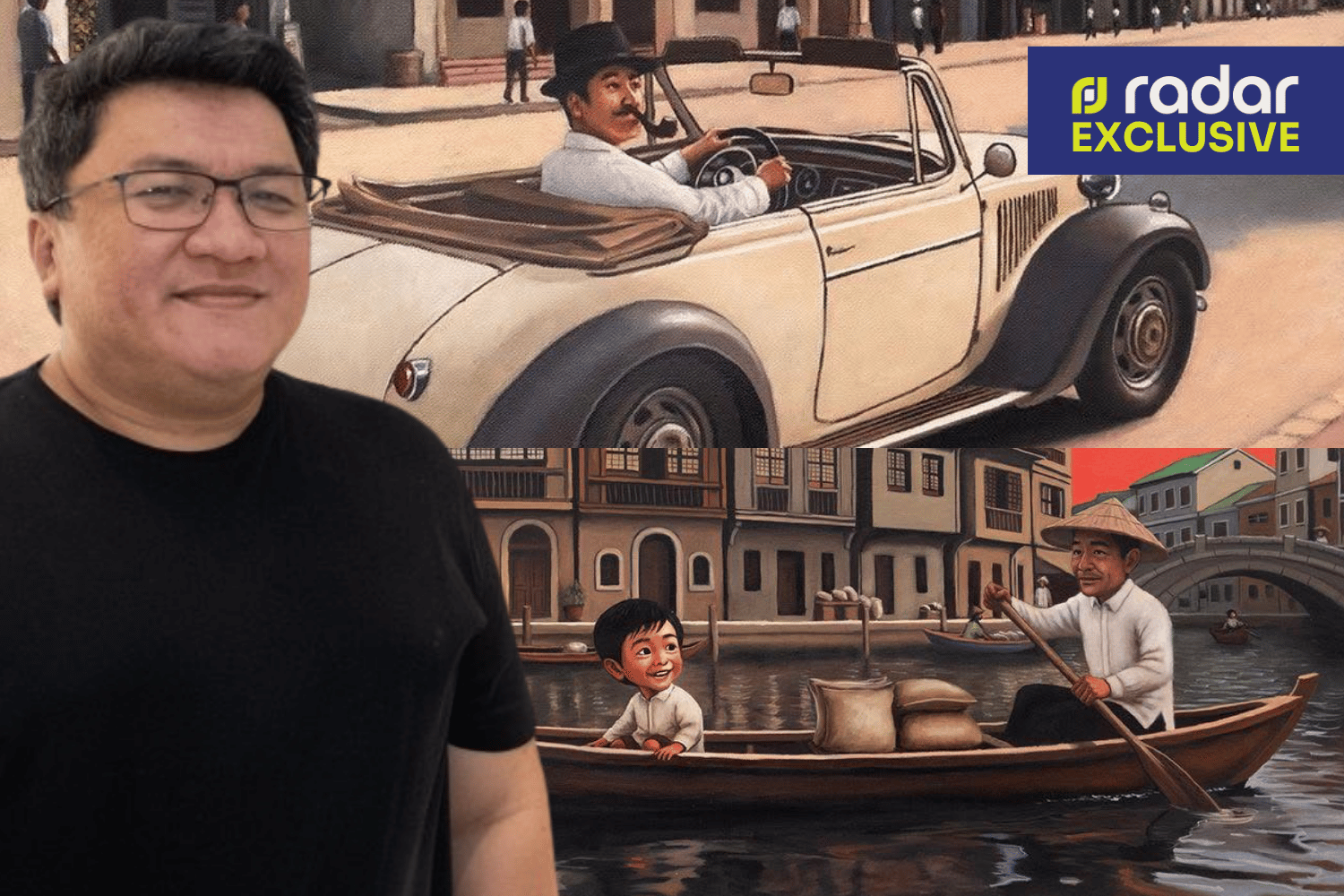
Artist explains how childhood curiosity, resourcefulness, and a passion for history defined his works.
A taho vendor walks through the streets of old Manila. A fruit seller proudly displays his merchandise. A couple dressed in traditional Filipino clothing makes their way to church. Behind them stand buildings reminiscent of a city that has long since changed.
These are the scenes that contemporary Filipino artist Xander Calceta brings to life on canvas, capturing not just the appearance of a bygone era but also the dignity, character, and everyday stories of the people who inhabited it.
Swipe or click arrows to see photos
Known for his distinctive combination of painterly realism, stylized figures, and nostalgic imagery, Calceta has developed an artistic language that transforms ordinary Filipino experiences into compelling visual narratives.
In an exclusive interview with radar, the self-taught painter shares how childhood curiosity, financial limitations, and a fascination with Filipino history shaped his artistic journey.
An artist born from curiosity
Calceta’s fascination with art began during childhood, partly inspired by his grandfather, a respected artist in Tagbilaran, Bohol, who painted religious scenes reminiscent of the Sistine Chapel.
His grandfather also had an unusual story: during the Japanese occupation, he reportedly created imitation currency to help his family survive.
As a young boy, Calceta experimented with drawing imitation Philippine bills using colored ballpens and paint, initially as a childhood prank.
He also admired National Artist Fernando Amorsolo, whose depictions of Filipino life would become an early artistic influence.
But becoming a painter was far from easy.
With little money for proper materials, Calceta practiced using donated paints and even experimented with hardware-store tinting colors. He borrowed art books, studied established painters, and emailed artists to seek technical advice.
“That process taught me that learning art is not just about having the right materials, but also about curiosity, resourcefulness, and the willingness to keep learning,” he tells radar.
Without formal art training, Calceta gradually developed his skills through observation, experimentation, and persistence.
Reimagining old Manila
Today, Calceta is particularly associated with paintings that revisit the Philippines of an earlier era.
His “Old Manila Times” series depicts familiar scenes of Filipino life, populated by vendors, churchgoers, and ordinary citizens against carefully constructed historical settings.
Yet these are not conventional historical paintings.
Calceta deliberately alters the proportions, expressions, and appearances of his characters, combining realistic environments with figures that sometimes appear whimsical or theatrical.
“For me, a painting does not always have to reproduce reality exactly. Sometimes, changing certain features or exaggerating a character’s expression makes the image more engaging and gives the story a stronger presence,” he explains.
His artistic influences range from naturalism and impressionism to painterly realism and stylized figurative art.
Rather than faithfully reproducing historical photographs, he creates his own interpretation of the past, one that feels simultaneously familiar and imagined.
Giving ordinary Filipinos their dignity
Perhaps the most compelling aspect of Calceta’s paintings is how he chooses to represent everyday Filipinos.
In his historical scenes, taho vendors, fruit sellers, and other working-class characters appear wearing traditional clothing such as the barong Tagalog and baro’t saya. Filipino-Chinese figures are sometimes depicted in traditional Chinese attire.
The result is a world where ordinary people become the central characters of their own stories.
For Calceta, this is intentional.
“My intention is to portray ordinary people with dignity and a sense of pride,” he tells radar.
“Being poor does not mean one cannot be presentable, take pride in one’s appearance, or carry oneself with honor.”
He acknowledges that his depictions may not always conform to historical reality. But accuracy, he argues, is not necessarily the point.
His paintings are celebrations of Filipino identity, where social status does not determine a person’s worth.
The power of nostalgia
Calceta’s fascination with memory developed gradually.
He initially painted impressionistic landscapes before accepting portrait commissions featuring grandparents and ancestors, often dressed in clothing from earlier generations.
These commissions helped him appreciate how paintings could preserve family histories.
He subsequently explored assemblage art and still-life compositions featuring vintage objects, discovering how familiar belongings could evoke personal memories and untold stories.
That fascination eventually evolved into his nostalgic paintings of old Manila.
“For me, nostalgia is about bringing forgotten moments back to life through art while leaving room for viewers to create their own interpretations,” he says.
His works do not simply ask viewers to remember a particular place. They encourage them to imagine the people, relationships, and experiences that once gave those places meaning.
From improvised paints to major galleries
Calceta’s journey from experimenting with inexpensive materials to exhibiting in established galleries reflects years of artistic exploration.
His works have been presented through Galerie Joaquin and Galleria Nicolas, including exhibitions such as “Tableau of Memories,” “Grounded Stories,” and the recent “Kuwento ng Kahapon.”
He has also participated in major group exhibitions, including Manila Art, and has exhibited internationally at the LA Art Show in California.
His artistic credentials include recognition in competitions organized by the Art Association of the Philippines, GSIS, and PhilPost.
Yet Calceta considers the development of his “Old Manila Times” series among the most significant breakthroughs of his career.
The series emerged from earlier experiments with vintage assemblage and still-life painting, eventually developing into a distinctive visual world that galleries and collectors began to recognize.
“I see this as a defining period in my career, much like an artist’s distinct creative period,” he shares.
For him, however, the most meaningful reward is not simply exhibition opportunities or professional recognition.
It is seeing viewers connect emotionally with his paintings.
An artistic legacy rooted in Filipino identity
While Calceta continues to explore different artistic approaches, his fascination with Filipino life remains central to his work.
He hopes his paintings will preserve fragments of cultural memory that might otherwise disappear as cities modernize and generations change.
More importantly, he wants the people in his paintings to be remembered.
“I want to be remembered as an artist who gave dignity to ordinary people and brought their stories to life through art,” he tells radar.
“More than creating beautiful images, I hope my paintings will evoke nostalgia, bring joy, and remind Filipinos of the richness of their cultural identity.”
For an artist who began by experimenting with donated paints and borrowed books, that ambition speaks to something greater than technical mastery or commercial success.
In Calceta’s imagined streets of old Manila, the vendors, families, and ordinary citizens who rarely occupy the pages of history are finally given center stage.
READ:
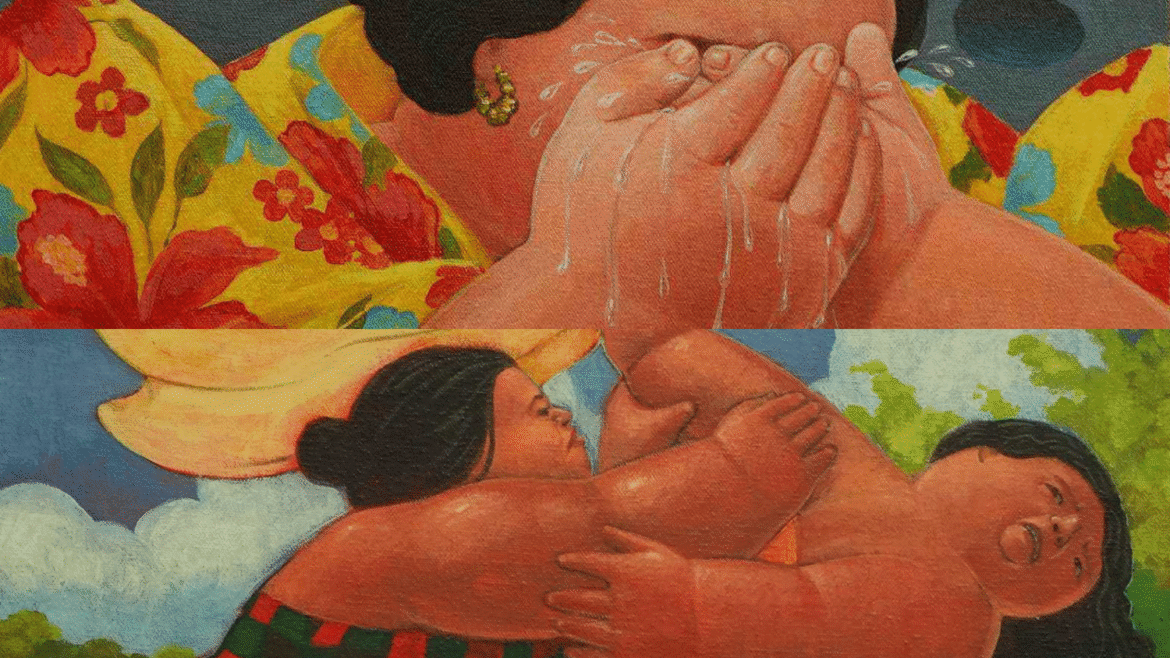
Raymond Legaspi turns the troubles of our times into biting pop art
Top Dagohoy
August 14, 2026
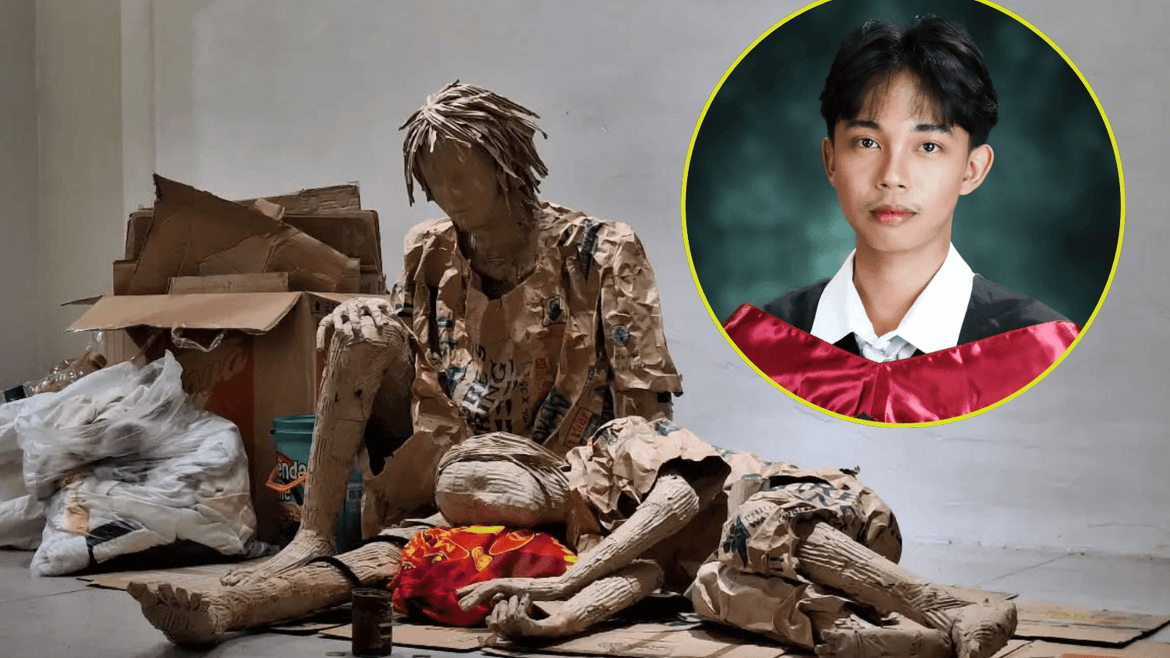
Fresh grad turns discarded cardboard into portrait of homelessness
Nikko Miguel Garcia
October 29, 2026
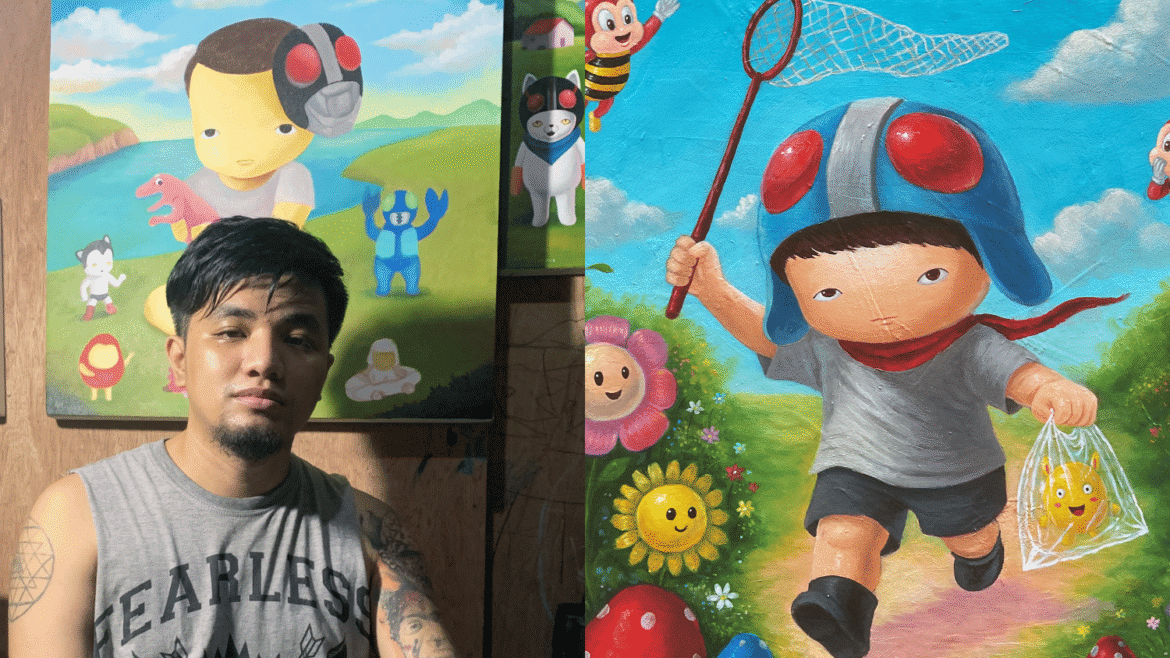
Gemart Ortega builds his own ‘Homeworld’ from childhood memories, monsters, and Filipino folklore
radar Lifestyle
August 31, 2026