True luxury lies in the history and documented journey of an object over time.
A young businessman proudly rolls up his sleeve, making sure everyone at the table notices the gleaming Swiss watch on his wrist. Across from him, an elderly gentleman barely glances at it. Instead, he removes an old signet ring, its gold softened by decades of wear.
“This belonged to my great-grandfather,” he says. “He wore it when he met the governor-general.”
The conversation instantly shifts.
Someone asks about the family’s ancestral home. Another admires a Victorian brooch passed down through four generations. An antique pocket watch emerges from a coat pocket—not because of its brand, but because it once belonged to the family’s patriarch. Nobody talks about prices. They talk about stories.
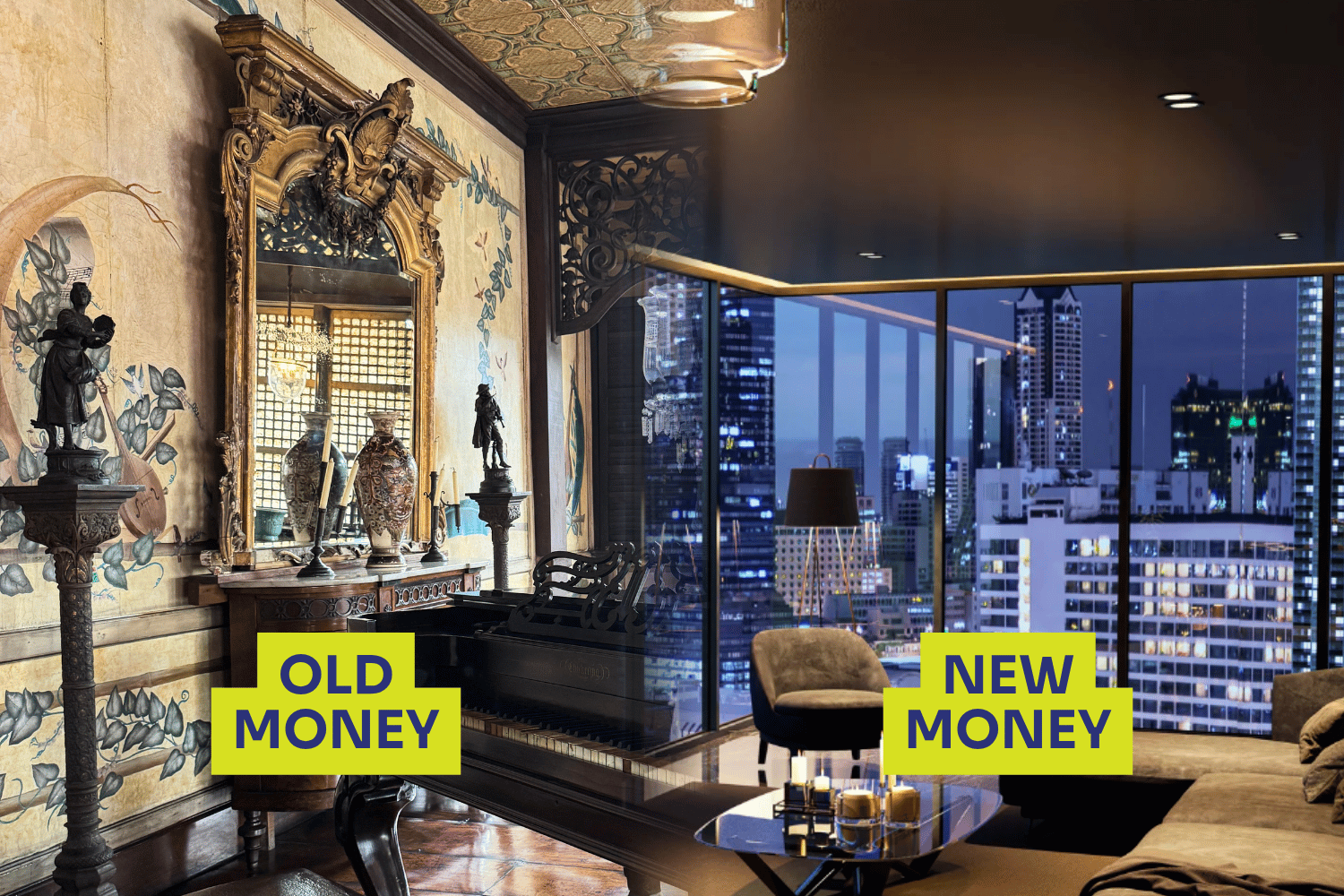
That is perhaps the clearest difference between old money and new money.
New wealth often collects luxury. Old wealth collects provenance.
One buys the latest Hermès bag, Rolex, or Ferrari because the logo is immediately recognizable. The other buys an 18th-century desk that once sat inside a Spanish colonial mansion, a necklace with royal lineage, or a painting that hung in a European estate—not because strangers recognize them, but because history does.
To the old rich, the true luxury isn’t the object itself. It’s knowing exactly where it has been, whose hands have held it, and why it mattered.
Provenance is the documented history of an object’s creation, ownership, and journey through time. To most people, it sounds like paperwork. To the world’s wealthiest collectors, it is often more valuable than the object itself.
An artwork that once hung in the home of a renowned collector can sell for millions more than an identical piece with no recorded history. A vintage watch owned by a celebrated statesman or Hollywood icon becomes far more desirable than the same model fresh from a vault. Every prestigious owner, museum exhibition, auction record, restoration report, and historical event attached to an item increases not only its story but also its value.
This is why old-money families meticulously preserve receipts, letters, photographs, certificates, and ownership records. Without them, even an authentic masterpiece can become difficult to sell. With them, an ordinary heirloom can become a priceless artifact.
Provenance is also the ultimate protection against fraud. As counterfeit luxury goods and forged artworks become increasingly sophisticated, collectors rely on documented ownership histories to verify authenticity. A clear paper trail also protects buyers from unknowingly purchasing stolen art, looted antiquities, or disputed treasures that could later be seized through legal action.
Today, provenance has entered the digital age. Luxury brands, auction houses, and financial institutions are increasingly using blockchain technology to create tamper-proof digital records for fine art, jewelry, watches, rare wines, and even real estate. These digital certificates ensure that an object’s history can be verified for generations.
The questions the old rich ask before making a purchase reveal everything about their priorities.
Who owned this?
Where has it been?
Can every transfer of ownership be documented?
The newly wealthy often seek recognition from strangers. The old wealthy seek validation from history.
One buys objects to announce success.
The other buys stories that will outlive them.
Perhaps that is the greatest luxury of all—not owning something expensive, but owning something that history remembers.
READ:

Are Filipino queers making more money than everyone else?
radar Lifestyle
June 5, 2026

The uniquely Filipino money practices that influence how households spend
Kiara Gorrospe
December 8, 2025
Nostalgia in your wallet: The rising value of old Philippine money
John Lloyd Aleta
April 5, 2026