Taken from her homeland, Mali endured decades of isolation and died before ever reaching a sanctuary.
Mali spent almost her entire life on display. Apparently, even death could not free her from it.
For more than four decades, generations of Filipinos came to Manila Zoo to stare at the country’s only captive elephant. She became an attraction, a photo opportunity and a childhood memory for millions.
Behind that nostalgia, however, was a much sadder existence.
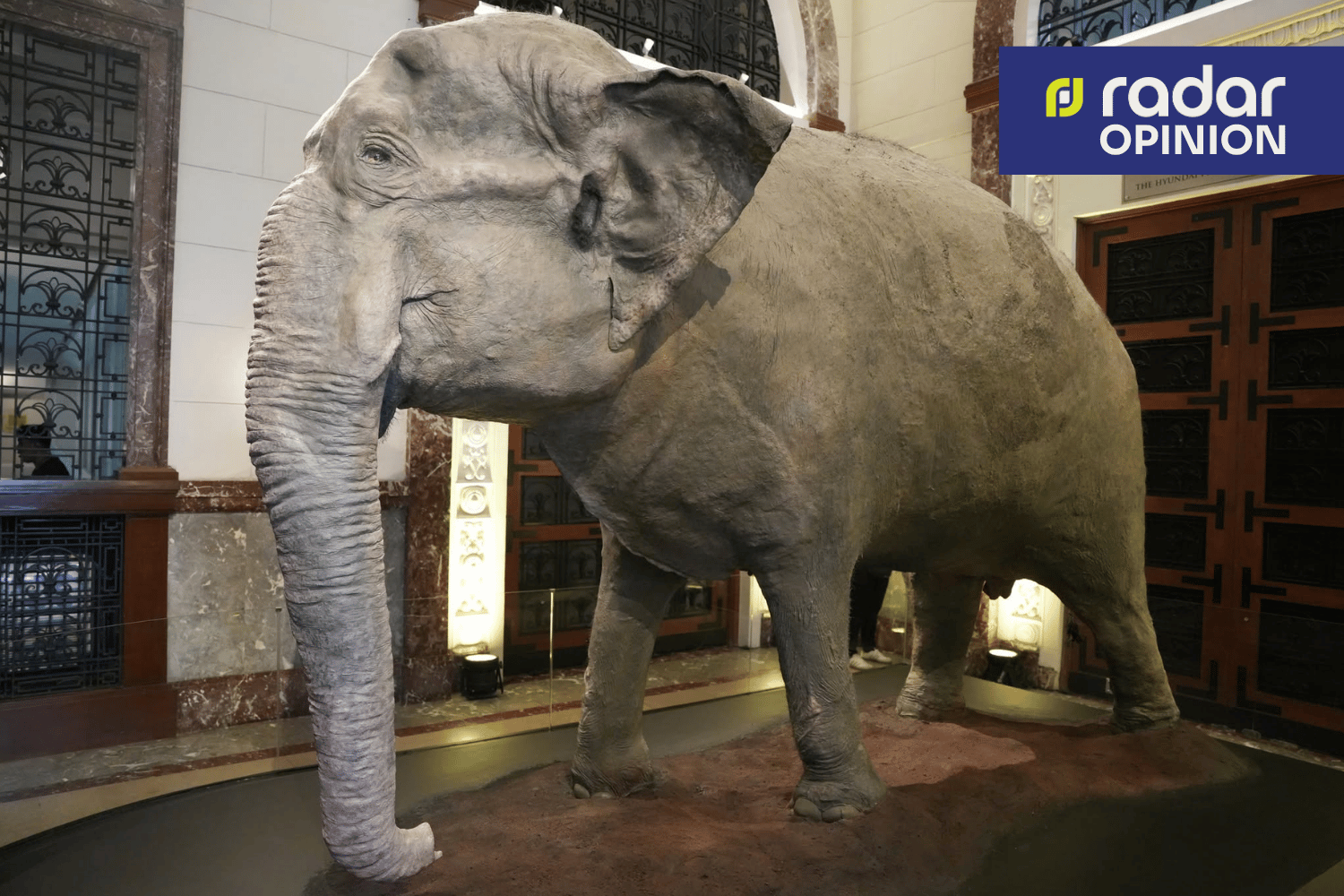
Mali died on November 28, 2023. Nearly three years later, her taxidermied body is on public display at the National Museum of Natural History.
It is a cruel final twist for an animal already dubbed the “world’s saddest elephant.”
A lifetime she never chose
Born in Sri Lanka around 1974, Vishwa Ma’ali was orphaned and given to then-First Lady Imelda Marcos in 1977. She was only around three years old.
She would spend virtually the rest of her life at Manila Zoo.
After her elephant companion Shiva died in 1990, Mali spent more than 30 years without another elephant.
For an intensely social animal whose natural life revolves around herds and family relationships, that solitude became the tragedy that defined her.
Animal welfare advocates spent years campaigning to have Mali transferred to a sanctuary. Paul McCartney was among the international figures who appealed for her relocation.
Mali never got out.
She died at around 49 after suffering from serious health problems including cancer and cardiovascular disease.
And still, Mali cannot rest
Her death could have been the end of a lifetime spent as a spectacle.
Instead, Mali underwent an 11-month taxidermy process.
On August 27, 2026, her preserved body was unveiled at the National Museum of Natural History as part of “The Lady of the Land.”
There is educational value in preserving animals for museums. But Mali was not simply another specimen.
This was an elephant who had already spent decades being exhibited to humans.
Alive, people came to look at her.
Dead, people are being invited to look at her again.
Perhaps that is the cruelest part of Mali’s story.
She was taken from her homeland as a child, spent decades without another elephant, became famous for her loneliness and died without ever reaching the sanctuary advocates wanted for her.
And now her body has been turned into an exhibit.
The “world’s saddest elephant” spent a lifetime working as an attraction.
Even death, it seems, was not enough to finally let Mali rest.
READ: