We should end the captivity of wild animals for public display.
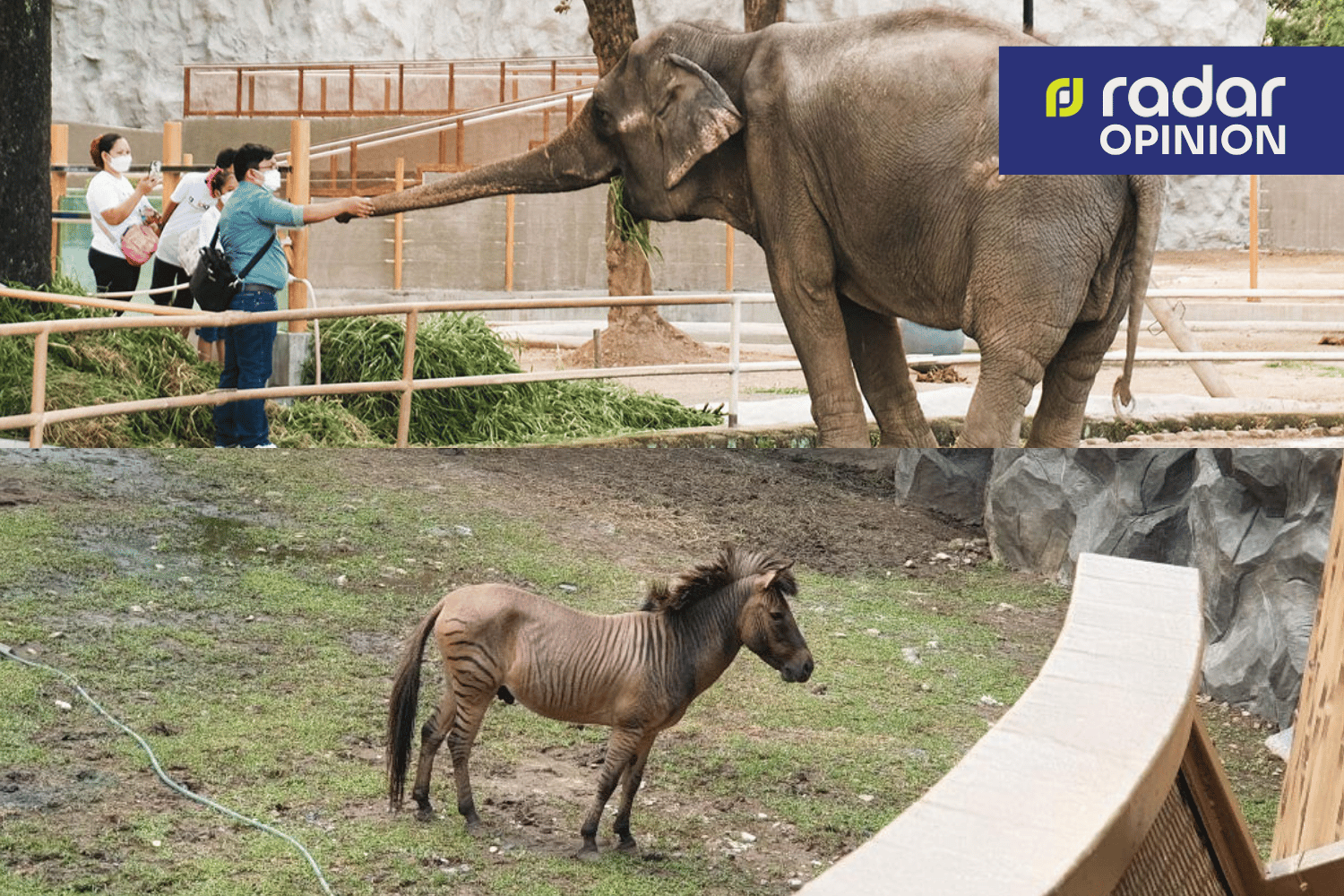
Generations of Filipino children went to Manila Zoo to see Mali. They pointed, took photographs and went home with a childhood memory.
Mali stayed behind.
The elephant from Sri Lanka spent decades without another elephant before dying in 2023. Animal welfare advocates called her one of the “world’s loneliest elephants.”
Her story should force us to confront an uncomfortable question: Why do traditional zoos still exist?
Stop romanticizing captivity
We have wrapped zoos in nostalgia: school field trips, family outings, seeing a tiger or elephant for the first time.
But our happy memories tell us nothing about the experience of the animal on the other side of the barrier.
Wild animals did not evolve to become permanent exhibits.
Elephants are highly social. Large carnivores are adapted to territories vastly larger than urban enclosures. Animals need to forage, explore, socialize, hide—and sometimes simply choose not to be seen.
Captive animals can also develop stereotypic behaviors such as repetitive pacing, swaying and head-bobbing, often associated with restrictive or insufficiently stimulating environments.
A renovated enclosure may be prettier and more comfortable.
A bigger cage is still captivity.
Is this really education?
We say elephants belong in nature while keeping them in cities. We tell children tigers should roam forests, then pay admission to watch them behind barriers.
Then we call it education.
Children today have documentaries, immersive museums, virtual reality, nature parks and rescue centers. Better still, teach them about the extraordinary animals living in Philippine forests, wetlands and seas.
Conservation should teach children that animals deserve habitats—not that humans deserve access to animals.
Conservation is not collection
This does not mean opening cages tomorrow.
Some facilities perform legitimate rescue, research and conservation work. Captive animals that cannot survive in the wild still need lifelong care.
The traditional zoo model, however, should be phased out.
Stop acquiring exotic animals merely for display. Stop breeding animals simply to replenish exhibits. Transfer suitable animals to reputable sanctuaries and transform zoos into wildlife rescue, rehabilitation and biodiversity centers.
Mali was reportedly loved by her keepers and generations of Filipinos.
But humans cannot become elephants. Love cannot reproduce a herd. Veterinary care cannot recreate a natural social structure.
We know far more about animal intelligence, emotion and social relationships than previous generations did.
Our ethics should evolve with that knowledge.
Close traditional zoos like Manila Zoo.
Replace spectacle with sanctuary, exhibition with rehabilitation and collections with genuine conservation.
And when children someday ask why there is no elephant at the city zoo, perhaps the best answer is:
Because an elephant never belonged there in the first place.
READ: