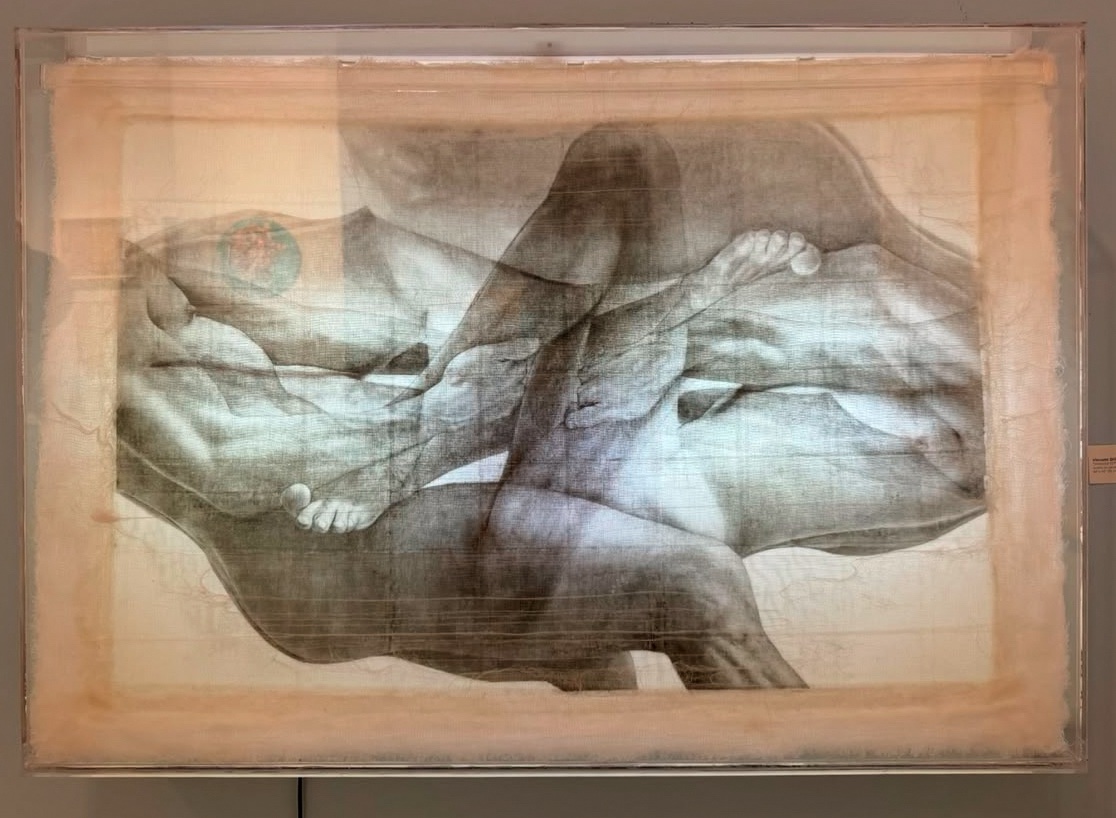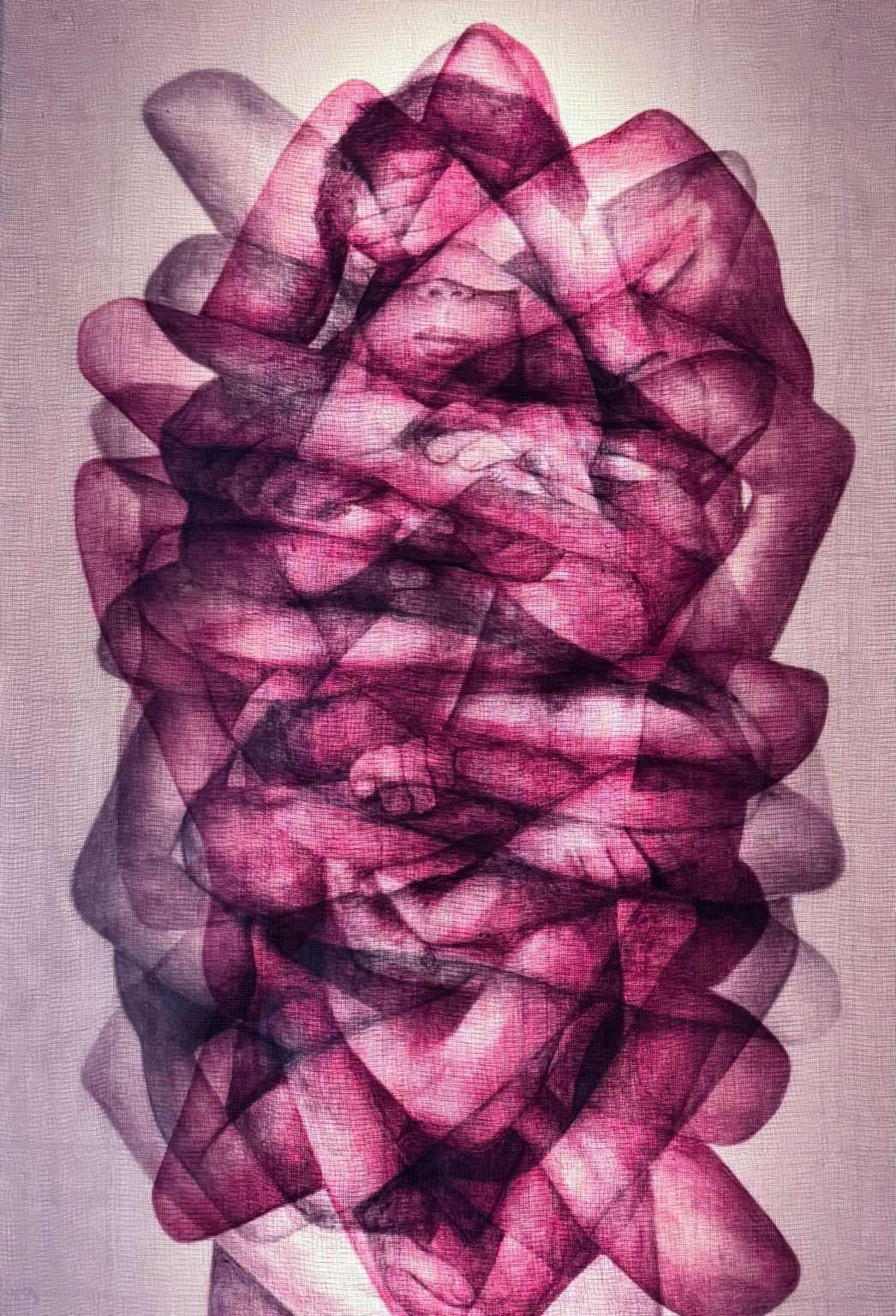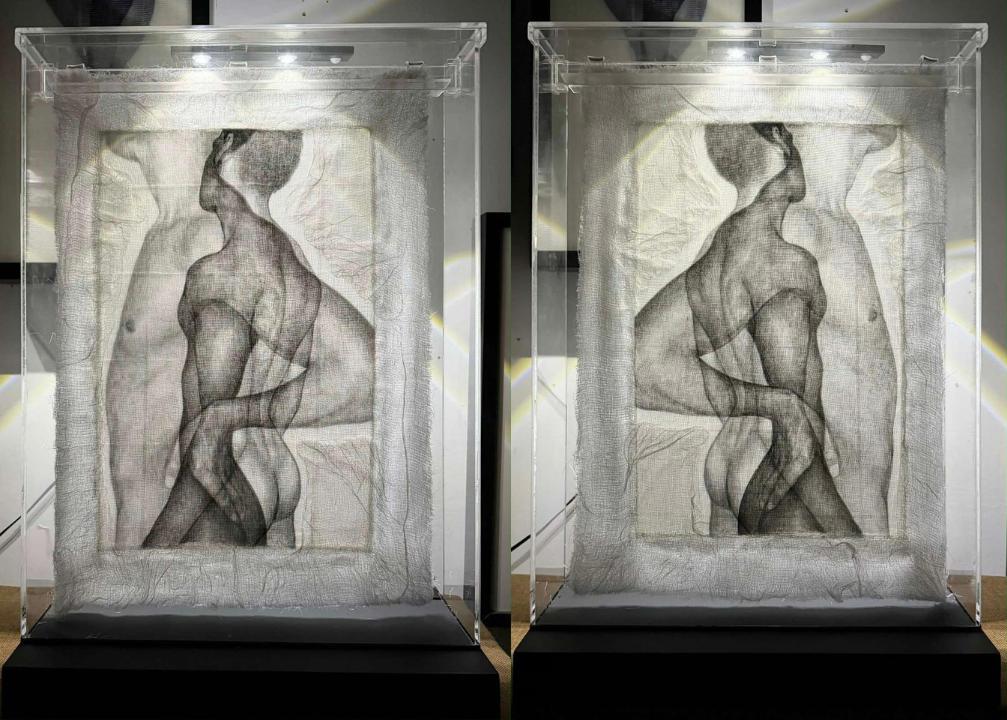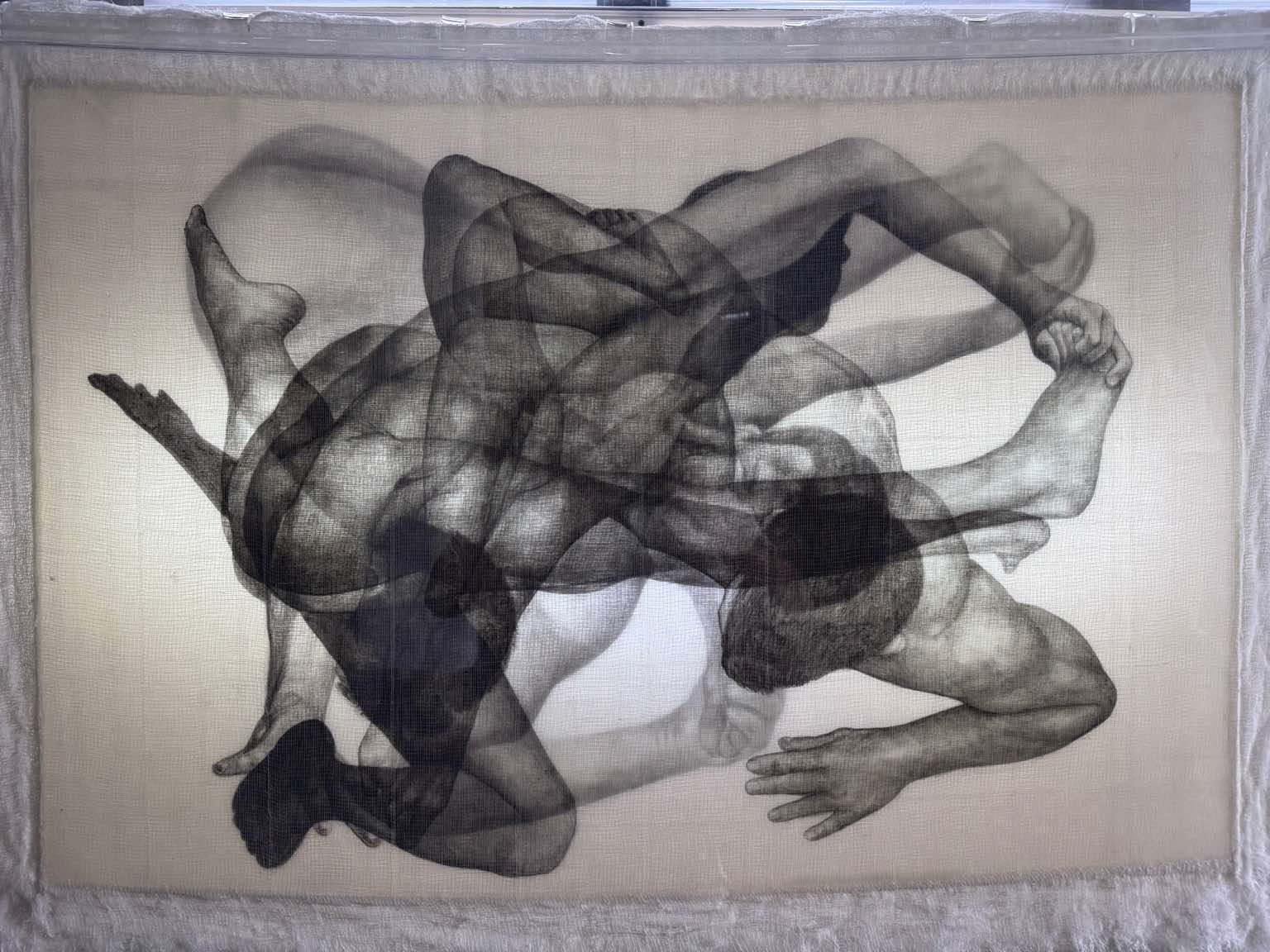
Through his signature use of medical gauze and acrylic, Vincent Diñoso redefines figurative art.
In an art scene crowded with reinvention, Vincent Diñoso stands apart—not by abandoning the human form, but by pushing it into something more fragile, more luminous, and more alive.
At just over a decade into his professional career, the Pasay-born artist has become one of the most sought-after names among collectors, not only for his technical command of anatomy but for the quiet tension that pulses through his work. His figures are not merely drawn or painted—they seem to hover, suspended between presence and disappearance.
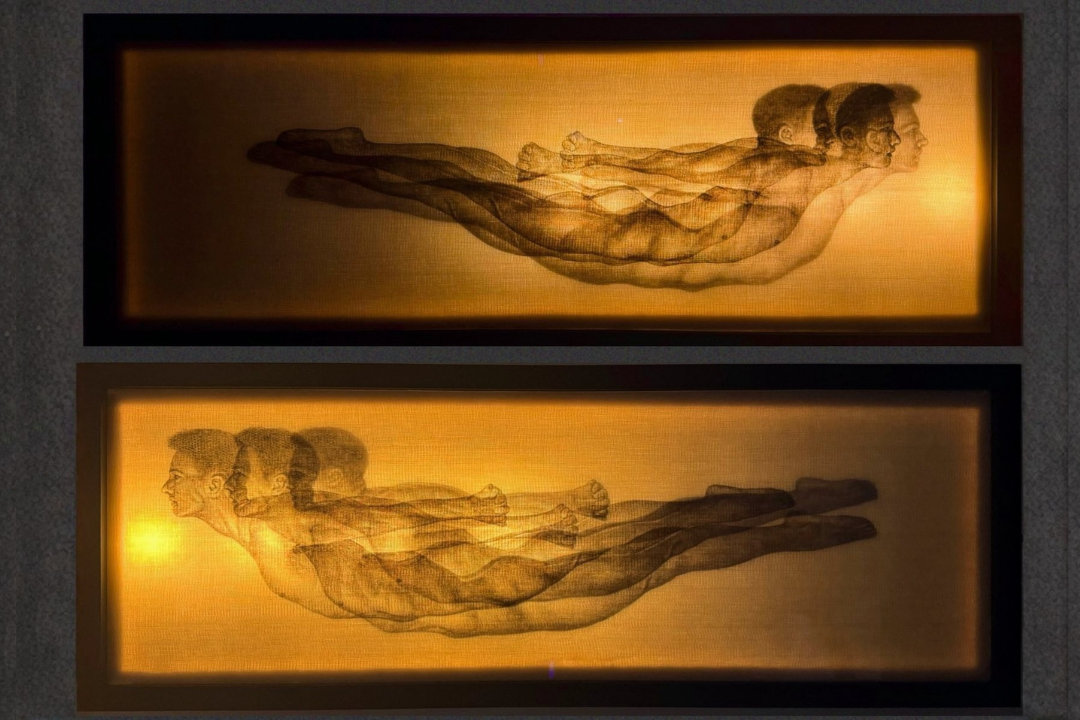
The secret lies in his canvas Instead of traditional linen or cotton, Diñoso works on gauze—a material more commonly associated with wounds than with art. Thin, translucent, and delicate, gauze forces both artist and viewer to confront vulnerability head-on. Layered with acrylic and ink, it transforms into something almost spectral, allowing light to pass through and around the body, as if memory itself were taking shape.
The result is a body that refuses to be fixed. Arms dissolve into shadow. Torsos blur into overlapping silhouettes. Faces emerge, then recede. It is anatomy, yes—but anatomy in flux.
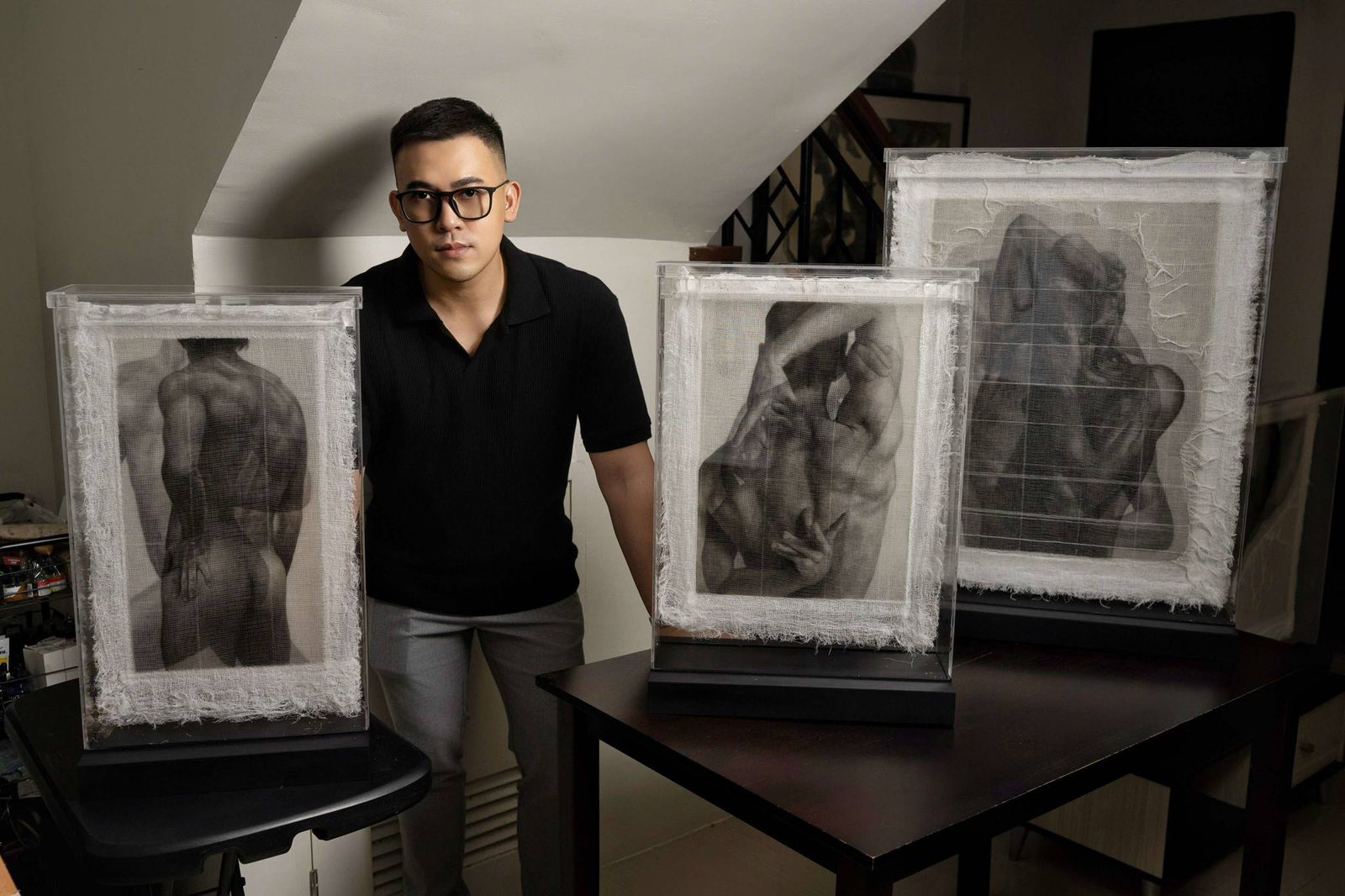
The anatomy of ghostly presence
A graduate of University of the Philippines Diliman, Diñoso has long been preoccupied with the human figure. He resists the idea of “mastery,” framing his practice instead as an obsession—one that keeps evolving with every piece. That evolution is precisely what excites collectors. Each exhibition reveals a shift: more daring compositions, more ambitious scale, a deeper interrogation of identity and form.
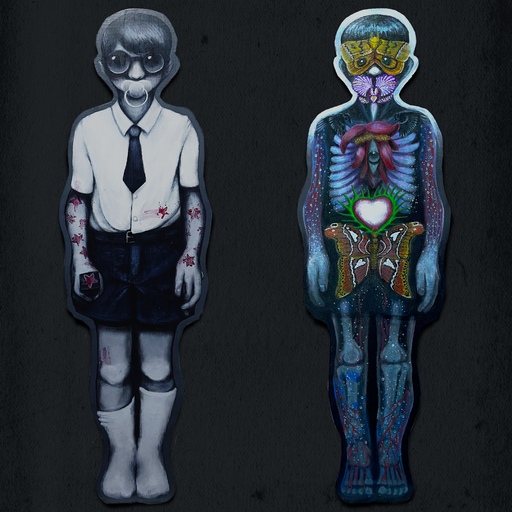
His solo shows at Pinto Art Museum—from Skinworks: Profiles & Nudes to Silhouette, Shadow, Self—have charted this trajectory, drawing audiences into a world where the body becomes both subject and metaphor. Here, flesh is not solid but layered, not defined but constantly becoming.
There is also something distinctly personal beneath the surface. Diñoso has spoken of discovering gauze in his youth, drawn to its fragility at a time when he himself felt pressure to conform. The act of reinforcing and building up the material became, in many ways, an act of self-repair. That quiet narrative lingers in his work, giving it emotional weight beyond its visual allure.
Today, that combination—technical precision, conceptual depth, and a signature medium—has placed him firmly on collectors’ radars. His works don’t just decorate walls; they invite prolonged looking, shifting depending on the light, the distance, the mood of the viewer.
Swipe or click arrows to see photos