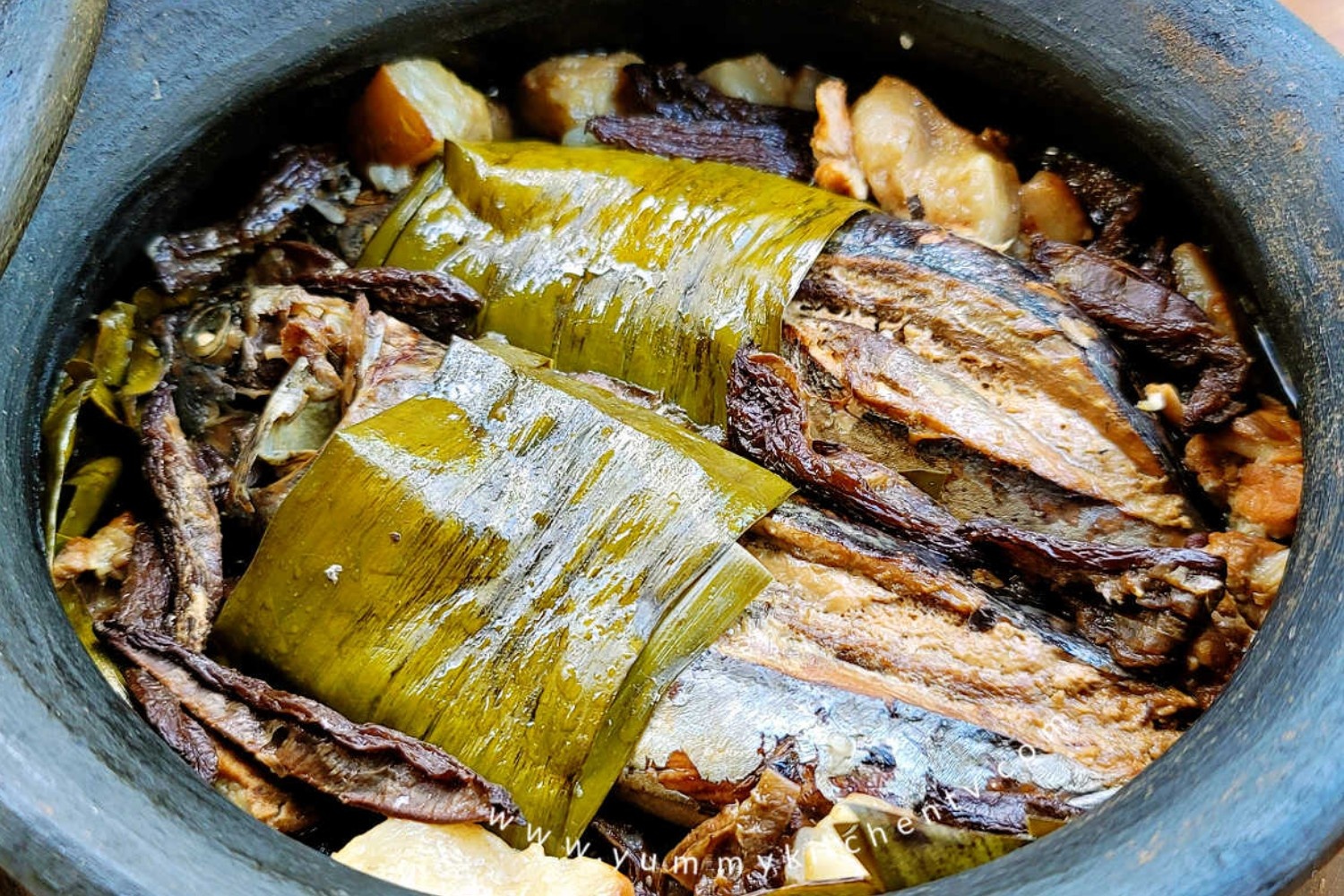
The addition of pork fat and sun-dried kamias creates a natural acidity that historically allowed sinaing na tulingan to remain shelf-stable for days without refrigeration. Photo by Yummy Kitchen
The secret to this coastal heirloom lies in a four-hour slow braise that softens even the smallest bones into perfection.
Ask a Batangueño what “sinaing” is, and they’ll tell you it isn’t just about the rice. It’s about that heavy clay pot sitting on the stove since 5AM. Sinaing na tulingan is the ultimate slow burn—a dish where the fish essence at the bottom is just as important as the meat. It’s salty, it’s tangy, and it’s got that signature layer of pork fat that makes every bite feel like a welcome hug.
Long before the time of refrigerators, the coastal towns of Batangas faced a delicious problem: an overwhelming abundance of tulingan (bullet tuna). To prevent waste, locals developed a slow-braising technique using natural preservatives—salt, sun-dried kamias, and pork fat. What was once a practice to save the catch for storage led to a signature recipe.
The alchemy of the palayok
Preparation starts with cleaning the fish and removing their tails. Afterwards, the fish are brined, partially wrapped in banana leaves, and layered in a palayok with the dried kamias and pork fat. The spare banana leaves are placed at the bottom of the palayok to prevent the ingredients from sticking. Water is added to the pot, and the fish is slow-braised for three to four hours until the bones are tender and the flavor seeps into the fish.
The result is a soft, meaty tulingan infused with the pork fat with a sour and tangy sauce thanks to the dried kamias.
The dish is available in Batangas’ public markets and eateries, especially near the coastal towns of Nasugbu, Lipa, and Balayan. In Metro Manila, you can find sinaing na tulingan in Batangueño-style restaurants like Tapa El Gordo in Manila, Provenciano in Maginhawa, Quezon City, and The Blue Kitchen at the Power Plant Mall, Makati.
Sinaing na tulingan is salty, tangy, and it’s got that signature layer of pork fat that makes every bite feel like a welcome hug.
Writer, storyteller, explorer... all in one: Rei is in pursuit of tales that offer inspiration and shape different perspectives. Beneath his quiet and reserved persona is an optimistic and carefree soul with a desire to form long-lasting bonds with everyone he meets.